Chapter 4 - Adrian's Ledger
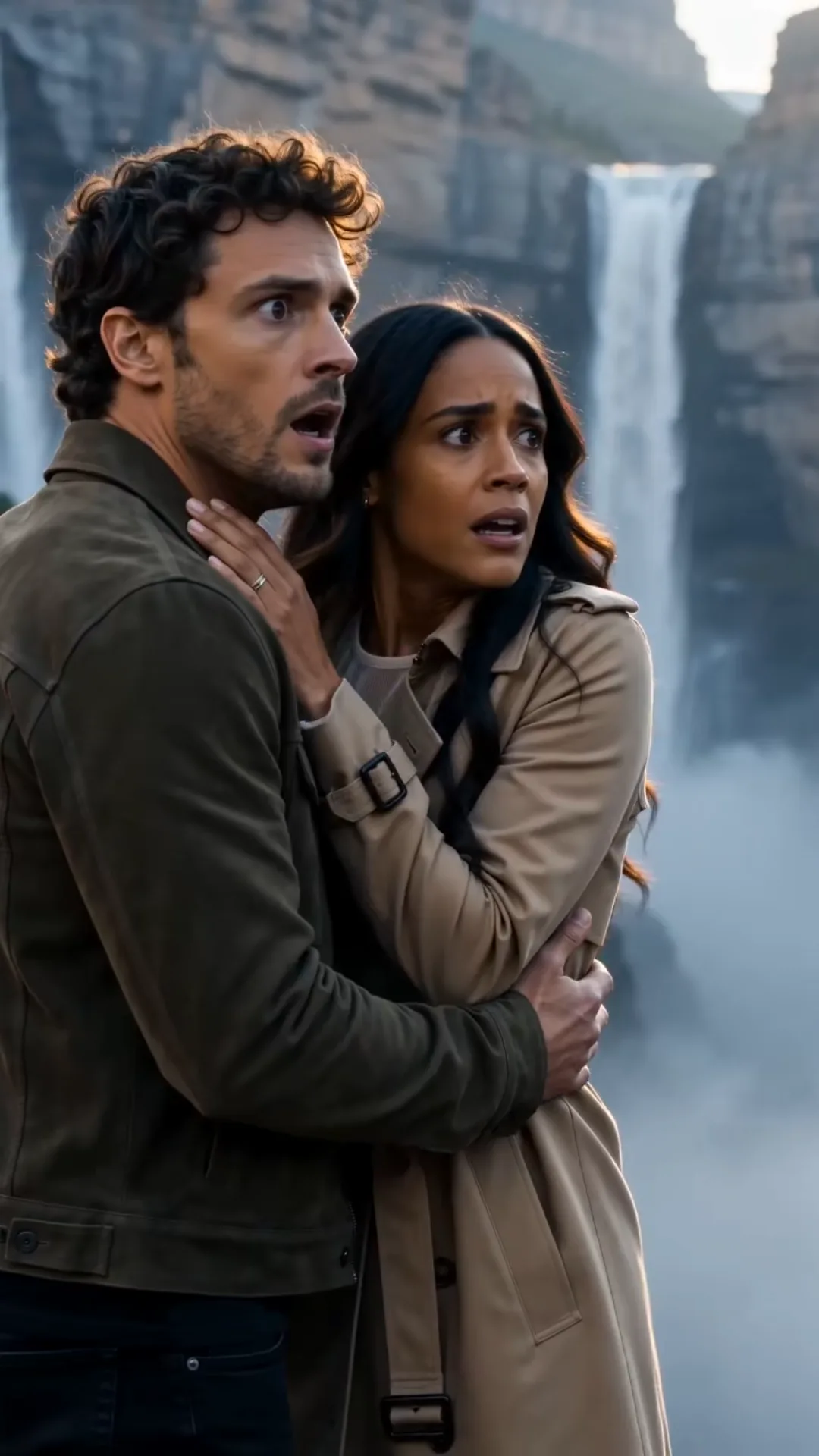
Adrian Kesler kept two versions of himself, and he had gotten very good, over the years, at making sure they never met.
The first version wore good suits and billed three hundred and forty dollars an hour and sat across conference tables from men twice his age, nodding at the right moments, saying I understand your concern in a voice built to sound like it had never once in its life felt concerned about anything.
The second version owed one hundred and ninety-one thousand dollars to men who did not send invoices.
The debt had not started as anything dramatic. It had started, the way these things usually do, small and reasonable — a bad year in a private investment fund a college friend had sworn was safe, a loan taken to cover the gap, a second loan taken to cover the interest on the first. By the time Adrian understood what was happening to him, he was three loans deep with a man named Castellano who did not care about spreadsheets or extensions or the particular unfairness of market downturns.
Castellano cared about dates.
He had given Adrian a date now — eight weeks out — and had communicated, through an associate with very calm eyes and very large hands, that missing this particular date would result in consequences that Adrian's law degree had not prepared him to negotiate.
He did not tell Elena about the debt for a long time.
He told himself this was to protect her. In the quieter parts of his own mind, in the parts he visited less often, he suspected it was because some part of him understood, even then, that the moment she learned about Castellano's deadline, whatever was happening between them would stop being a love affair and start being something with math attached to it.
He was right to suspect this.
He told her on a Tuesday, in his apartment, four months before the trip to the falls, after a bottle and a half of wine had loosened something in his chest that usually stayed carefully locked.
"How much," Elena had asked, very calmly, when he finished.
"It doesn't matter."
"How much, Adrian."
He told her.
She had not flinched. This was, he would think later, the moment he first understood what he was truly dealing with — not the grieving young wife the world saw at the hospital fundraisers, not the devoted caretaker the nurses praised, but something colder and more capable, something that had been quietly assembling itself inside Elena Hale for two years while everyone around her mistook her stillness for sorrow.
"Victor's insurance policy," she said, "has a rider. Accidental death, double indemnity. I read it when we did the estate planning last year."
"Elena—"
"How much would clear the debt and leave something over?"
He had stared at her across the small kitchen table, the wine going warm and forgotten in his glass, and understood, with a lurch somewhere below his ribs that felt almost like falling, that he had not corrupted her.
She had simply been waiting for a reason.
Over the following weeks, in stolen hours in the fourth-floor conference room, in parked cars outside pharmacies where Elena picked up Victor's medications, in the careful, clinical language of two people building something together that neither of them would ever say out loud in full, the plan took shape.
It needed to look like an accident.
It needed a location with no cameras, no witnesses beyond the three of them, terrain rough enough that a wheelchair losing control was plausible, and a fall severe enough that questions about the body would be difficult to ask, because there would be very little body left to ask questions of.
Adrian had found the falls on a hiking forum, in a thread about scenic overlooks with poor safety railing, three separate commenters warning that the northern viewpoint was, quote, an accident waiting to happen, seriously, the fencing there is a joke.
He had felt something close to gratitude, reading that thread.
Some cold, practical part of himself had thought: good. Other people will believe it too.
He told himself, in the weeks that followed, that he was doing this for Elena. That her marriage was a trap she'd fallen into honestly, before she understood what she was signing herself up for, and that freeing her from it was, in its own twisted way, an act of love.
He believed this for exactly as long as it took to actually stand at the edge of that cliff and watch Victor Hale go over it without a sound.
After that, he stopped being able to believe much of anything at all.
In the weeks leading up to the trip, he had gone to Victor's house exactly four times under the pretense of foundation business, and each time he had found himself, against his own better judgment, actually talking with the man — about tax structures, yes, but also about an old college rowing injury Victor still complained about, about a trip to Portugal he and Elena had taken before the accident, about the particular stubborn hope he still carried, even now, even after everything, that his hands might someday regain enough function to play piano again, even badly, even just for himself.
"I used to be terrible at it," Victor had told him, laughing at his own memory. "Elena used to cover her ears. But I liked terrible. Terrible was mine."
Adrian had smiled and said something appropriate and gone home afterward and thrown up in his own bathroom sink, gripping the porcelain with both hands, staring at his reflection in the mirror above it like a stranger he did not recognize and was not sure he wanted to.
He did not tell Elena about this.
He told himself it was weakness, something to be managed and hidden, the way he managed and hid the calls from Castellano's associate, the way he managed and hid the small tremor that had developed in his left hand sometime in the last month and had not gone away.
On the morning of the trip, driving the two hours north with Elena silent beside him and Victor humming something tuneless in the back seat, folded into his wheelchair, his hands resting in his lap the way they always rested now, Adrian gripped the steering wheel and watched the road unspool ahead of him and thought, with a clarity that frightened him more than anything Castellano's associate had ever said:
I am about to become a man I cannot come back from.
He did not turn the car around.
May you like



That was the part he would return to, later, in the version of this story he told himself in the sleepless hours of every night that followed. Not the push. Not the sound, or the silence after the sound. Just this — the two hours of highway, the humming from the back seat, the perfectly ordinary morning light on the windshield, and the entire remaining length of his own free will, still intact, still his, right up until the moment they reached the gravel path and he chose, deliberately and with his eyes open, not to use it.
---







