Chapter 8 - The Sound
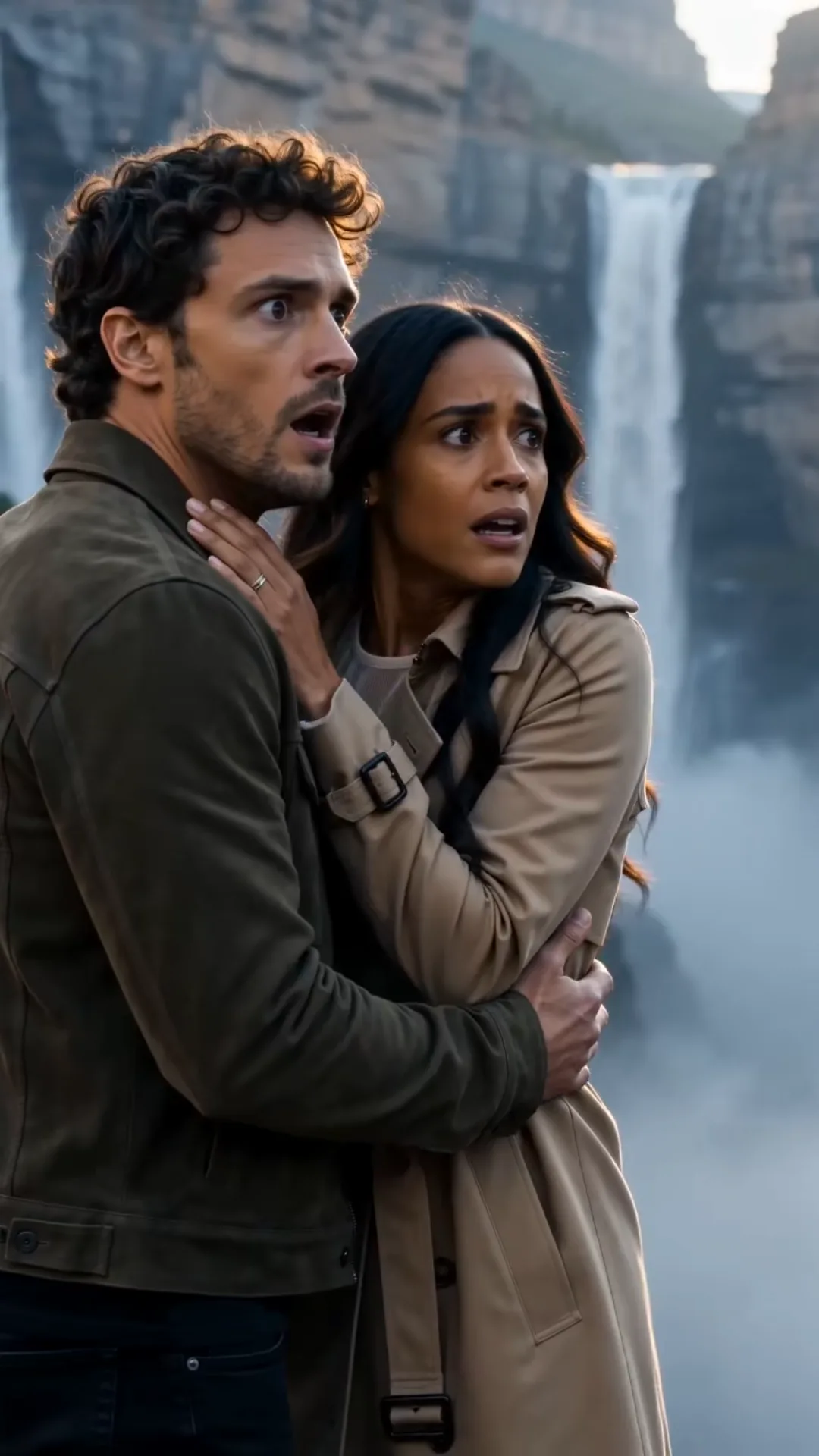
Detective Rourke had worked homicide for nineteen years, long enough to develop a private catalogue of the small, specific ways that grief lied.
Genuine grief, in his experience, was clumsy. It stumbled over dates. It contradicted itself about small, meaningless details — what time they'd left the house, which direction the wind had been blowing — while remaining absolutely, unshakably consistent about the large, unbearable facts.
Elena Hale's grief did the opposite.
She was letter-perfect on the timeline. Eleven-fifteen departure, eleven-forty arrival at the turnout, the walk up the service path taking approximately twenty minutes given the difficulty of the terrain, the fall occurring, she believed, sometime around noon.
But when he asked her, gently, to describe the moment itself — the actual instant the chair went over — her account grew strange in a way he couldn't quite name. Too smooth in some places. Oddly blank in others, as though she were reading from a script she had memorized and then, halfway through, forgotten the next line and simply skipped ahead.
"And Mr. Kesler," Rourke said, consulting his notepad though he already knew the answer, "he was standing where, exactly, when the chair began to move?"
"Beside me. Slightly behind me."
"Not holding the chair himself?"
"No. I had the chair. He was just—" She stopped. Something crossed her face, quick and involuntary, that Rourke's nineteen years told him to pay very close attention to. "He was just there. Standing there."
"Ms. Hale, are you all right? You've gone quite pale."
"I keep hearing it," she said. "The sound."
"What sound?"
She did not answer that directly. Instead she asked him something that struck him, even after two decades of strange interviews, as genuinely unusual.
"Did your team find anything unusual at the scene. Anything besides—" She stopped again. "Anything besides what you'd expect."
"Unusual how?"
"I don't know," she said, and for the first time in the entire interview, Rourke believed he was looking at something true. Fear, plain and uncomplicated, sitting undisguised on her face. "There was a sound. Right after. A crack, like something breaking, and then—"
"Rockfall," Rourke said. "It's a documented hazard up there. The whole overlook is eroding. We found evidence of a fresh slide near the original point of impact, consistent with additional material giving way after your husband's chair went over. It's actually fortunate neither of you was closer to the edge when it happened."
He watched her carefully as he said this, offering her the simplest, most mundane explanation available, the kind of answer he had learned, over the years, that guilty people almost always accepted with visible relief, eager to have the horror of what they'd done folded neatly back into the ordinary, explainable world.
Elena did not look relieved.
If anything, she looked worse.
"That's not what it sounded like," she said quietly.
"What did it sound like?"
She did not answer.
Two floors below, in a separate interview room, Adrian Kesler was giving his own account to Detective Osei's partner, and giving it, by the partner's later assessment, considerably worse than Elena had. His hands would not stay still. He asked, twice, unprompted, whether they had recovered a body, and when told that recovery efforts were ongoing given the force and depth of the falls, he had made a sound the partner would describe in his report only as not what you'd expect from a man simply worried about a friend.
He too mentioned the noise.
"It wasn't rockfall," he told the partner, his voice tight and strange. "I've heard rockfall. I hiked for years before law school. This wasn't that. This was—" He stopped, visibly searching for a word that did not exist in any vocabulary he'd needed before that afternoon. "It came from everywhere. And after it, there was—"
He did not finish the sentence.
The partner wrote mist in his notes, followed by a question mark, because that was the only word Adrian eventually offered, repeated three times with increasing agitation, as though the word itself were the entire horror rather than merely a description of it.
That night, in separate apartments that felt, for the first time since the affair began, unbearably far apart, Elena and Adrian each lay awake staring at ceilings that offered no answers, replaying the same handful of seconds over and over — the crack, the gathering mist, the voice that could not have been a voice, that had to have been the wind, that had to have been shock playing tricks on two exhausted, guilty minds.
Elena told herself this for three straight hours before finally admitting, somewhere near two in the morning, that she did not believe it.
She had heard him.
Not imagined him. Not misremembered the wind. She had heard Victor's voice, clear and warm and entirely his own, saying the same words he'd said only moments before his death, and something in the specific gentleness of that voice — no anger in it, no accusation, nothing but the same soft wonder he'd shown looking at the falls for the very last time — frightened her more than rage would have.
Rage, she could have understood.
Rage, she might even have felt she deserved.
This was something else. Something patient. Something that did not need to shout to make itself understood, because it had all the time in the world, and it had chosen, for reasons she could not begin to guess at, to wait.
She got up at three in the morning and stood at her bedroom window, looking out at the dark shape of the house Victor had left her — the house she now owned outright, the foundation whose accounts she and Adrian would soon control together, the entire architecture of the life she had killed a man to obtain, laid out before her exactly as planned, exactly as promised.
It felt, standing there in the dark, like the emptiest room she had ever stood in.
Somewhere across town, in his own apartment, Adrian was doing something similar — standing at his own window, looking out at a city that no longer felt like it belonged to him, his left hand trembling in a way that had gotten steadily worse since the drive home, since the long silent hours in the car with Victor's empty wheelchair folded uselessly in the trunk behind them, a physical presence neither of them had been able to look at directly the entire way down the mountain.
Neither of them called the other that night.
May you like



Some instinct in both of them, some cold animal wisdom neither could have articulated, understood that the sound they had heard at the cliff's edge was not something a phone call could fix, and that whatever answer was coming for them — and both of them now believed, with a certainty that defied all their careful planning, that an answer was indeed coming — it would arrive on its own schedule, patient as falling water, and there was nothing either of them could do now but wait for it.
---







