Chapter 5 - The Plan
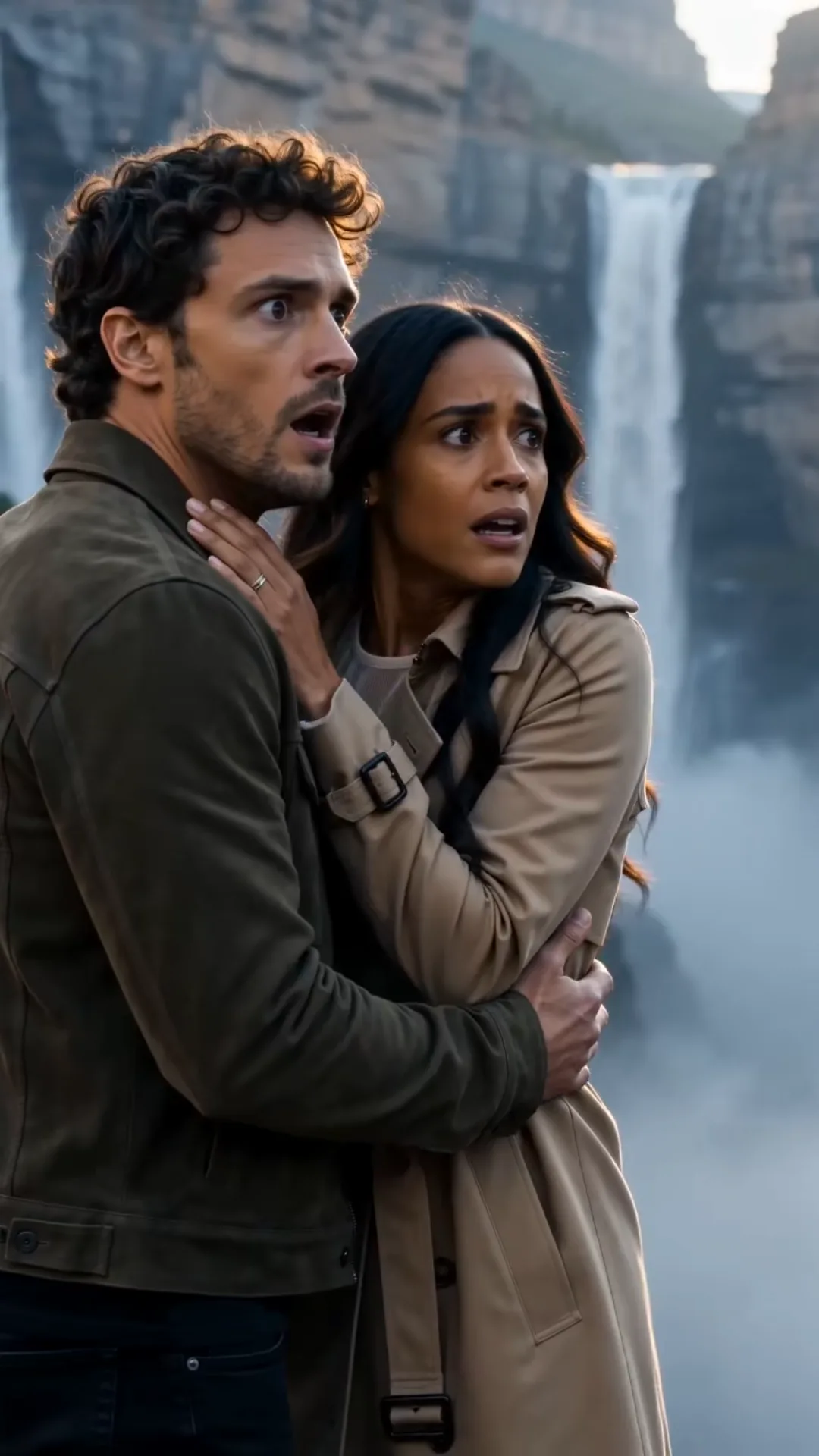
They mapped it out on the back of a takeout menu, which struck Elena, even at the time, as a small obscenity — that a man's death could be sketched out in blue ballpoint pen on the back of a menu for a Thai restaurant that delivered General Tso's chicken to Adrian's apartment every other Friday.
"The turnout is here," Adrian said, tapping a spot he'd circled twice. "Public parking lot, no cameras, about a quarter mile hike to the overlook. Rangers do a sweep twice a day, morning and late afternoon. If we go midday, we've got a window of at least three hours with nobody up there."
"What about other hikers."
"It's a Tuesday in September. Off season, mid-week. I checked the trail app — average of two to four visitors a day this time of year, and most of them do the loop trail, not the northern overlook. The overlook's not wheelchair accessible, technically, which is exactly why nobody goes there. It'll just be us."
Elena looked at the crude map for a long moment.
"How do we get the chair up there if it's not accessible."
"There's a service path. Maintenance crews use it. It's rough, but it's passable if you're careful, and if anyone asks, that's our story — Victor wanted to see the view, we knew the main trail wasn't built for the chair, so we used the service path instead. Nothing suspicious about a devoted wife trying to give her husband one good afternoon."
Devoted wife.
The phrase sat strangely between them, the way certain words had started to lately, both of them aware of the distance between the language they used to plan this and the language the rest of the world would use to describe her, afterward, at the funeral, in the newspaper, in the quiet condolence calls from people who had known Victor for decades and never once suspected the woman standing beside his casket had been the one who put him in the ground.
"And after," Elena said. "What do we say happened."
Adrian's pen hovered over the menu.
"The truth, mostly. We took him up to see the falls. The chair hit loose gravel near the edge — there's actual erosion up there, I checked, it's a real hazard, not something we're inventing — and it got away from us. We tried to grab it. We couldn't reach it in time."
"They'll ask why neither of us was holding onto it properly."
"Grief makes people careless in hindsight. Nobody's going to expect us to give a perfectly rehearsed account of the worst moment of our lives. If anything, a little confusion, a little contradiction between our stories — that's more believable than if we agree on every detail. Real trauma doesn't sound rehearsed, Elena. It sounds messy."
She had looked at him then, really looked at him, and thought — not for the first time, but for the first time with this particular clarity — that Adrian had a talent for this that unsettled her more than she wanted to admit. Not cruelty, exactly. Something colder. A kind of fluency in deception that suggested he had been practicing it, in small ways, for a very long time before she ever walked into his life.
She wondered, briefly, what else he might be fluent in that she hadn't yet discovered.
She pushed the thought away. There would be time to examine Adrian Kesler later, once this was finished, once the money and the freedom and the terrible quiet relief of it were finally hers. For now, she needed him. That was the whole of the calculation, clean and simple, the way she had learned to make all her calculations since the accident had taught her that sentiment was a luxury tax on survival.
"The wheelchair rider," she said. "Double indemnity is only for accidental death. If there's any hint this was deliberate—"
"There won't be. No autopsy findings that suggest foul play, because there won't be a body intact enough to autopsy in any meaningful way. Waterfall like that, rocks at the base — even if they recover anything at all, and that's a significant if, it won't tell anyone anything except that a man fell a very long way onto very hard rock."
He said this in the same flat, competent tone he used for tax structures.
Elena found, to her own quiet alarm, that she was grateful for it. Grateful that one of them could speak about the destruction of Victor's body in clinical terms, because it meant she didn't have to be the one to say it first, didn't have to be the one who broke whatever thin membrane still separated planning this from actually being a person capable of doing it.
"What about Marta," she said. "She watches me. She's watched me for months."
"Marta's an employee. Employees don't get subpoenaed for gut feelings. As long as there's no physical evidence connecting us to intent — no searches on your computer, no suspicious withdrawals, nothing in writing — her suspicions are just an old woman's grief talking. Grief makes people paranoid. It's expected. It's even sympathetic."
"You've thought about this a lot."
"I've thought about very little else for two months."
There was a silence after that, the kind that used to precede intimacy between them and now, more and more, preceded something closer to a business negotiation, two people circling the last details of a contract neither of them would ever have the nerve to put down in actual writing.
"After," Elena said finally. "You and me. How does that work, once the money clears, once enough time has passed that people stop watching."
Adrian set the pen down.
"We wait," he said. "A year. Maybe two. We're not seen together in public before then, not even by accident, not even at the grocery store. Then, eventually, two people who both happened to know Victor Hale reconnect, slowly, believably. Nobody thinks twice about a widow finding companionship a few years down the line. It's the immediacy that gets people caught. Patience is the entire game, Elena. Patience is the only thing standing between us and getting away with this."
She had nodded, at the time, as though this made perfect sense, as though patience were a simple thing, a muscle you could choose to use or not use, rather than the single hardest requirement of everything they were about to do.
She did not yet know how badly both of them would fail at it.
She folded the takeout menu in half, then in half again, and slid it into her coat pocket rather than the trash, telling herself she would burn it later, in the same sink where Adrian burned his own evidence, and neither of them said anything else about it that night, though both of them lay awake long after, in separate apartments, staring at separate ceilings, already hearing, in their own private imaginations, a sound neither of them had heard yet.
A boom.
May you like



Distant. Wrong. Waiting somewhere up the mountain for the day they would finally give it a reason to arrive.
---







