Chapter 5 - What the Well Remembers
Three weeks earlier, before any of this, Isadora had stood at a well in the cool of a morning and had not known she was being watched.
She remembered the well because it was the first quiet place she'd found since leaving the city.
The bucket had a frayed rope, and she'd had to wind it twice around her wrist to get enough grip, and the water that came up was cold enough to sting her hands and clean enough that she'd cupped some in her palms and drunk it right there, standing in the dust with her braid coming loose and her belly just beginning to round out under her dress.
She had felt, for the first time in nearly a year, almost safe.
That was the photograph.
Not staged. Not posed. Just a girl at a well, drinking water with her eyes half closed, thinking about nothing at all — which was, Isadora would understand only much later, exactly the kind of photograph a man like Rafael knew how to make the most damage with. Not a threat. Not a message. Just proof.
I can still see you.
She hadn't known, that morning, that Dona Amélia had been watching her from the kitchen window with an expression the girl had never once managed to name.
She hadn't known that the older woman's hand had gone, without her quite meaning it to, to the small silver locket she wore under her collar — the one she never opened in front of anyone — the way it always did when something reminded her of a well, a morning, a girl who thought she was safe.
Because Dona Amélia had stood at that same well once.
Thirty years before Isadora had ever been born, in a dress not so different from the one the girl wore now, with a belly not so different in shape, with a man not so different in the particular quiet way he had of arriving without warning.
She had not told Isadora any of this in the three weeks the girl had lived at Fazenda Santa Luzia.
She had only watched her — at the well, in the kitchen, out among the chickens with her hand pressed to the small of her back the way pregnant women do near the end — and had said nothing, because there are some things a woman only says once she is certain she has to.
The photograph had arrived on her phone at six that morning.
No message with it. Just the image, and a phone number she recognized immediately, though she had deleted it from her contacts eleven years ago.
She had stood in her kitchen for a long time, looking at the girl's face frozen mid-laugh at the edge of the well, and had felt something very old rise up in her chest — not fear, exactly, though there was fear in it, but something closer to recognition.
Here it is again, she had thought. The same story, wearing a different girl's face.
She had not told Isadora that morning because she had needed, first, to find out how much the girl already knew — how much she was hiding, how much she had already guessed, whether she was the kind of girl who ran toward danger out of loyalty or the kind who ran only because she had nowhere else to run.
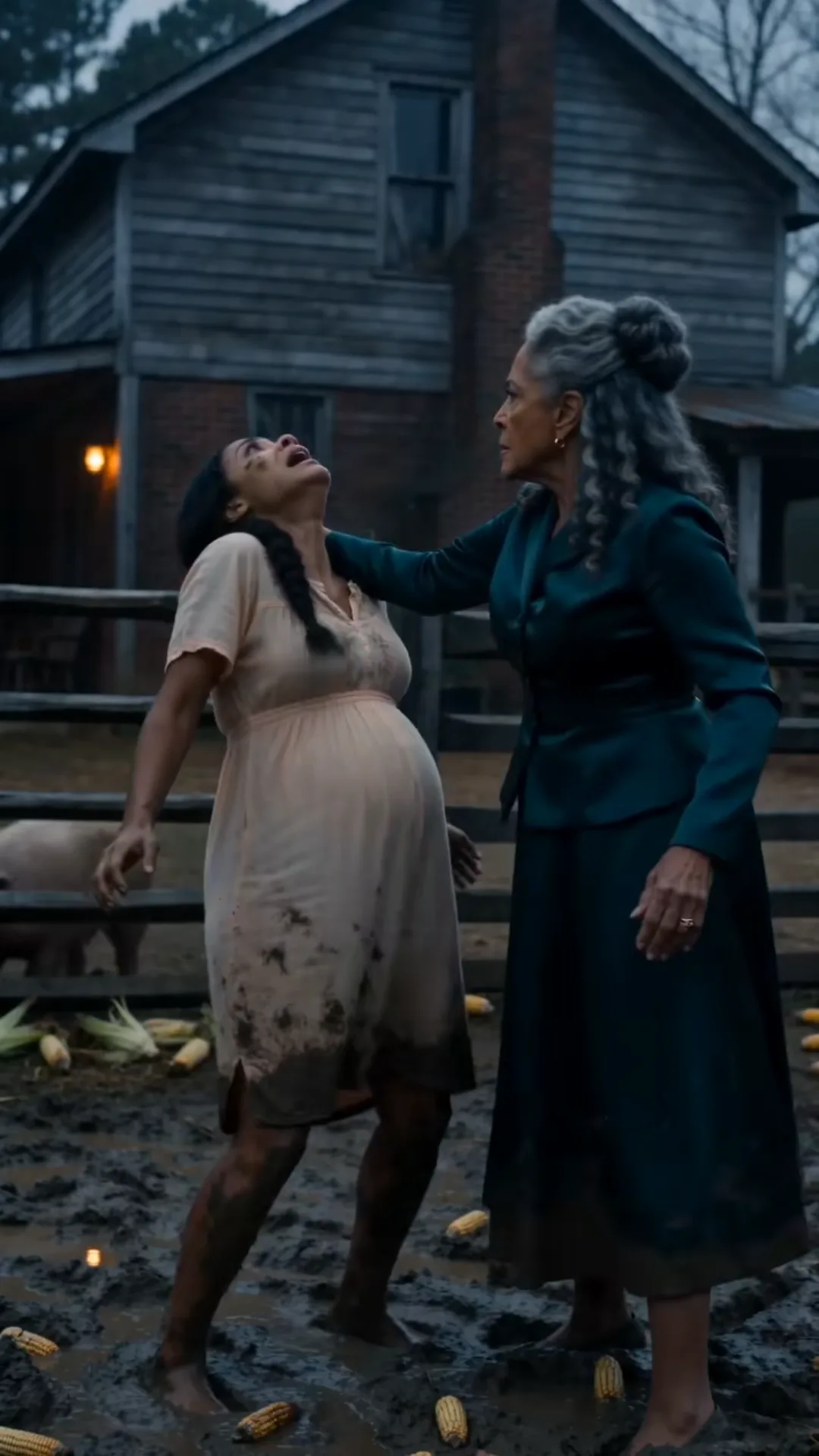
That was the interrogation in the mud.
Not cruelty. Not really. A test — clumsy, urgent, badly timed — to find out, before the truck arrived, exactly how much time they had left, and whether the girl beside her would stand or scatter when it came.
Isadora had not known any of this while it was happening.
May you like



She had known only the grip on her wrist, the grip on her shoulders, the grip in her hair, and had understood each one as a new shape of danger, when in fact — though she would not learn this until much later, until the worst of the night was already behind them both — every single one of those hands had been trying, in the only language Dona Amélia still knew how to speak, to hold her together.
---







