Chapter 9 - What Gets Buried, What Gets Kept
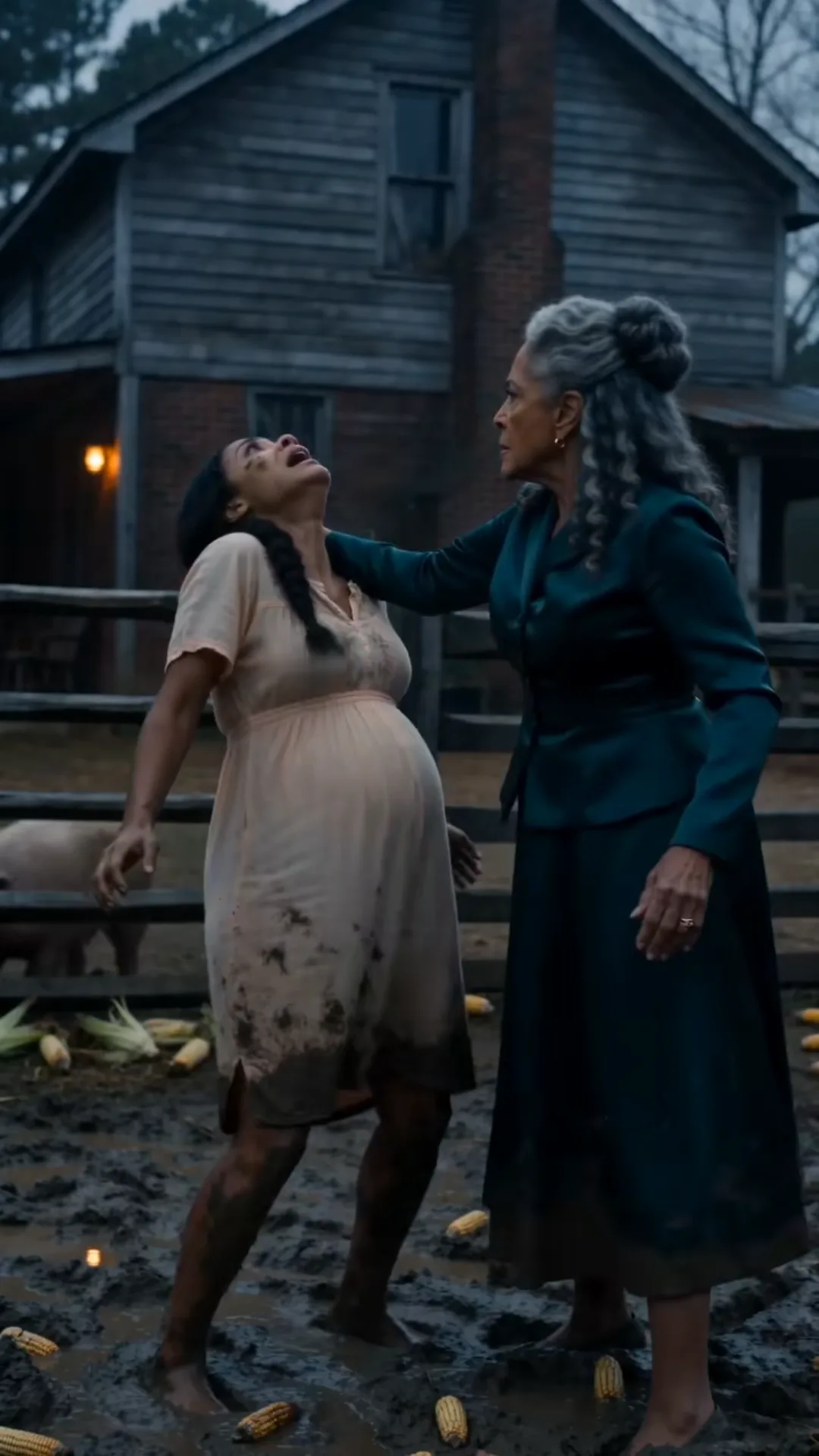
Inside, the kitchen was warm in the particular way old houses are warm — not from any fire lit that evening, but from decades of fires lit before it, soaked into the stone and the wood until the walls themselves seemed to hold heat like a body holds memory.
Dona Amélia set a cup of something hot in front of Isadora — cinnamon, maybe, and something else underneath it, some herb the girl didn't recognize — and sat down across from her at the long wooden table, her black dress still streaked at the hem with the same mud that clung to Isadora's bare legs.
For a while, neither of them spoke.
Then Dona Amélia reached up and unclasped the silver locket from around her neck — the one she never opened in front of anyone — and set it on the table between them, its small clasp catching the lamplight.
"Open it," she said.
Isadora's hands trembled as she lifted it. Inside, folded small enough to fit the tiny frame, was a photograph gone soft and yellow at the edges — a girl of maybe seventeen, laughing at something outside the frame, her dark hair loose around her shoulders, one hand resting on a belly just beginning to round.
"Her name was Beatriz," Dona Amélia said. "She was my daughter. Her father—" the word came out with effort, like something pried loose from a wall it had been mortared into for years, "—was a man very much like the one who just left my land."
Isadora looked up. "What happened to her?"
"She ran," Dona Amélia said. "Same as you. She came to a place she thought was safe. And I—" her voice caught, just once, and then steadied, the way a candle flame steadies after a draft passes, "I was not the woman standing at that fence tonight. I was younger, and frightened, and I believed that paper and promises meant more than they do. I let him take her for one evening. Just one evening, to talk, he said. Just to say goodbye properly."
She did not finish the sentence out loud.
She did not need to.
Isadora's hand found hers across the table, the same way it had found her in the mud an hour before, and this time it was Isadora holding on.
"I bought this farm with what was left after," Dona Amélia said. "I told myself it was to get away from the city, from the memories, from everyone who looked at me like I was the mother who let it happen. But that was never really why."
"Then why?"
Dona Amélia's eyes, when they met Isadora's, were wet but steady.
"Because eventually," she said, "another girl was going to stand at that well. And this time, I intended to be watching."
Outside, the wind picked up, carrying the smell of turned earth and distant rain through the cracked kitchen window, and somewhere past the fence one of the pigs settled with a long, contented sigh, indifferent to everything that had happened in its pen an hour before.
"I frightened you tonight," Dona Amélia said. "In the mud. I am sorry for that. I needed to know, before he arrived, whether you would run toward him or away — and I did not have time to ask gently."
"I understand," Isadora said. And, to her own surprise, she found that she did.
"You will stay," Dona Amélia said. It wasn't quite a question, but it wasn't quite an order either — something gentler than both, offered the way you offer a hand rather than issue an instruction.
"For as long as you'll let me," Isadora said.
May you like



Dona Amélia closed her hand around the girl's, and around the small locket between them, and for the first time in longer than she could easily remember, felt something in her chest that was not grief, and was not fear, but something that had been waiting a very long time to be let back into the house.
---







