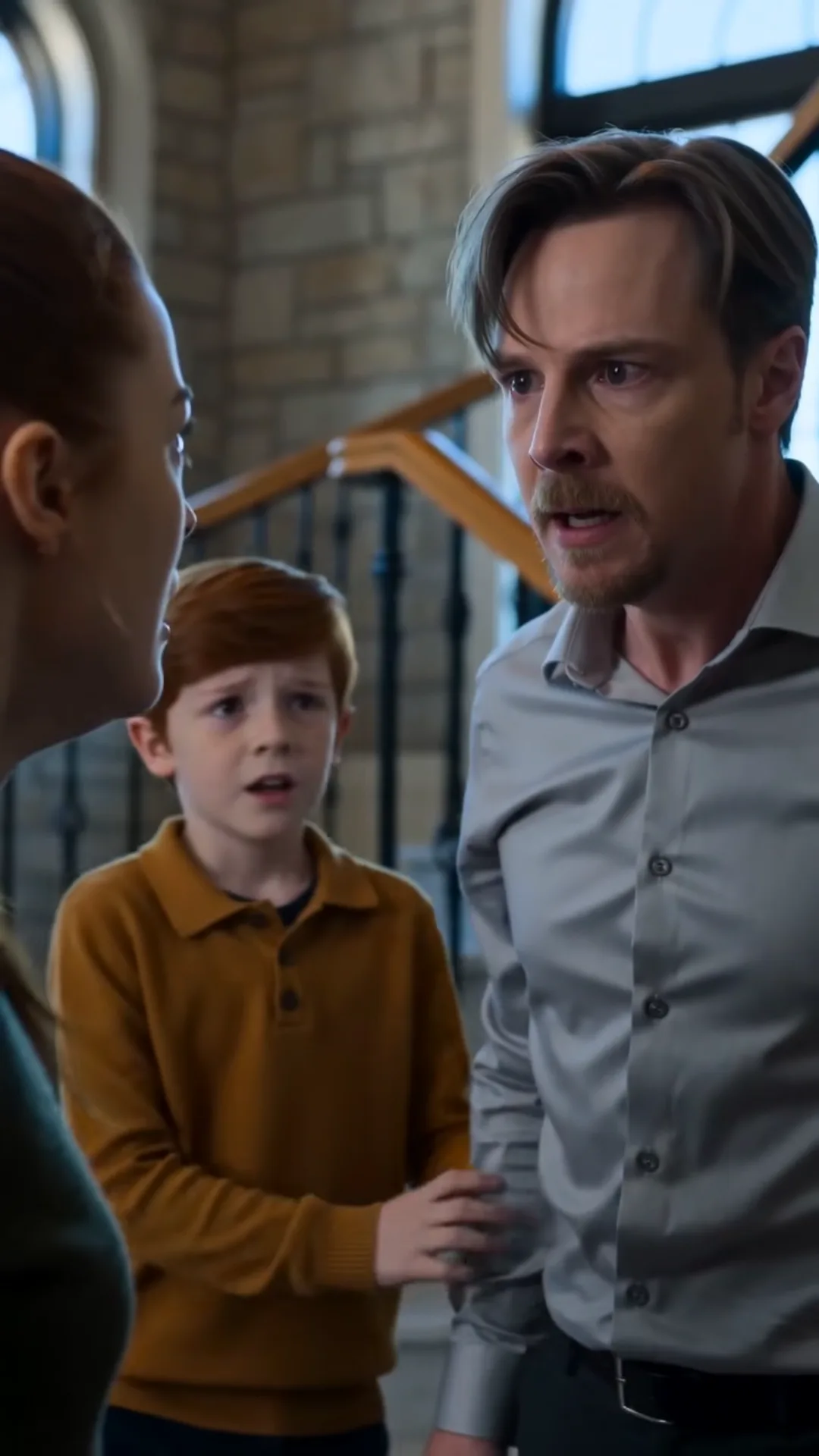
Chapter 2 - The Consulting Fee
Elena Cross had not always been Elena Hale.
She had grown up in a two-bedroom apartment above a laundromat, the smell of fabric softener so constant in her childhood that even now, decades later and rich beyond her mother's imagining, the smell of it made her stomach clench with something between nostalgia and rage.
Her mother had cleaned houses.
Elena had watched her mother clean the houses of women exactly like Margaret Hale — women who left twenty-dollar tips folded under crystal ashtrays and called it generosity, women who said you're like family and then handed over a mop.
She had promised herself, at fourteen, scrubbing a stranger's baseboards because her mother's knees had given out, that she would never again be the woman holding the mop.
She would be the woman who owned the house.
It had taken her seventeen years, four jobs in luxury retail where she'd learned to read wealth off a person the way other people read weather off a sky, two relationships with men who had money but no spine, and finally, at thirty-one, a chance meeting with Daniel Hale at a charity gala where she was working coat check and he was drunk enough to tip her three hundred dollars and ask for her number in the same breath.
She had married him fourteen months later.
She had loved him, actually, for the first year — a small, surprised, guarded love, the kind you feel toward a stroke of luck you don't quite trust.
But love, in Elena's experience, was a currency that devalued the moment you needed to spend it, and by the time Justin's mother's ghost had fully settled into the house — his real mother, dead of an aneurysm when he was five, present in every photograph Margaret refused to take down — Elena had stopped loving Daniel and started loving what Daniel represented, which was, in the end, a much more stable thing to love.
Money did not die of an aneurysm.
Money did not compare you to a saint.
The sister with the LLC was named Renata, and she was not, technically, doing anything illegal.
The consulting fees were real, in the sense that Renata really did send Elena invoices for "brand strategy" and Elena really did forward them to the household accountant, who paid them without question because that was what he was paid not to do.
The money went into an account Renata held for Elena, quietly, patiently, eleven thousand here, nine thousand there, a small tributary running parallel to the great river of the Hale fortune, filling up a private reservoir that had, over three years, become substantial enough that Elena had started to think of it not as a hedge but as an exit.
An exit from what, she had never let herself finish the sentence.
She finished it now, sitting in her car outside a strip mall two towns over, engine running, heater blasting against a cold that had nothing to do with the weather.
An exit from a marriage that had gone the color of old dishwater.
An exit from a mother-in-law who looked at her the way you look at a stain you can't quite place the origin of.
An exit funded, until eleven minutes ago, by a will that would eventually make her — not rich, exactly, since the shares and the house went to Daniel — but comfortable. Comfortable enough. A woman who never again had to smell fabric softener and flinch.
Two weeks.
She said it out loud in the empty car, testing the shape of it.
"Two weeks."
Her phone buzzed. Renata.
u ok? u sound weird on the phone earlier
Elena typed back with her thumb, deleted it, typed again.
Fine. Family stuff.
ur MIL again? that woman needs a hobby
Elena almost laughed. It came out instead as something closer to a cough, dry and involuntary, the kind of sound a body makes when it has decided, somewhere below conscious thought, that laughing and crying have temporarily become the same function.
She drove home along the river road, the one with no traffic lights, and for six miles she let herself imagine — not plan, just imagine, the way you imagine winning a lottery you haven't bought a ticket for — a version of the next month where the trust papers were never signed.
Where Ellery's draft sat in a drawer.
Where the appointment got pushed, and pushed again, the way old people's appointments so often did, doctor's visits and lawyer's visits alike, postponed by a cold, a grandchild's recital, a headache that turned out to be nothing.
Where two weeks became four, became six, became — long enough.
She did not let the thought finish either.
But she noticed, with a kind of clinical distance that frightened her more than the thought itself, that she had not needed to finish it for her body to already be making a list.
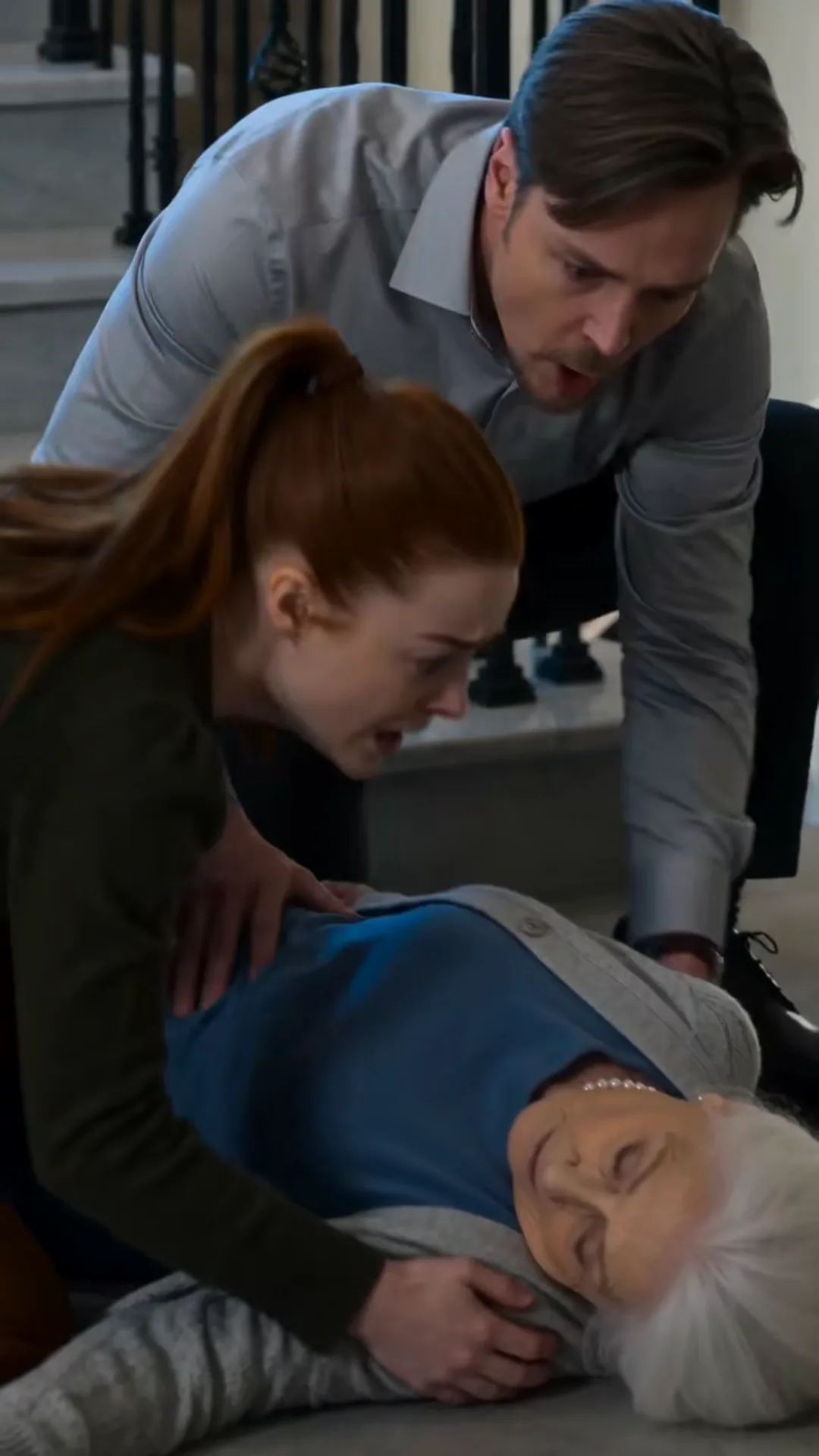
The staircase in the Hale house had nineteen steps.
Margaret took them every Thursday without the railing, because she was proud, and pride, Elena had learned in eleven years of watching rich people, was the one lock that never needed picking. You simply had to know where to stand so that when it opened, it looked like an accident.
---
At home, Justin was doing homework at the kitchen island, a math worksheet with more eraser marks than pencil.
"Where's Dad?"
"Gym," Elena said, hanging her coat. "Where's your homework going?"
"Bad." He didn't look up. "Nana Margaux gave me a puzzle instead of a snack today. She said food rots your teeth but puzzles rot in your head in a good way."
"That sounds like something she'd say."
"She also said," Justin went on, chewing his pencil, oblivious to the way Elena had gone still by the coat closet, "that grown-ups lie more than kids because they have more to lose. Is that true?"
Elena took a long moment before she answered, the kind of pause an adult learns to disguise as thoughtfulness.
"Sometimes," she said. "Sometimes grown-ups just have more complicated reasons for the things they say."
"That sounds like a lie about lying," Justin said, and went back to his worksheet, nine years old and already, without knowing it, closer to the truth than anyone else in the house.
Elena watched the back of his head — his hair a shade darker than his father's, a shade lighter than the mother he barely remembered — and felt something twist in her chest that she did not have a name for and did not want one.
She poured a glass of wine she didn't finish and went upstairs to change, and in the mirror of her closet, buttoning a blouse she'd bought with money that had come, three degrees removed, from a laundromat and a strip-mall LLC and a marriage she no longer believed in, she practiced her face.
Concerned. Warm. Innocent.
She had always been good at faces.
May you like



It was, she thought, watching herself smile at nothing in the glass, the one inheritance nobody could put in a trust and take away.
---