Chapter 6 - Nineteen Steps
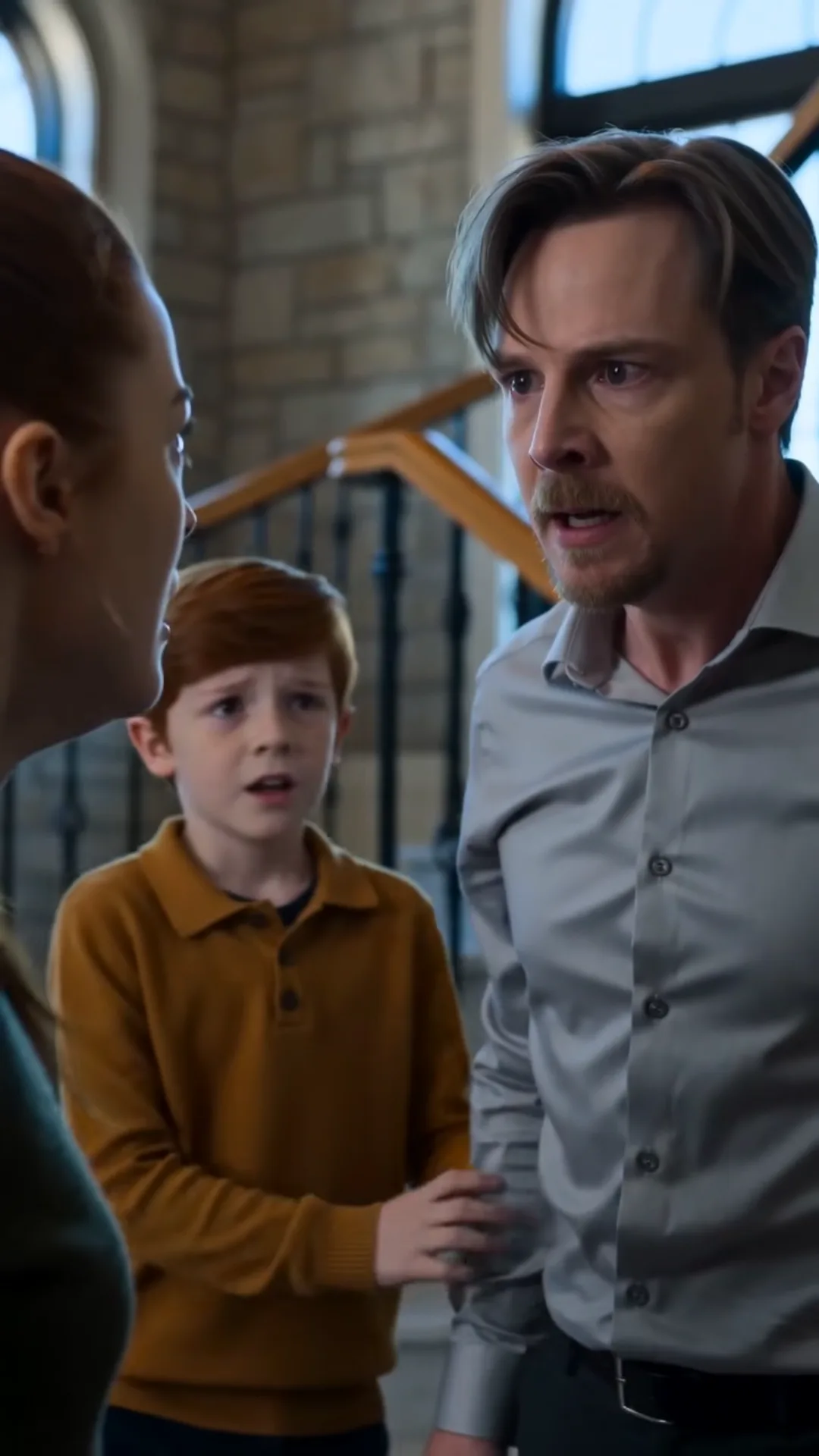
Margaret was three steps from the top when she heard Elena behind her.
"Forgot to tell you," Elena said, climbing the stairs two at a time, her voice light, conversational, the voice of a woman with nothing on her mind but small talk. "Ellery's office called the house line this morning. Something about a signature page."
It was a lie built for exactly one purpose: to get Margaret to stop.
Margaret stopped, one hand still not on the railing, because pride did not release its grip even for something as small as bad news about paperwork.
"What signature page? It's already signed."
"I don't know, they didn't say. Maybe a formality." Elena had reached the step just below her now. "You should call them back before lunch. I can bring you the phone."
"I'll call after we eat."
"Margaret—"
And here is the part that would be argued over, later, in rooms with recording devices and men in gray suits — whether what happened next was one motion or two, whether there was a half-second of hesitation in it or none at all, whether the hand that moved was reaching for balance or already committed to something else entirely.
Elena would never fully answer that question, not even to herself, not even years later lying awake in a much smaller, much colder room than the one she'd shared with Daniel.
What she would remember, in the flat unglamorous detail memory keeps of the worst moments of a life, was this: the beige of Margaret's cardigan sleeve under her palm. The particular give of an old woman's shoulder, more fragile than it looked, more fragile than Margaret herself, in seventy-plus years of never being handled roughly by anyone, had ever had reason to test. The sound — not a scream, because there wasn't time for a scream, but a single sharp intake of breath, the sound of a body registering betrayal a half-second before the mind could process it.
And then nothing under her hand at all, because Margaret was no longer standing.
She went down the way a body goes down stairs when nothing breaks the fall — not tumbling gracefully, the way it happens in films, but hard and awkward and entirely without dignity, elbow catching a step, hip catching the next one, her head, mercifully or not, missing the sharpest edge of the wrought-iron railing by a margin so small it would keep Elena awake for months.
She came to rest at the bottom, on her back, one arm flung out at an angle no sleeping person's arm ever rests in, her pearls scattered — the strand had broken somewhere in the fall — three small white beads rolling to a stop against the base of the railing like something out of a nursery rhyme about broken things.
She did not move.
Elena stood at the top of the stairs, hand still half-extended from where it had made contact, and for one long, suspended moment — three seconds, four, an eternity measured against the sudden silence of the house — she did not move either.
Then something in her, some cold engine that had been idling for days, turned over and caught, and she ran.
She ran down the stairs the way a person runs toward a disaster they had a hand in causing, which looks, to anyone watching, indistinguishable from the way a person runs toward a disaster they didn't — the same speed, the same wide eyes, the same hands reaching out uselessly before there's anything useful for them to do.
"Margaret," she said, dropping to her knees on the cold marble, her voice climbing into a register of alarm that she had, God help her, practiced in a mirror three days earlier without fully admitting that's what she was doing. "Margaret, can you hear me?"
Margaret's eyes fluttered — open, unfocused, then closed again.
A thin line of blood traced from her hairline down toward her ear, dark against the silver hair, bright against the pale marble.
"Margaret. Margaret, wake up. Oh my God. Oh my God, someone—"
And it was here, kneeling over the woman she had just, in one motion too fast to be entirely called a decision and too deliberate to be entirely called an accident, sent down nineteen marble steps, that Elena heard the sound she would later say, under oath, had been the worst moment of the entire day.
A creak.
The third step from the top — the one that always creaked, that everyone in the house knew creaked, that she had forgotten, in the total consuming focus of the last five seconds, could creak under the weight of anyone at all, including a nine-year-old boy who had come out of his room because the sound from downstairs had cut straight through his video game and some animal part of him, some part inherited from a mother he barely remembered and a grandmother who loved him more than her own comfort, had known immediately and without being told that the sound meant something was wrong.
Justin stood at the top of the stairs in his socks, his controller still in one hand, forgotten, dangling from his fingers by its cord.
He looked down at his grandmother, motionless on the marble.
He looked at his stepmother, kneeling over her, hands hovering, face arranged — expertly, professionally, a lifetime of practice compressed into a single expression — into something that looked, to anyone who hadn't been standing exactly where he was standing thirty seconds earlier, exactly like panic.
But Justin had been standing exactly where he was standing.
He had come out of his room at the sound of the creak, not the sound of the fall — the fall had come after, and by the time he reached the top of the stairs, quiet in his socks the way nine-year-olds move when they sense, before they understand, that something in a house has gone wrong, he had seen the last half-second of it.
He had seen his stepmother's hand on his grandmother's shoulder.
He had seen the shove — small, almost gentle-looking from a distance, the kind of motion that could, from the wrong angle or the right amount of denial, be mistaken for someone reaching out to steady a person who was already falling.
But Justin had not been at the wrong angle. He had been at the only angle that mattered, three steps up and slightly to the left, looking straight down the stairwell the way children look at things — without the adult reflex to explain away what they've seen, without the practiced instinct to doubt their own eyes in favor of a more comfortable story.
He had seen Elena push his grandmother down the stairs.
And now he stood at the top of them, controller dangling, socks silent on marble, and watched his stepmother perform the exact opposite of what he had just witnessed, her voice cracking with what sounded — what would have sounded, to anyone else in the world — like genuine terror.
"Someone call 911," Elena was saying, to no one, to the empty house, her hands finally landing on Margaret's shoulder, gentle now, so gentle, the same hand that thirty seconds earlier had not been gentle at all. "Oh God, oh God, she fell, she just — she must have slipped—"
Justin did not say anything yet.
He would learn, in the minutes and hours that followed, that there is a particular kind of quiet that settles over a child who has just seen something no child should see — not shock exactly, not the frozen, wordless shock adults expect and prepare for, but something colder and more deliberate, a nine-year-old mind doing the same kind of math his stepmother had been doing for days, except in the opposite direction, running toward a truth instead of away from one.
He came down the stairs slowly, one at a time, his hand finally finding the railing his grandmother never used, and stood a few feet from where Elena knelt over Margaret's still body, and he looked at his stepmother with an expression that had no cruelty in it at all, only the flat, terrible clarity of a child recording, exactly and permanently, the last thing he needed to see to understand who everyone in his life actually was.
"She's not breathing right," Elena said, not looking at him, her attention consumed by the performance she was giving to an audience of one very small, very quiet boy who had already seen the only performance that mattered. "Justin, baby, go get my phone, it's on the counter, go now—"
Justin did not move.
"Justin."
"You pushed her," he said.
It was not loud. It was not an accusation shouted in fury, the way it would happen later, downstairs, in front of his father, with all the volume and drama the moment seemed to call for.
It was quiet. Flat. A simple statement of recorded fact, delivered in the same voice he might have used to say the sky is gray or dinner's ready, and it was, for Elena, kneeling on the cold marble with her mother-in-law's blood beginning to pool very slightly beneath her silver hair, infinitely more frightening than any scream could have been.
Because a scream could be managed. A scream could be soothed, contradicted, folded into the general chaos of an emergency.
But a fact, stated flatly by a nine-year-old boy who had never once, in Elena's three years of careful, patient cruelty toward him, lied about anything at all, was not a thing that could be managed.
May you like



It was simply a thing that was now, irreversibly, true.
---







