Chapter 10 - Marble Doesn't Cry
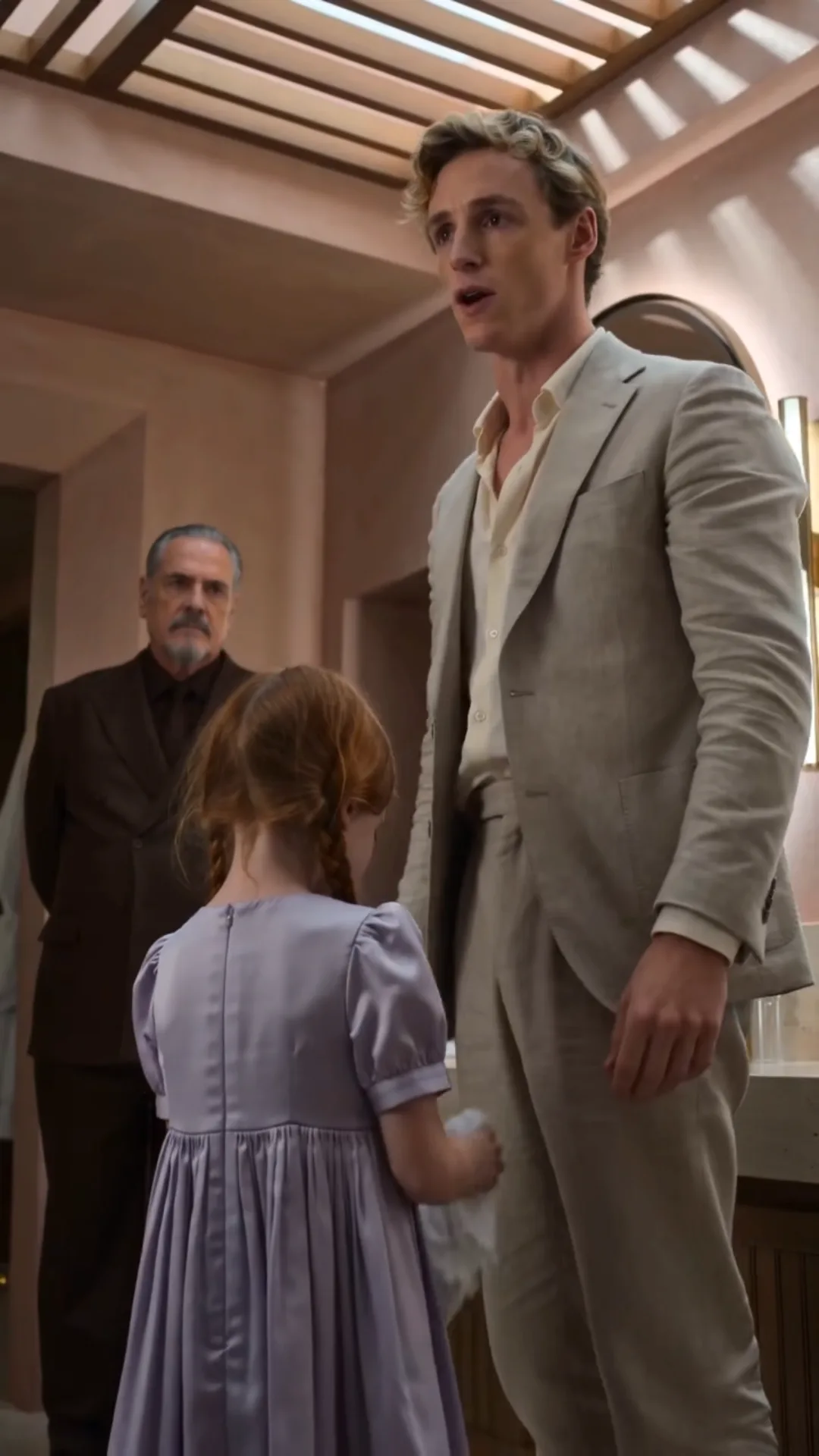
Six months later, the bathroom with the white marble countertop looked exactly the same.
Same gray-veined stone. Same gold fixtures. Same mirror the size of a door.
But nobody in the house thought of it the way they used to.
Luna walked past it most mornings on her way to breakfast, no longer flinching at the sight of it, no longer measuring her own worth against the shine of a surface that had never once asked anything of her.
Sometimes she stopped to look at her reflection in that enormous mirror — not out of vanity, but out of a habit she'd developed without noticing, checking to see if the girl looking back still had the same red, panicked eyes she'd worn the first time she'd stood in that room.
She never did anymore.
The house had changed in ways too many to count, most of them small, invisible to anyone who hadn't lived through the night that started it all.
Camila no longer wore the gray uniform of household staff. She had gone back, at Emilio's quiet insistence and her own long-buried ambition, to finish the nursing degree she'd abandoned eleven years earlier, spending her mornings in classes and her afternoons with Luna, building a life that finally belonged entirely to her.
Rafael had taken over more of his father's responsibilities within the family's businesses, though he made sure — every single day, without fail — to be the one who picked Luna up from school, small hand in his, the same way he'd once walked her down a basement hallway toward a truth neither of them yet understood.
Cecilia and Camila had not become close, not in the way storybooks might promise. Old wounds didn't dissolve simply because time had passed and circumstances had shifted. But something like a truce had formed between them, careful and cautious, built one small gesture at a time — a birthday remembered, a comment softened before it could cut, a slow unlearning of thirty years of certainty that some people simply didn't belong at a family's table.
It was enough. It didn't need to be more than that yet.
Emilio, for his part, had become the grandfather Luna hadn't known to hope for. He taught her to play chess on Sunday afternoons in his study, the same room where, months earlier, he'd made the decision that changed the shape of everyone's lives. He never let her win, which she appreciated more than she could have explained, because it meant that when she finally beat him — three months in, after weeks of careful practice — the victory was entirely hers.
On the six-month anniversary of that night, though none of them marked it as such out loud, the family gathered for dinner in the smaller dining room, the one usually reserved for evenings without guests, without performance, without an audience to manage.
Luna sat between her mother and her father, swinging her feet under the table the same way she had swung them on that kitchen stool six months earlier, though everything else about the moment had changed entirely.
"¿Puedo preguntar algo?" she said partway through dinner. Can I ask something.
"Claro, mi amor," Camila said. Of course, my love.
"¿Qué habría pasado," Luna asked slowly, working through the question with the careful precision children use when trying to understand something important, "si esa noche no hubiera derramado eso en el mostrador? ¿Si nunca hubiera entrado a limpiarlo?"
What would have happened if I hadn't spilled that thing on the countertop that night? If I'd never gone in to clean it?
The table went quiet for a moment, each adult turning the question over privately.
It was Rafael who answered first.
"Creo," he said carefully, "que tarde o temprano, el universo iba a encontrar la manera de ponernos en el mismo cuarto. Tú y yo. Estábamos destinados a encontrarnos, Luna. La mancha en el mostrador solo decidió cuándo."
I think, sooner or later, the universe was going to find a way to put us in the same room. You and me. We were meant to find each other, Luna. The stain on the countertop just decided when.
Luna considered this seriously, the way she considered most things now, with a thoughtfulness that had grown alongside her sense of safety.
"Entonces el mostrador nos ayudó," she said finally, matter-of-fact, the child logic arriving at its own gentle conclusion. So the countertop helped us.
Emilio let out a surprised laugh from the head of the table. "Supongo que sí," he said. Nunca pensé que le debería algo a un pedazo de mármol."
I suppose so. I never thought I'd owe a piece of marble anything.
Even Cecilia, seated near the far end of the table, allowed herself the smallest smile — not warm, not yet, but no longer entirely closed either, a door left slightly ajar where once there had only been a wall.
After dinner, Luna wandered back toward the guest bathroom on her own, drawn by some quiet curiosity she couldn't quite name.
She stood in the doorway for a long moment, looking at the white marble countertop under the soft evening light, remembering the girl who had knelt there with a gray, twisted rag, believing with her whole small heart that her family's survival depended on the shine of a stone surface.
She walked over, slowly, and placed one hand flat against the cool marble.
It didn't feel dangerous anymore. It didn't feel like a judge waiting to decide whether she deserved to stay.
It was just stone.
Cold, smooth, ordinary stone, in a room that had once held the worst night of her short life and, somehow, impossibly, had also held the beginning of everything good that came after it.
"No fue tu culpa," she whispered to the empty room, to the countertop, to the six-year-old version of herself she still carried somewhere inside her chest. It wasn't your fault.
Behind her, in the doorway, Rafael watched quietly, not interrupting, letting his daughter have this private moment of reckoning with a room that had changed both their lives.
When she finally turned and saw him standing there, she didn't flinch, didn't apologize, didn't reach for a rag.
She simply smiled, small and steady, and walked toward him, her hand finding his the way it always did now, without hesitation, without fear.
"¿Lista para dormir?" he asked. Ready for bed?
"Lista," Luna said. Ready.
They walked together down the hallway, past the marble and the gold and the glass, past every surface that had once seemed to hold her family's fate in its reflection, and none of it mattered anymore, none of it had ever mattered, because the thing that had actually decided whether she got to stay had never been the cleanliness of a countertop at all.
It had always been, simply, whether someone loved her enough to kneel down to her level and mean it.
May you like



And now, finally, impossibly, gloriously, she had more people who did than she could count on both small, unstained hands.
THE END







