Chapter 7 - The Study
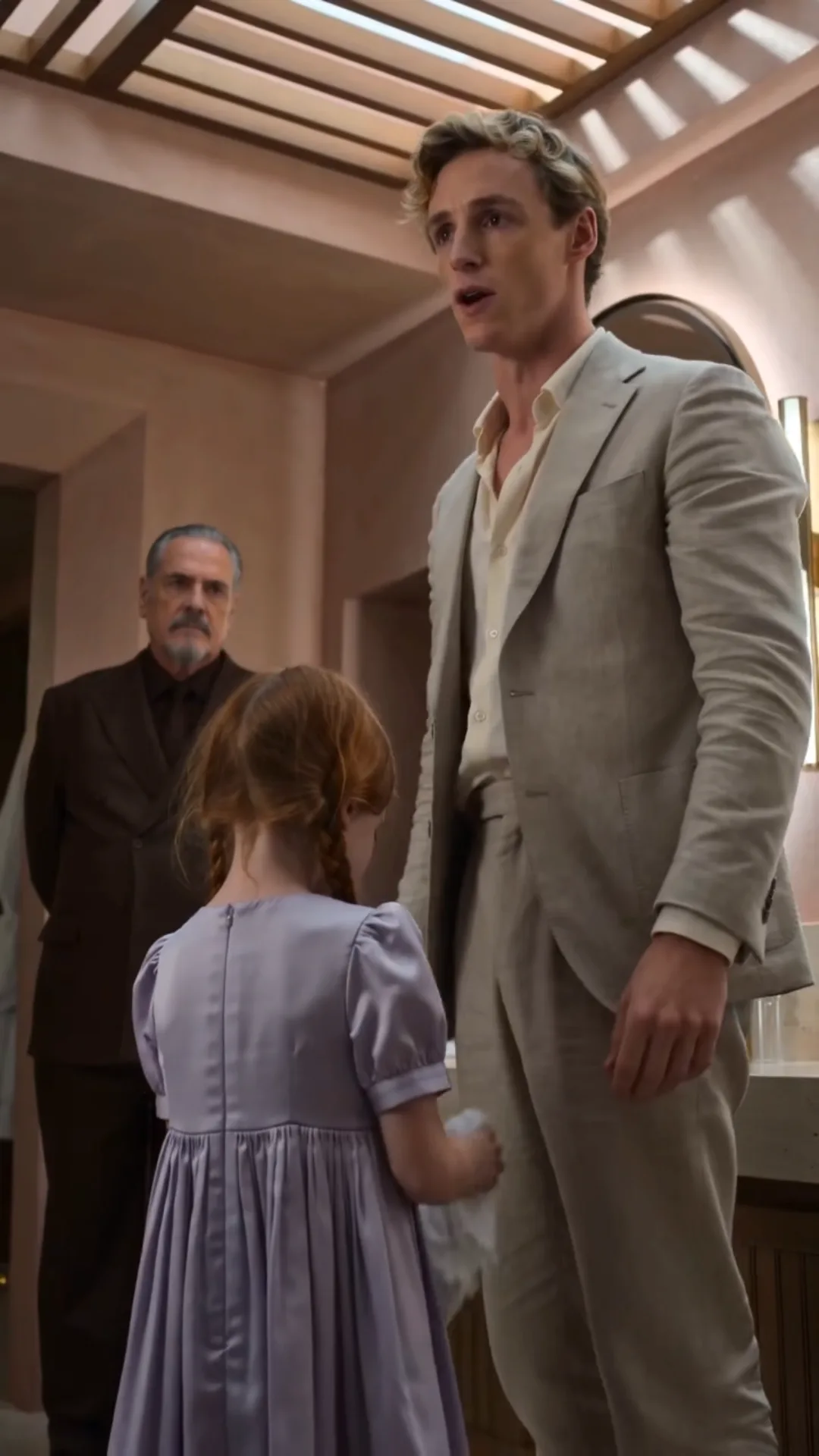
Don Emilio Villalta's study smelled the way it always had — leather, old paper, the faint ghost of cigars he no longer smoked but hadn't quite given up remembering.
He sat behind his desk when Cecilia entered, not looking up right away, his reading glasses low on his nose, a folder of documents open in front of him that had nothing to do with what she was about to say.
"Tenemos un problema," she announced, closing the door behind her with more force than necessary.
Emilio looked up slowly. He had learned, across thirty years of marriage, that Cecilia's problemas came in exactly two categories — things that were actual problems, and things that were merely inconveniences to her sense of control. He had also learned it was rarely obvious, at first, which category applied.
"¿Qué pasó?"
"Rafael," she said, and something in the single syllable of his name carried an entire indictment. "Encontró a una niña llorando en uno de los baños de invitados. La hija de una de las empleadas."
Rafael found a girl crying in one of the guest bathrooms. The daughter of one of the staff.
Emilio removed his glasses slowly, setting them on the desk. "¿Y eso es un problema por qué, exactamente?"
And why, exactly, is that a problem?
"Porque la niña," Cecilia said, each word measured, deliberate, "es su hija."
Because the girl is his daughter.
The study went very quiet.
Emilio's face didn't move for a long moment — not shock, not quite, but the particular stillness of a man recalculating an entire equation in real time.
"¿Estás segura?" he asked finally.
"La cara de la niña lo dice todo," Cecilia said. "Y Rafael no lo negó. Se paró frente a mí como si fuera su deber protegerla. Como si fuera—" She stopped, searching for the word. "Como si ya la hubiera aceptado."
The girl's face says everything. And Rafael didn't deny it. He stood in front of me like it was his duty to protect her. Like he'd already accepted her.
Emilio leaned back slowly in his chair, fingers steepled beneath his chin, an old habit from decades of negotiating deals far less complicated than the one now unfolding somewhere beneath his own roof.
"La mujer," he said. "¿Quién es?"
The woman. Who is she.
"Camila Reyes," Cecilia said, the name arriving with distaste, as if merely saying it aloud cost her something. "Trabajó aquí hace once años. Durante la temporada de verano. Recuerdo haberla despedido."
She worked here eleven years ago. During the summer season. I remember letting her go.
"¿Por qué la despediste?"
Cecilia hesitated, just slightly, a hesitation Emilio caught immediately, having spent enough years married to recognize the small fault lines beneath her certainty.
"Porque la vi con Rafael," she admitted. "Cerca del jardín trasero. No era apropiado."
Because I saw her with Rafael. Near the back garden. It wasn't appropriate.
"¿Y la corriste sin decirme nada?"
And you fired her without telling me anything?
"Era mejor así," Cecilia said, defensive now, her chin lifting. "Rafael tenía diecinueve años. Un futuro completo por delante. No iba a dejar que una empleada del servicio arruinara eso."
It was better that way. Rafael was nineteen. A whole future ahead of him. I wasn't going to let household staff ruin that.
Emilio's expression hardened slightly, something old and disappointed surfacing behind his eyes. "Y en el proceso," he said quietly, "le negaste a mi nieta once años con su padre."
And in the process, you denied my granddaughter eleven years with her father.
Cecilia's mouth opened, then closed. She hadn't expected that framing — hadn't, perhaps, allowed herself to consider it in those terms at all.
"Emilio—"
"¿Sabías que estaba embarazada cuando la corriste?" he asked. Did you know she was pregnant when you fired her?
"No," Cecilia said quickly. Too quickly. "No lo sabía."
Emilio studied his wife's face for a long moment, the way he used to study contracts before signing them, looking for the clause hidden in fine print that would cost him later.
"¿Y si lo hubieras sabido?" he asked. And if you had known?
Cecilia didn't answer.
The silence answered for her.
Emilio rose slowly from his chair, walking to the window that overlooked the back garden — the same garden, though neither of them said it aloud, where a broken gate had once let two nineteen-year-olds believe, briefly, that the world outside their families' expectations might actually let them stay together.
"Tengo una nieta," he said quietly, more to the glass than to his wife. "Once años, y nunca lo supe."
I have a granddaughter. Eleven years, and I never knew.
"Emilio, por favor—no dejes que esto se convierta en algo más grande de lo que es. Rafael es joven. Puede cometer este error y seguir adelante. Podemos manejarlo con discreción, con un acuerdo financiero para la mujer y la niña, algo generoso, algo que las mantenga alejadas sin que nadie tenga que—"
Emilio, please — don't let this become bigger than it is. Rafael is young. He can make this mistake and move on. We can handle it discreetly, with a financial arrangement for the woman and the girl, something generous, something that keeps them away without anyone having to—
"Basta," Emilio said. Enough.
The single word cut through her sentence like a blade, quiet but absolute.
He turned from the window, and for the first time in longer than either of them could easily remember, there was something in his face Cecilia had rarely seen directed at her — not anger exactly, but a kind of grief, old and freshly reopened.
"Toda mi vida he construido esta familia pensando en el apellido," he said. "En el legado. En lo que se ve bien desde afuera. Y en el proceso, me he perdido cosas que nunca voy a recuperar. No voy a dejar que perdamos también a esta niña."
My whole life I've built this family thinking about the name. The legacy. What looks good from the outside. And in the process, I've missed things I'll never get back. I won't let us lose this girl too.
"¿Qué estás diciendo?" What are you saying.
"Estoy diciendo," Emilio said, walking toward the door of his study with a steadiness that hadn't been there when the conversation started, "que voy a conocer a mi nieta esta noche. Y que Camila Reyes y su hija se quedan en esta casa, no como empleadas escondidas en el sótano, sino como lo que realmente son."
I'm saying I'm going to meet my granddaughter tonight. And that Camila Reyes and her daughter are staying in this house — not as staff hidden in the basement, but as what they actually are.
Cecilia's face went through several emotions in rapid succession — disbelief, anger, something close to panic. "Si haces esto," she said, her voice rising, "todo lo que hemos construido, todo lo que la gente piensa de esta familia—"
If you do this, everything we've built, everything people think of this family—
"La gente pensará lo que nosotros les mostremos que piensen," Emilio said simply. People will think whatever we show them to think.
He paused at the door, looking back at his wife one final time.
"Y si esto significa que finalmente tienes que compartir esta casa con la nieta que siempre debiste haber tenido la oportunidad de conocer," he added quietly, "entonces tal vez es exactamente lo que se supone que tiene que pasar."
And if this means you finally have to share this house with the granddaughter you always should have had the chance to know, then maybe it's exactly what's supposed to happen.
May you like



He left the study without waiting for her response, his footsteps steady down the marble hallway, heading toward the staff quarters for the first time in years, toward a small kitchenette where his son, a woman he barely remembered, and a six-year-old girl with his own late mother's eyes were about to have their lives changed by a decision made in a room none of them had been present for.
---







