Chapter 8 - What Pride Costs
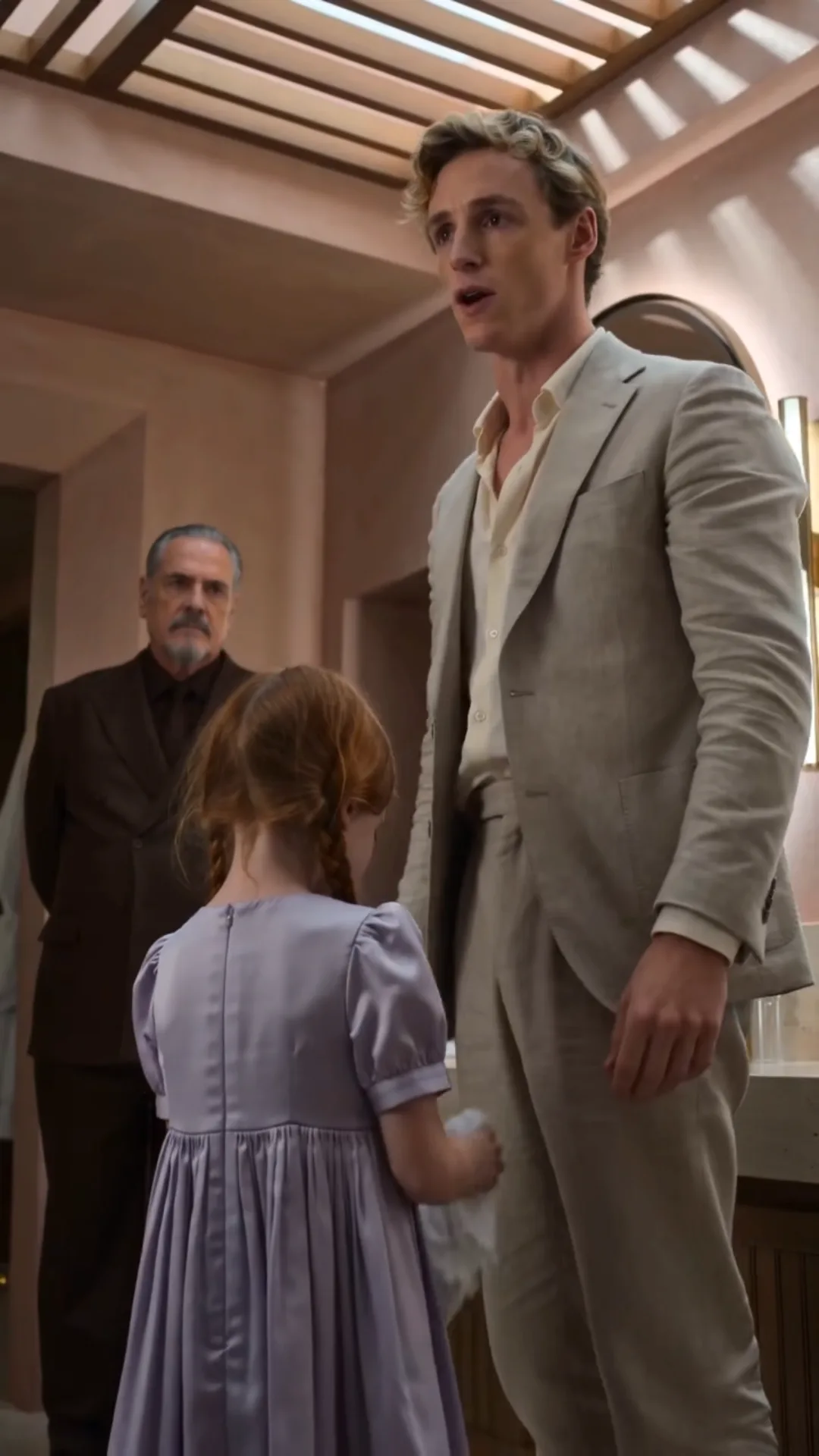
Camila didn't cry when Emilio Villalta walked into the small kitchenette.
She had cried enough for one night already, and something in her had gone past the point where more tears would come easily. What she felt instead, watching the old man's tall frame duck slightly under the low doorway, was something closer to dread.
Rich men did not walk into staff kitchens unless something was about to be taken away.
That had been true her entire life. She braced for it the way she'd braced for every hard thing that had ever come — spine straight, chin level, ready to absorb the blow without letting her daughter see it land.
But Emilio didn't speak the way she expected.
He stopped just inside the doorway, and his eyes went first — before Camila, before Rafael — to Luna, sitting on the stool with her father's arm still loosely around her shoulders.
Something in the old man's face moved.
"Tienes los ojos de mi madre," he said quietly. You have my mother's eyes.
Luna blinked up at him, confused, unsure whether this stranger with the mustache was someone to be afraid of or something else entirely.
"¿Quién eres?" she asked, with the direct honesty only children retain past the age of five.
"Soy tu abuelo," Emilio said. I'm your grandfather.
The word landed in the room differently than papá had an hour earlier — quieter, but no less seismic, another entire relationship dropped into Luna's world within the space of a single evening, another piece of a family she hadn't known existed suddenly folding itself around her.
Camila stood slowly, positioning herself slightly in front of her daughter, an old instinct that hadn't caught up yet to the fact that the threat in the room had, apparently, already changed sides.
"Don Emilio," she said carefully, "si esto es sobre lo que pasó, sobre el mostrador, yo puedo—"
If this is about what happened, about the countertop, I can—
"No es sobre eso," Emilio said gently, raising a hand. This isn't about that.
He looked at her for a long moment — really looked, the way people rarely look at household staff, seeing not a role but a person, a woman who had been nineteen once, in love once, in a garden with a broken gate, before his family's judgment had scattered her life into a shape she never chose.
"Le debo una disculpa," he said. I owe you an apology.
Camila's composure faltered slightly. Whatever she had braced for, it hadn't been this.
"Cuando mi esposa la despidió," Emilio continued, "yo no pregunté por qué. No pregunté a dónde iría. No pregunté si estaba bien. Firmé los papeles que me pusieron enfrente y seguí con mi día. Y en el proceso, permití que mi propia nieta creciera sin que ninguno de nosotros supiera que existía."
When my wife let you go, I didn't ask why. I didn't ask where you'd go. I didn't ask if you were okay. I signed the papers put in front of me and went on with my day. And in the process, I allowed my own granddaughter to grow up without any of us knowing she existed.
Camila's arms tightened around herself, old wounds reopening at a speed she hadn't prepared for.
"No necesito una disculpa," she said, her voice tighter than she intended. "Necesito saber qué va a pasar ahora. Con mi trabajo. Con nuestro lugar aquí."
I don't need an apology. I need to know what happens now. With my job. With our place here.
It was, Rafael realized, watching her, the most honest thing Camila had said all night — the fear underneath every other fear, the practical terror of a woman who had learned that kindness from powerful people rarely came without conditions attached.
"Su lugar aquí," Emilio said, "ya no es el de una empleada, Camila. Es la madre de mi nieta. Eso cambia todo."
Your place here is no longer that of an employee, Camila. You're the mother of my granddaughter. That changes everything.
"¿Y si yo no quiero que cambie todo?" she asked.
The room went still.
Rafael turned to look at her, surprised, something uncertain crossing his face for the first time since they'd found each other again in that hallway.
"¿Qué quieres decir?" he asked. What do you mean.
Camila took a breath, steadying herself, and when she spoke again, there was a fierceness in her voice that hadn't been there a moment before — not anger, but something older and more stubborn, a pride she had carried like armor through eleven hard years.
"No quiero limosnas," she said. "No quiero que me den un lugar en esta casa por lástima, ni porque de repente descubrieron que mi hija tiene su apellido. Trabajé duro toda mi vida sin la ayuda de esta familia. Puedo seguir haciéndolo."
I don't want charity. I don't want to be given a place in this house out of pity, or because you suddenly discovered my daughter has your family's name. I worked hard my whole life without this family's help. I can keep doing that.
"Camila—" Rafael started.
"Déjame terminar," she said, and something in her tone made him fall quiet immediately. "Once años, Rafael. Once años trabajé limpiando casas de gente que ni siquiera me miraba a los ojos, guardando cada peso que podía para que mi hija tuviera algo mejor. No lo hice para que un día alguien llegara y arreglara todo con un cheque."
Eleven years, Rafael. Eleven years I worked cleaning the houses of people who wouldn't even look me in the eye, saving every peso I could so my daughter would have something better. I didn't do it so that one day someone would show up and fix everything with a check.
Her voice cracked slightly, but she pushed through it.
"Lo que quiero," she continued, "es que mi hija crezca sabiendo que su valor no depende de qué tan limpio deja un mostrador, ni de qué apellido lleva, ni de la lástima de nadie. Quiero que sepa que se puede quedar en un lugar porque la quieren ahí, no porque de repente es útil tenerla cerca."
What I want is for my daughter to grow up knowing her worth doesn't depend on how clean she leaves a countertop, or what last name she carries, or anyone's pity. I want her to know she can stay somewhere because she's wanted there, not because it's suddenly convenient to keep her close.
Emilio listened to all of it without interrupting, his expression growing more thoughtful, more respectful, with every word.
When she finished, he nodded slowly.
"Tiene razón en todo," he said. You're right about all of it.
He looked at Luna, who had been watching the entire exchange with wide, careful eyes, absorbing more of the adult world's complicated weight than any six-year-old should have to in a single night.
"Y por eso," Emilio continued, "no le voy a ofrecer un cheque, Camila. Le voy a ofrecer una elección. Puede irse de esta casa mañana mismo, con los recursos que necesite para empezar de nuevo donde quiera, y Rafael seguirá siendo el padre de Luna sin importar la distancia. O puede quedarse, no como empleada, sino como la mujer que mi nieto ama y nunca dejó de amar, en una casa que finalmente va a tratarla como merece."
And that's why I'm not going to offer you a check, Camila. I'm going to offer you a choice. You can leave this house tomorrow, with whatever resources you need to start fresh wherever you want, and Rafael will still be Luna's father regardless of the distance. Or you can stay — not as an employee, but as the woman my grandson loves and never stopped loving, in a house that will finally treat you the way you deserve.
The word ama — loves — hung in the room, and Rafael's eyes flew to his father's face, startled, before settling on Camila's, and something passed between the two of them that neither had allowed themselves to feel fully in eleven long years.
Camila looked down at Luna, who was watching her mother with an expression of pure, unguarded hope — the look of a child who has just been handed, for the first time in her life, the possibility of an ending that doesn't require scrubbing anything clean to earn it.
"Necesito pensarlo," Camila said finally, her voice unsteady. I need to think about it.
"Tómese el tiempo que necesite," Emilio said gently. Take whatever time you need.
He turned to leave, then paused at the doorway, looking back one more time at his granddaughter.
"Buenas noches, Luna," he said softly. Good night, Luna.
"Buenas noches," she answered, still testing the shape of this new grandfather in her mind, this new word, this new room in the house of her life that had just opened up without warning.
May you like



He left, and the kitchenette settled into a heavy, uncertain quiet — three people who had, in the span of a single night, become an entirely different family than they'd been at sunset, none of them yet sure what shape that family would ultimately take.
---







