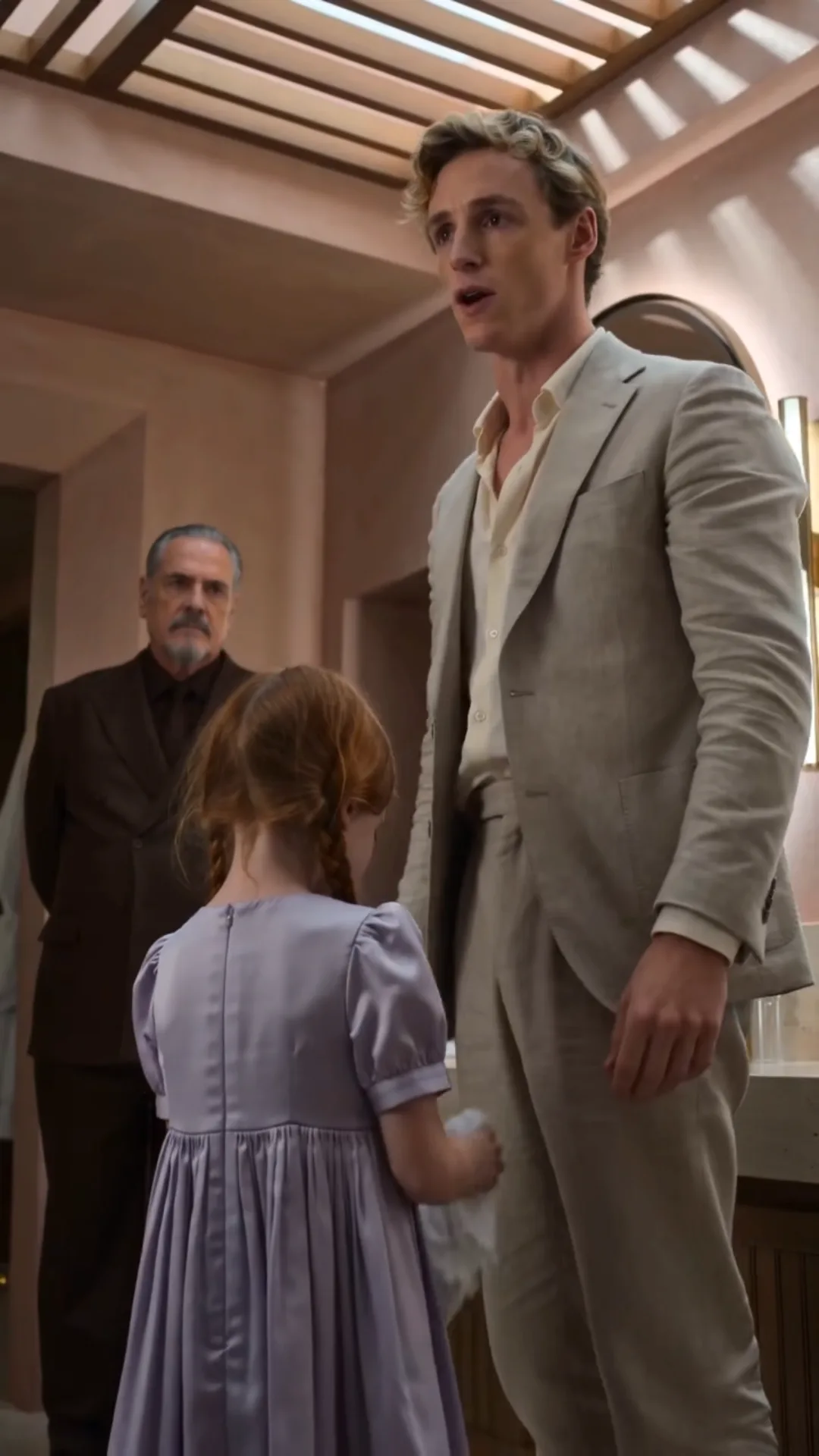
Chapter 2 - The Name
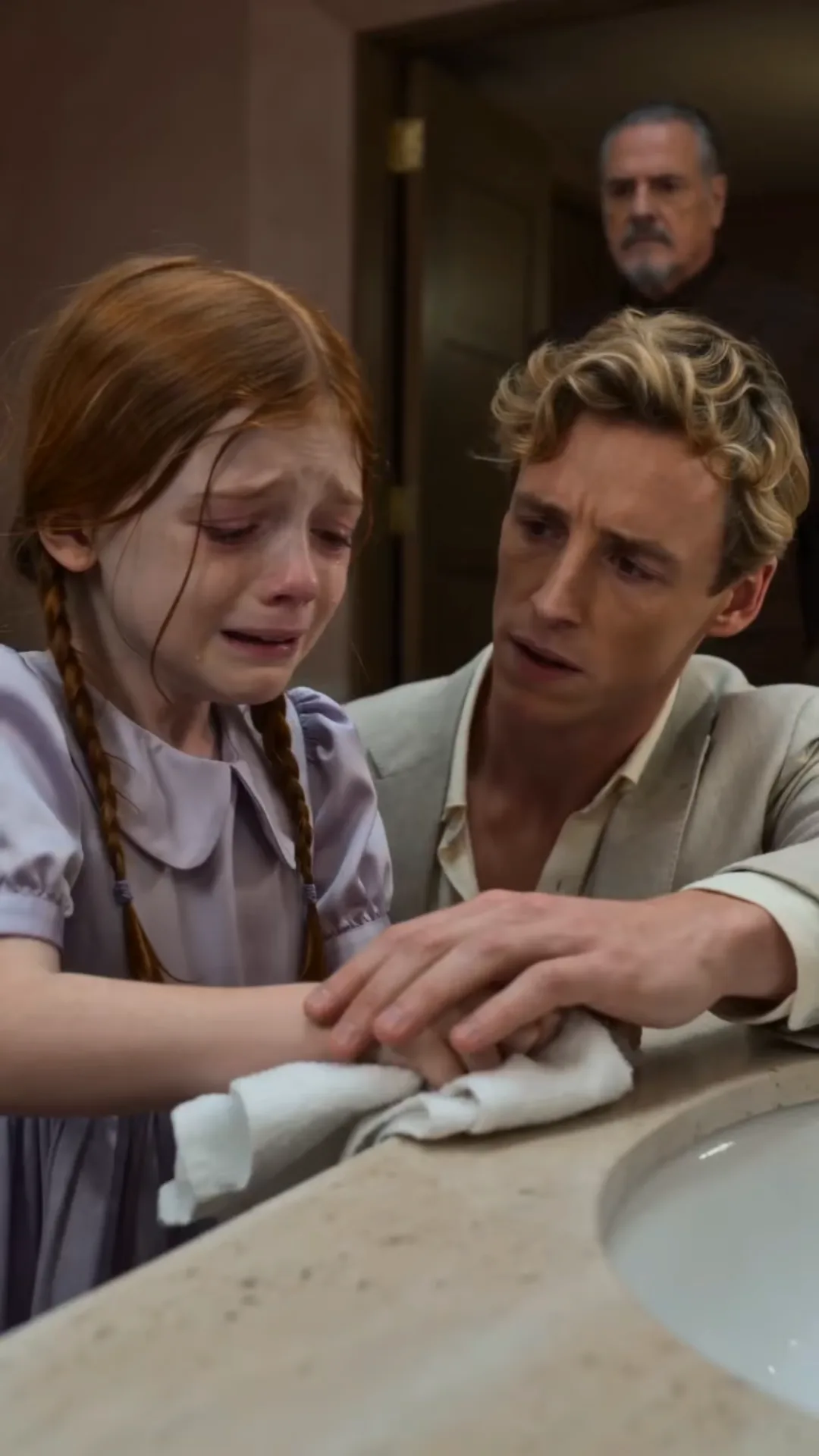
"¿Cómo te llamas?"
The question came out soft, but it landed like something solid — a stone dropped carefully, not thrown.
Luna's eyes were still wet, still red-rimmed, but they held still on his face the way a compass needle holds still once it finds north.
Nobody had asked her that tonight.
Not the driver who'd brought them here in the dark. Not the older woman with the clipboard who'd walked her mother through the service entrance like she was inventory. Not the man in the dark suit standing in the doorway now, who had looked at her the way you look at a stain you're deciding whether to report.
Just her name. Nothing else attached to it. No whose daughter are you, no why are you back here, no does someone know you're in this bathroom.
Just: who are you.
"Luna," she said.
It came out cracked in the middle, like the word itself had been crying too.
He said it back to her once, quietly, testing the shape of it in his mouth the way you test a stair before putting your full weight on it.
"Luna."
Something about hearing her own name repeated — not corrected, not sighed, not followed by a task — made her chin tremble all over again, but differently this time. Not the shaking of fear. The shaking of relief, which sometimes looks exactly the same on the outside.
"Es un nombre bonito," he said. It's a pretty name.
She wiped her nose with the back of her wrist, an ugly, childish gesture she would have been embarrassed by in front of anyone else, but his face didn't flinch, didn't perform disgust, didn't do any of the small cruelties adults do without noticing they're doing them.
"¿Y usted?" she asked. And you?
A small thing moved at the corner of his mouth. Not quite a smile. The idea of one, arriving late.
"Rafael," he said.
Rafael.
She turned the name over silently, the way she turned over smooth stones she found on the ground, deciding whether it was a keeping kind of thing or a throwing-away kind of thing.
It was a keeping kind of thing.
His eyes moved over her face again, slower this time, cataloguing something. The redness under her eyes. The tiny crescents her nails had left on her own palm. The way her whole body still curved slightly forward, like she was bracing for a blow that hadn't landed yet but might.
"¿Cuántos años tienes, Luna?"
"Seis," she said. Six.
He nodded slowly, like six was a very serious number, a number that came with responsibilities he hadn't expected a person that age to be carrying.
Behind him, the mirror caught them both — the man in black crouched low, the small girl in pink with her hair stuck to her face — and for a second it looked less like two strangers in a bathroom and more like something that had always belonged in a frame, hung on a wall somewhere, titled something soft.
"Rafael," Luna said, testing his name in her own mouth now, the way he had tested hers. "¿Usted vive aquí?"
Do you live here.
Something flickered behind his eyes. Complicated. Older than the four seconds it took to cross his face.
"Sí," he said. "Toda mi vida."
My whole life.
There was a weight in the way he said it. Luna, at six, couldn't have named what that weight was, but she felt it anyway, the way you feel a change in air pressure before you understand it's about to storm — a heaviness that didn't belong to a person who was simply telling you where he slept at night.
"¿Y usted le tiene miedo también?" she asked.
Are you scared of it too?
She didn't specify what it meant. She didn't have to. His eyes moved, just barely, toward the doorway, toward the two shapes still standing there in gold and gray, and something tightened along his jaw.
"A veces," he admitted. Sometimes.
It was the most honest thing anyone had said to her all night, and it came from a stranger crouched on cold marble in a suit that cost more than her mother made in a year.
Luna studied him.
Children have a particular kind of radar for lies, tuned finer than any adult's, because children have spent their entire short lives being lied to gently, for their own good, and they learn early to listen underneath the words instead of to them.
There was no lie underneath Rafael's words.
That was what made her stop shaking.
"Mi mamá dice que si algo se ensucia," Luna said, quieter now, almost confessional, "es porque no lo cuidamos bien. Y si no lo cuidamos bien, entonces no merecemos quedarnos."
My mom says if something gets dirty, it's because we didn't take good care of it. And if we didn't take good care of it, then we don't deserve to stay.
Rafael went very still.
Not the stillness of someone who hadn't heard. The stillness of someone who had heard exactly right, and wished he hadn't.
"¿Quién le dijo eso a tu mamá?" he asked. Carefully. Like the question itself was fragile.
Luna's small shoulders lifted, then dropped. A gesture too old for her body, the shrug of someone who has already learned that some questions don't have answers, only origins too tangled to explain.
Rafael's gaze drifted — just for a second — back toward the doorway.
Toward gold silk and a stern, painted mouth.
Toward a gray mustache and a suit dark as a closed door.
When he looked back at Luna, something in his expression had rearranged itself. The softness was still there, but underneath it now sat something harder. Something with edges.
"Eso no es cierto," he said. That's not true.
"¿Cuál parte?" Which part.
"Ninguna," he said. None of it. "Nadie merece quedarse o no quedarse por lo limpio que esté un mostrador."
Nobody deserves to stay or not stay based on how clean a countertop is.
Luna's eyes filled again, but this time the tears came from somewhere different — not fear, but the strange, aching relief of hearing an adult say out loud the thing you'd been too scared to believe on your own.
"¿De verdad?" she whispered. Really?
"De verdad," Rafael said.
And for a moment — just one — the enormous, gleaming, cold-marbled room around them shrank down to the size of the small space between their two faces, and nothing else in the house existed at all.
Then, from somewhere behind him, a voice cut through the quiet like a blade drawn from its sheath.
Luna flinched.
Rafael's hand tightened around hers instinctively, a reflex faster than thought.
The moment they'd built together — small, private, six seconds old — cracked down the middle.
May you like



And somewhere behind Rafael's shoulder, the woman in gold silk took one step further into the room.
---