Chapter 6 - The Kitchenette
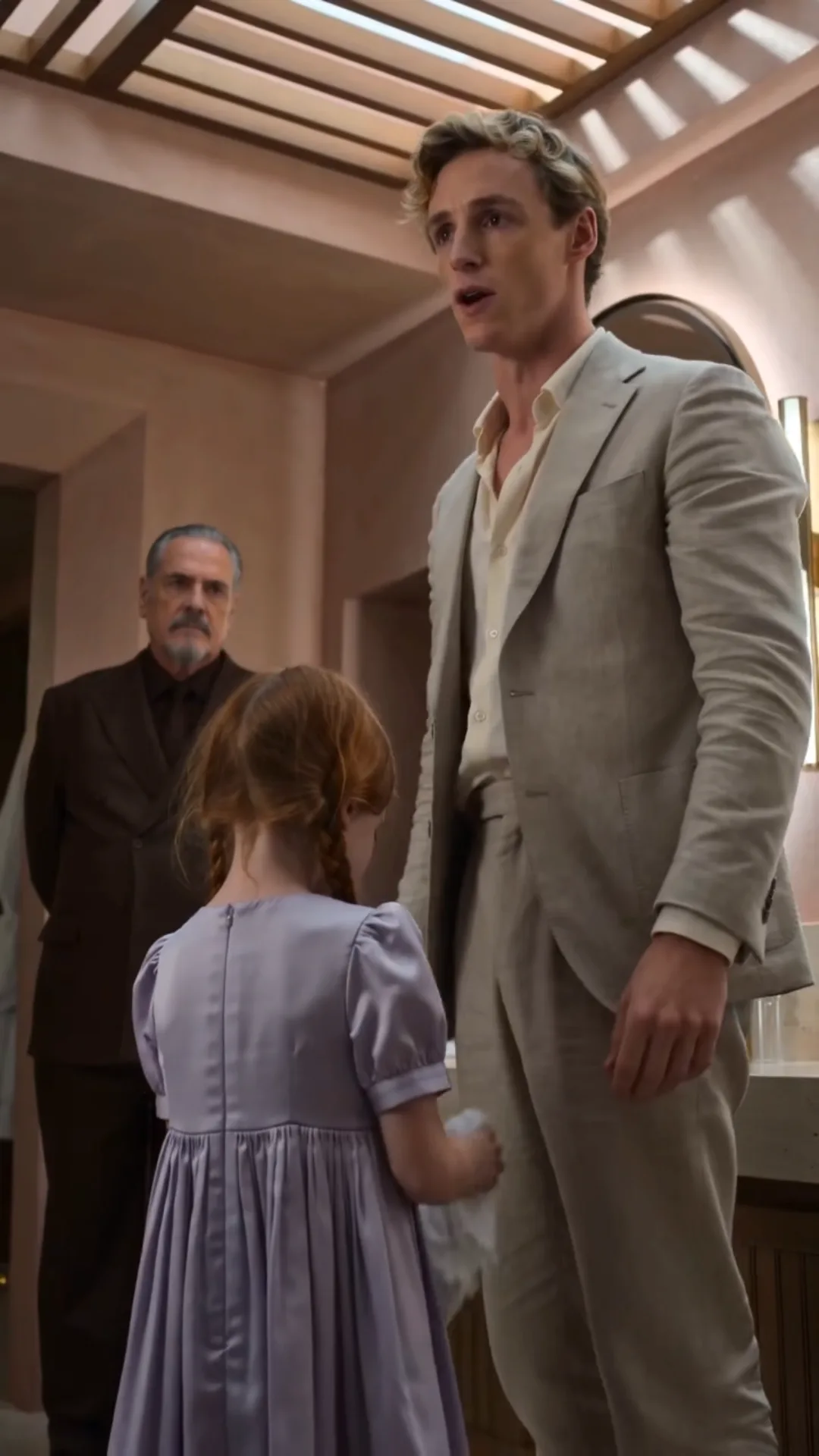
Luna sat on the stool swinging her feet, the plastic cup empty in front of her, the water long finished but her hands still wrapped around it because it gave her something to hold onto.
She could hear voices down the hallway. Not the words, just the shape of them — her mother's voice rising and falling in a way she rarely heard it rise, Rafael's voice low and steady beneath it like a floor holding up something heavier than itself.
She didn't understand grown-up conversations the way she understood grown-up rules.
Rules were simple. Don't touch. Don't run. Don't make noise after eight. Keep things clean, because clean things got to stay and dirty things got sent away — that was the rule that had governed her entire understanding of the world for as long as she could remember, ever since her mother had explained it to her in a small, tired voice the week they'd moved into the little room behind the laundry area.
"Si mantenemos todo perfecto, mi amor, nadie tiene motivo para correrte."
If we keep everything perfect, my love, nobody has a reason to send you away.
Luna had taken that rule and carried it everywhere, the way other children carried a favorite stuffed animal — pressed close, never set down, brought out especially in moments of fear.
Tonight had been full of fear.
She had spilled something on the marble — she still wasn't sure what, a drop of something dark from a glass she hadn't been allowed to touch in the first place, left behind by adults at the party upstairs who never noticed children could see everything, including the messes nobody thought to clean up after themselves.
She had panicked. The dark drop had felt, in that moment, like the edge of a cliff — one wrong stain standing between her entire life staying the same and it collapsing all at once.
So she had scrubbed.
And scrubbed.
And scrubbed until a stranger with kind eyes and a black suit had come and knelt down and told her, without knowing anything about her rule, that nobody deserved to stay or not stay because of a countertop.
She hadn't understood, until this exact moment, sitting alone in a small kitchen with an empty cup, how badly she had needed someone to say that to her.
The voices down the hall grew quieter, then stopped altogether.
Footsteps approached — her mother's familiar rhythm, and beside it, a second set, heavier, unfamiliar, though she already knew whose they were.
Camila appeared in the doorway first, her face doing something complicated, something Luna had never quite seen on her before — not the tired calm she wore most nights, not the sharp fear from earlier in the bathroom, something else entirely, something that looked almost like she'd been crying and laughing in the same five minutes.
Rafael stood behind her, a step back, his hands loose at his sides, his eyes finding Luna immediately and staying there.
"Mi amor," Camila said, crossing the small kitchen and crouching in front of her daughter, taking both of Luna's small hands in hers. "¿Estás bien?"
Luna nodded slowly, though the question felt bigger than a simple yes or no could answer.
"Rafael me contó lo que pasó en el baño," Camila continued gently. "Lo del mostrador."
Rafael told me what happened in the bathroom. About the countertop.
Luna's face crumpled slightly, the shame she'd carried into this kitchen rising back up. "Perdón, Mami. No quería que nos corrieran."
I'm sorry, Mommy. I didn't want us to get kicked out.
Camila's eyes filled instantly, and she pulled her daughter close, pressing a kiss to the top of her damp hair.
"Nunca," she said fiercely, her voice thick. "Nunca vas a tener que hacer eso otra vez. ¿Me escuchas? Nunca."
Never. You will never have to do that again. Do you hear me? Never.
Luna pulled back slightly, searching her mother's face, confused by the sudden certainty in her voice, a certainty that hadn't existed an hour ago.
"¿Por qué ya no?" Why not anymore.
Camila glanced up at Rafael, a silent question passing between the two adults, something negotiated in the space of a look that took less than a second and yet seemed to carry the weight of eleven years.
Rafael crouched down too, joining them at the small height of the kitchen stool, the three of them forming an uneven triangle on the floor of a room meant for standing quickly and eating faster.
"Luna," he said carefully, "¿te acuerdas que te pregunté tu nombre, en el baño?"
Do you remember, in the bathroom, when I asked your name?
She nodded.
"Y tú me preguntaste el mío."
And you asked me mine.
Another nod.
"Hay algo más que quiero decirte," he said, his voice unsteady in a way Luna hadn't heard from him before, "pero no sé si sabes lo que significa todavía. Está bien si no lo entiendes ahorita. Solo quiero que lo escuches."
There's something else I want to tell you. But I don't know if you know what it means yet. It's okay if you don't understand it right now. I just want you to hear it.
Luna looked between the two adults, sensing the shift in the room, the way children always sense when something important is about to be handed to them, even before they understand its shape.
"Yo soy tu papá," Rafael said.
The words hung in the small kitchen for a long moment, suspended, waiting to see what they would become once they landed.
Luna's face did several things in quick succession — confusion first, her small eyebrows drawing together; then something like disbelief, her eyes flicking rapidly between her mother's face and Rafael's, searching for the joke, the trick, the moment someone would say April Fools even though it wasn't April.
Neither adult laughed. Neither looked away.
"¿Mi papá?" Luna repeated slowly, testing the word like she'd tested his name earlier, deciding whether it was a keeping kind of thing.
"Sí," Rafael said. Yes.
"Pero yo nunca—" She stopped, her small hands twisting together in her lap. "Mami dijo que mi papá se había ido. Que no iba a volver."
Mommy said my dad left. That he wasn't coming back.
Camila's face flooded with guilt, quick and sharp. "Mi amor, no sabía—no sabía que él seguía aquí. No sabía que lo íbamos a encontrar así."
My love, I didn't know — I didn't know he was still here. I didn't know we'd find him like this.
Luna processed this the way children process enormous things — not all at once, but in pieces, turning each piece over before setting it aside to examine the next.
"¿Por eso me ayudaste?" she asked Rafael finally, her voice very small. "¿En el baño? ¿Porque sabías que era tu hija?"
Is that why you helped me? In the bathroom? Because you knew I was your daughter?
Rafael shook his head immediately, firmly. "No, mi amor. No sabía. Te ayudé porque estabas llorando y asustada, y eso era suficiente razón para cualquiera."
No, sweetheart. I didn't know. I helped you because you were crying and scared, and that was reason enough for anyone.
"Pero ahora que sabes," he continued, his voice cracking slightly on the words, "te prometo que nunca vas a tener que limpiar nada para ganarte un lugar en ningún sitio. Ni aquí. Ni en ningún otro lugar. Nunca más."
But now that I know — I promise you, you will never have to clean anything to earn your place anywhere. Not here. Not anywhere. Never again.
Luna looked at him for a long moment, her small face working through something too large for her years, and then — slowly, carefully, like testing whether a bridge would hold her weight — she leaned forward and pressed herself against his chest.
Rafael's arms came around her immediately, and Camila watched, one hand pressed to her mouth, eleven years of secrets finally finding their way to the surface in the shape of a small girl's arms wrapping around a father she hadn't known she had, in a kitchen meant for standing.
May you like



Somewhere above them, upstairs, past marble and gold and glass, a woman in a gold silk dress was already making a phone call, already setting something in motion that none of the three of them, in that small warm moment, could yet see coming.
---







