Chapter 10 - Every Piece of Evidence
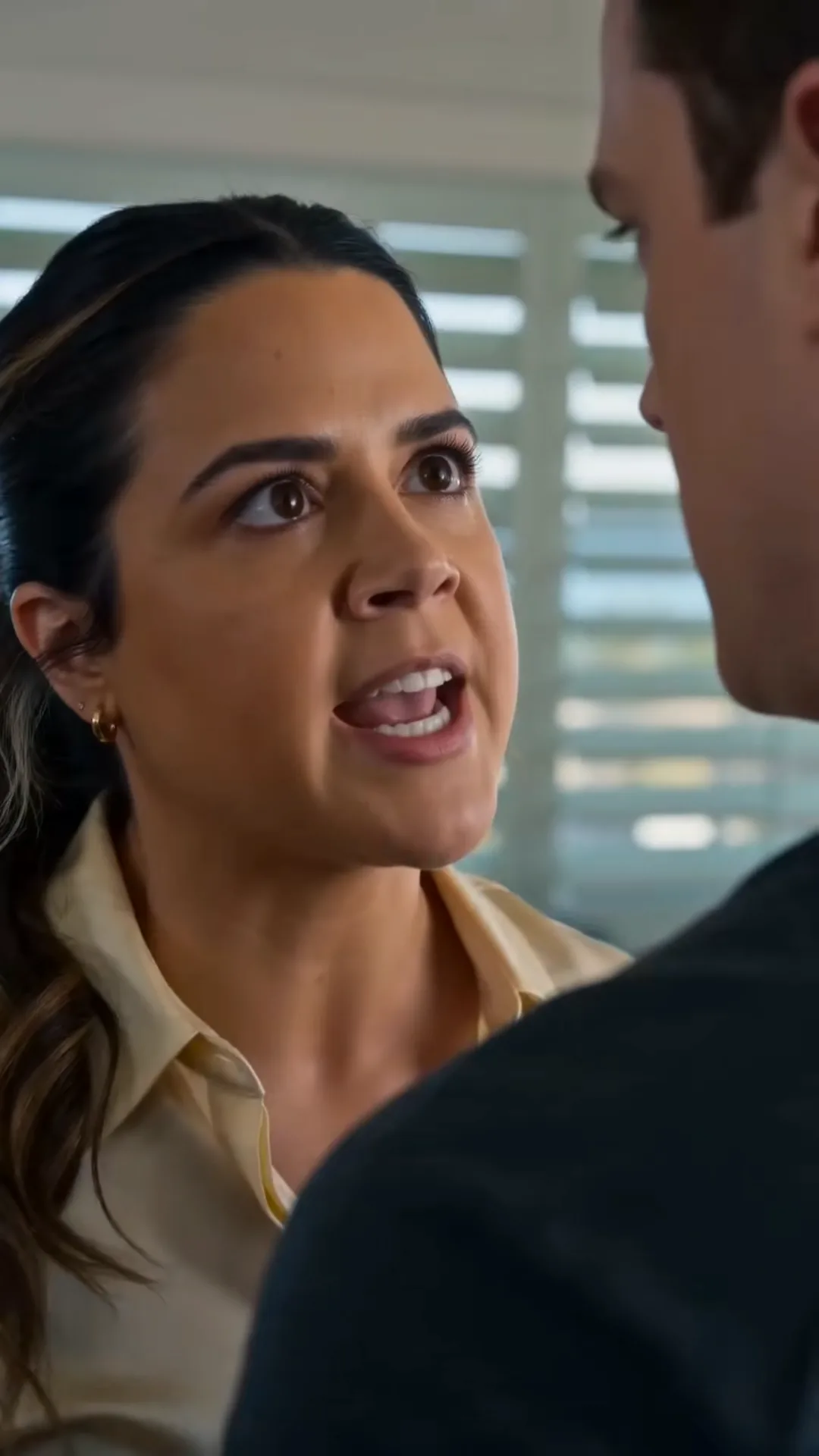
The living room, twenty minutes later, looked like a crime scene photograph of itself — the same beige sofa, the same wooden coffee table, the same warm floor lamp throwing yellow light across walls that had absorbed three years of quiet cruelty and, today, finally, one afternoon of it made loud.
EMS had already checked Eleanor's scalp — a small tear, no stitches needed, a compress and instructions to see her regular doctor within forty-eight hours, and a strong suggestion, gently delivered, that someone stay with her tonight.
"I'll stay," Sarah said, before the paramedic had finished the sentence.
Eleanor, wrapped in a blanket someone had produced from the hall closet, didn't argue.
---
Diane sat on the porch steps with the younger officer, giving her account in a voice that had recovered nearly all its old composure — a family disagreement, an unfortunate physical altercation, regrettable, not premeditated, certainly not what it might look like out of context.
It was, Sarah thought, watching through the front window, a masterful performance.
It might even have worked, on its own, in a world where the living room floor was the only evidence anyone had.
But the living room floor was not the only evidence anyone had.
---
The older officer — Officer Reyes, her nameplate read, the same steady woman who'd crouched beside Eleanor first — stepped back inside and found Sarah in the kitchen, filling a glass of water with hands that had only just stopped shaking.
"Ms. Cross. I understand you have some documentation you'd like to share with us."
Sarah nearly laughed — a short, disbelieving exhale, six weeks compressed into a single breath.
"I have a folder in my car. Deed transfers. A changed beneficiary form. Bank records showing a joint account holder added without my mother's understanding. A statement from a shop owner about my mother being isolated from her routine for months. Seventeen photographs I took myself, ten days ago, documenting a bruise pattern and physical evidence of financial and social control in this house."
Officer Reyes's eyebrows lifted, very slightly — the particular look of someone recalibrating an ordinary domestic call into something considerably larger.
"That's — a lot of preparation for a spontaneous family argument."
"It wasn't spontaneous for us," Sarah said. "It's been building for three years. Today was just the first time it happened where I could see it."
"I'm going to need that folder. And I'm going to need you to walk me through it, start to finish, down at the station, once your mother's settled."
"I'll bring everything."
---
It was the deed transfer that changed the shape of the afternoon.
Officer Reyes, reading through the folder in her patrol car while her partner finished processing statements on the porch, called in the notary's name and license number to dispatch — a routine check, the kind run dozens of times a shift, except this particular license number came back flagged, already, in an open state investigation into a mobile-notary service under scrutiny for facilitating exactly this pattern of elder financial exploitation across three counties.
Sarah's careful, patient, six-week paper trail had, without her fully realizing it, walked directly into a case that state investigators had already been quietly building from the other direction.
And at the center of both — the deed transfer, the beneficiary change, the investment account restructuring — sat one recurring signature.
Not Diane's.
Jimmy's.
Every document requiring legal authorization had been signed, notarized, and filed under the power of attorney held not by Diane, but by her husband — a detail Diane had engineered with the same careful architecture she'd applied to every wall in that house, every favor, every quiet cruelty dressed as help.
If it ever came apart, the signature at the bottom of every incriminating page would be his.
He mostly just signs where she points.
---
The second officer walked back inside at 5:52 p.m., a printout in one hand, and found Jimmy still sitting on the arm of the broken sofa, staring at nothing, one hand still occasionally drifting to the back of his skull where it had struck the armrest an hour before.
"James Cross?"
"Yeah." His voice came out smaller than Sarah had heard it in years — smaller, even, than the passive dinner-table voice she remembered from before she'd left, three years ago.
"I need you to stand up, please, and turn around."
"What? Why?"
"There's an active investigation involving fraudulent transfer of real property and financial instruments, filed under a power of attorney bearing your signature, connected to a notary currently under state investigation. You're being placed under arrest pending further questioning."
"I didn't — I just signed what she gave me, I didn't even read half of it, ask Diane, she'll tell you, I didn't—"
"You can explain everything downtown, sir. Turn around, please."
The handcuffs clicked shut with a small, final sound that seemed, in that quiet living room, disproportionately loud — louder than the fight, louder than the slap, louder, even, than the siren that had first announced the police's arrival.
Eleanor watched from the sofa, blanket still around her shoulders, her expression a complicated wreckage of things — grief, relief, something that might have been the last exhausted collapse of thirty years of hoping her son would someday become the boy who'd once walked four blocks in the rain for a stranger.
Diane, on the porch, watching through the window as her husband was led, hands cuffed behind his back, toward the patrol car, went very, very still.
Whatever calculation had been running behind her eyes since the moment Sarah walked back through that door finally, visibly, failed to produce an answer.
---
Lily stood in the hallway doorway through all of it, holding her mother's abandoned water glass with both hands, watching her uncle walk past her toward the front door in handcuffs.
"Uncle Jimmy," she said, as he passed.
He stopped, just for a second, officer's hand light on his shoulder, and looked down at her — the niece he'd watched grow up over three summers of not doing anything, the small witness whose unprompted phrase, like always, would end up quoted, weeks later, in a formal statement that state investigators found more useful than almost any document in Sarah's careful folder.
"I'm sorry," he said, and it came out cracked, and small, and three years too late.
Lily considered him with the same total seriousness she'd once used to explain dust bunnies shaped like rabbits.
"Sorry doesn't unstand the standing," she said. "You have to do something next time. That's what makes sorry real."
It wasn't a sentence built for a courtroom.
It didn't need to be.
It was a seven-year-old's plain, sideways logic, landing exactly the way plain things land — straighter, somehow, than anything anyone older in that room had managed to say all afternoon.
Jimmy had no answer for it.
The officer walked him out to the car.
---
Later — weeks later, after depositions and a state investigator's follow-up call, after Diane was named, eventually, in an amended filing alongside her husband, after Eleanor's bald patch grew back in slowly, silver, healthy, and her voice, in ordinary conversation, stopped shrinking at every silence — Sarah would sit with her mother on the porch steps, the same steps where geraniums had once been the only garden Diane allowed to survive.
"You saved every piece of evidence," Eleanor said, watching Lily chase fireflies across a lawn that was, once again, allowed to grow a little wild.
"I saved every piece I could find," Sarah corrected gently. "It wasn't enough on its own. It needed you. It needed Lily. It needed all of it together."
Eleanor reached over and took her daughter's hand — the same hand that had, weeks ago, grabbed a stranger's fist out of her hair, thrown a brother off balance onto a broken sofa, held a shaking granddaughter's phone call steady at 12:41 in the morning.
"I used to think evidence meant paper," Eleanor said. "Documents. Proof a court would believe."
"What do you think it means now?"
Eleanor watched Lily's small silhouette dart after another firefly, laughing at nothing, unguarded, loud in a way the house had once, for three careful years, refused to allow.
"I think," she said slowly, "it means anyone brave enough to notice something true, and say it out loud, before it's too late to matter."
May you like



The porch light came on automatically as the evening dimmed, warm and yellow, the same color it had always been, the same color it would be tomorrow — except now, for the first time in three years, nothing underneath that light needed to whisper.
THE END







