Chapter 5 - The Day the Medicine Went Missing
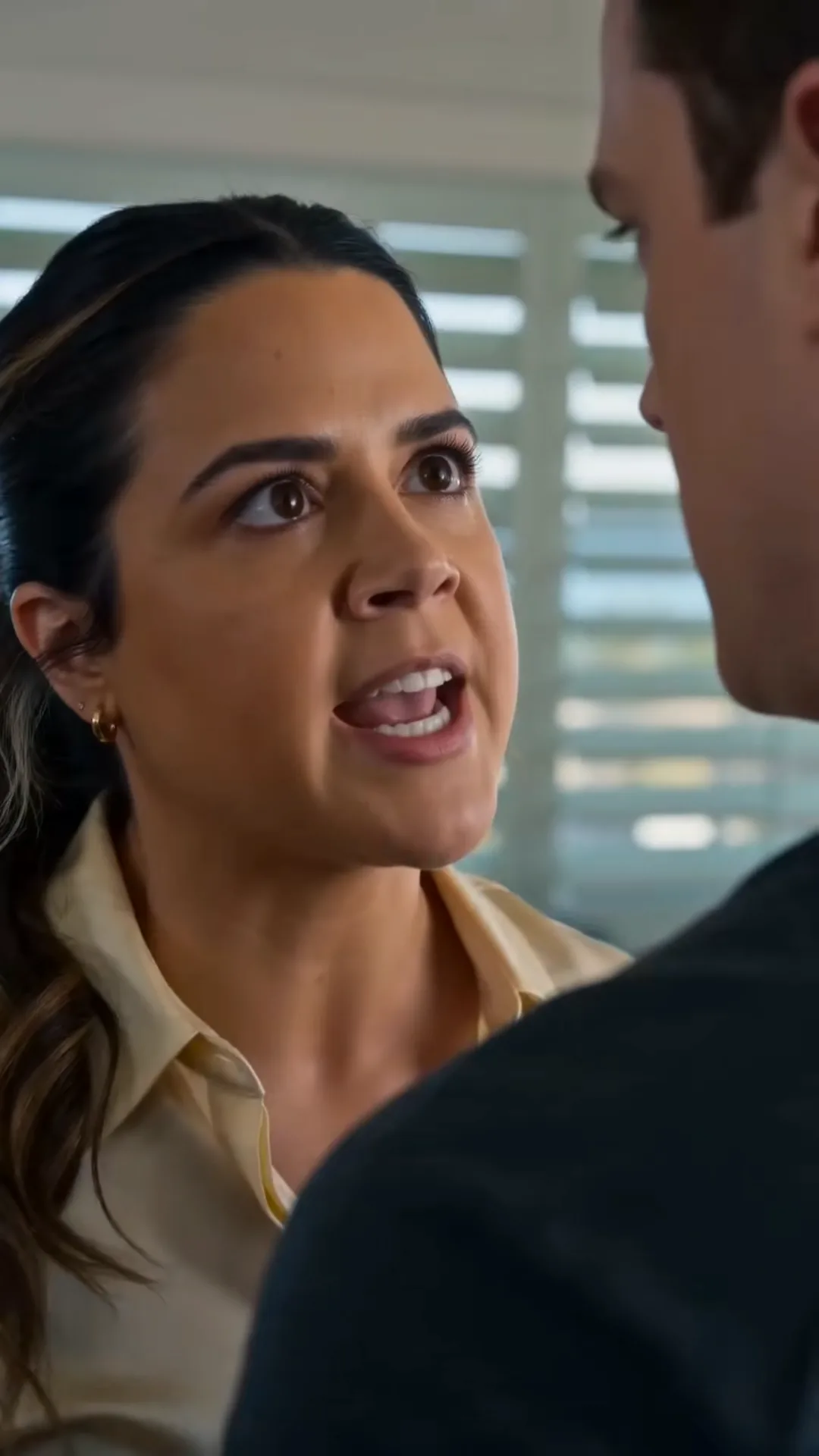
Eleanor's hands shook more than usual that Wednesday, and it had nothing to do with age.
Her heart medication — small white pills in an amber bottle, taken every morning at 7:00 with a glass of water — had not been on the kitchen counter where it always sat.
"Diane," she called, carefully, the whisper-voice Lily had noticed months ago now permanent, load-bearing. "Have you seen my pills?"
Diane appeared in the doorway with a dish towel over her shoulder, composed as a magazine photograph.
"I moved them."
"Moved them where?"
"To my office. I've been meaning to talk to you about this — Dr. Halloran mentioned at your last appointment that we should monitor your dosage more carefully. Given your memory."
"There is nothing wrong with my memory."
"Eleanor." The soft napkin-voice. The narrated concern. "You forgot Lily's visit last week until I reminded you. You forgot the gas bill was due. I'm not trying to upset you. I'm trying to help."
Eleanor had not forgotten Lily's visit. She had been confused about which Saturday, for exactly the length of one sentence, before correcting herself — the way any person, of any age, might momentarily misplace a date in a week that blurred one Tuesday-narration into the next.
But by the time Diane finished speaking, doubt had already done its work. Had she forgotten? Was her memory going? Was this — God, was this the beginning of the thing she'd watched take her own mother, decades ago, slow and merciless?
"I'd like my pills back," Eleanor said, and heard her own voice come out thinner than she intended.
"Of course. I'll bring them to you at seven, with your water, every morning, just like Dr. Halloran suggested. It's really no trouble."
It was, Eleanor understood somewhere underneath the fog Diane had just settled over her, an enormous amount of trouble — the trouble of no longer controlling access to her own heart medication, in her own house, that she had lived in for forty-one years.
But she said, "Thank you," because that was the sentence the house had trained into her, the way water trains a stone smooth over enough years of running across it.
---
Jimmy came home from the hardware store at 5:30, a can of paint under one arm for a fence repair he'd been meaning to get to since spring.
He found his mother sitting very still at the kitchen table, hands folded, staring at nothing in particular.
"You good, Mom?"
"Diane moved my pills."
"Yeah, she mentioned that. Doctor's orders, right? Makes sense — safer if she manages the dosage."
"I've managed my own dosage for eleven years, Jimmy."
Something in her voice — not loud, Eleanor had forgotten how to be loud in this house, but sharp in a way it hadn't been in months — made him actually look at her. Really look.
For one full second, something crossed his face. Recognition, maybe. Or the ghost of the boy who used to walk four blocks in the rain with an umbrella for a stranger.
"I'll talk to her," he said.
He did not talk to her.
He went upstairs, changed out of his work clothes, and by dinner the conversation had evaporated the way most things evaporated in that house — not resolved, just absorbed, the way a sponge absorbs water without anyone asking the sponge how it feels about being full.
---
Lily wasn't there that Wednesday. She was three hundred miles away at her father's, doing ordinary seven-year-old things — a spelling test, a lost tooth, a cartoon about a dog detective.
But two days later, back for the weekend, she noticed the amber bottle sitting on a high shelf in Diane's office instead of the kitchen counter, and she asked about it the way children ask about things — directly, without the social camouflage adults use to soften an accusation into a question.
"Why does Grandma's medicine live in your office now, Aunt Diane?"
Diane's smile didn't waver, but something behind her eyes recalibrated, the way a machine recalibrates when it detects an unexpected input.
"Because I take care of Grandma now, sweetheart. That's what grown-ups do for each other."
"Grandma used to take care of it herself. She told me. She said she's been taking her own medicine since before I was born."
"People change, Lily. People need more help as they get older."
Lily considered this with the total seriousness of a seven-year-old encountering a new fact about the world.
"But Grandma's not confused," she said finally. "She remembers everything. She remembered my whole birthday even though it's not till October. She remembered the song Grandpa used to sing even though he died before I was born. She's not confused. She's just scared of you."
The kitchen went very still.
Diane's dish towel stopped moving on the counter.
"That's not a kind thing to say."
"I'm not trying to be unkind. I'm being a good noticer. Mommy says that's a good thing to be."
Diane crouched down, at last, to Lily's eye level, and her voice dropped into a register Lily had never heard from her before — quiet, and cold, and entirely without the polished warmth of every other sentence she'd delivered in this kitchen.
"Sweetheart, I think it's time your mother stopped filling your head with things. Grown-up business isn't for little girls to repeat."
"I didn't repeat anything Mommy said. I said what I saw."
It was, Lily would understand only much later, the single bravest sentence of her small life to that point.
She did not know, crouched there in pink socks on the kitchen tile, that she had just handed her mother the sharpest piece of evidence in the entire case — not a document, not a deed, not a signature.
A child's unprompted, unrehearsed, devastatingly plain observation, offered to the very person it accused, without flinching.
---
Eleanor watched the whole exchange from the hallway, unseen, one hand pressed flat against the doorframe as though she needed the wall to keep standing.
She thought about seventy-eight years of learning to whisper.
She thought about a granddaughter who had learned, in a fraction of that time, to speak the plain truth directly into the face of the person trying to erase it.
Something in Eleanor's chest — not her heart medication's business, something older, something that had nothing to do with dosage — shifted for the first time in months.
That night, after Lily had gone to bed and Diane had retreated to her binders in the office, Eleanor sat at the kitchen table with a pen she had to search three drawers to find, because pens, too, had a way of disappearing in this house.
She wrote a short letter.
Not to a lawyer. Not to the police.
To her daughter.
Sarah, it began, the handwriting shakier than it used to be, but the words, for the first time in three years, entirely her own. I have not been honest with you about how things are here. I think I have not been honest with myself either. I would like you to come home, if you are willing. I do not know how to ask for help. I am asking anyway.
She folded the letter, addressed an envelope from memory to a P.O. box Sarah had used years ago and might not use anymore, and placed it in her cardigan pocket, planning to mail it the next time — however rare that had become — she found herself alone near a mailbox.
She did not know that four hundred miles away, in a motel room that smelled like carpet cleaner, her daughter had already decided to come home without waiting for any letter at all.
The mail, in the end, would never need to be sent.
May you like



But the writing of it mattered anyway — the act of a woman, after three years of practiced silence, finally putting her own true voice down on paper, addressed to someone who had never once stopped loving her, even from four hundred miles and three years of unanswered distance away.
---







