Chapter 4 - What the Files Wouldn't Say
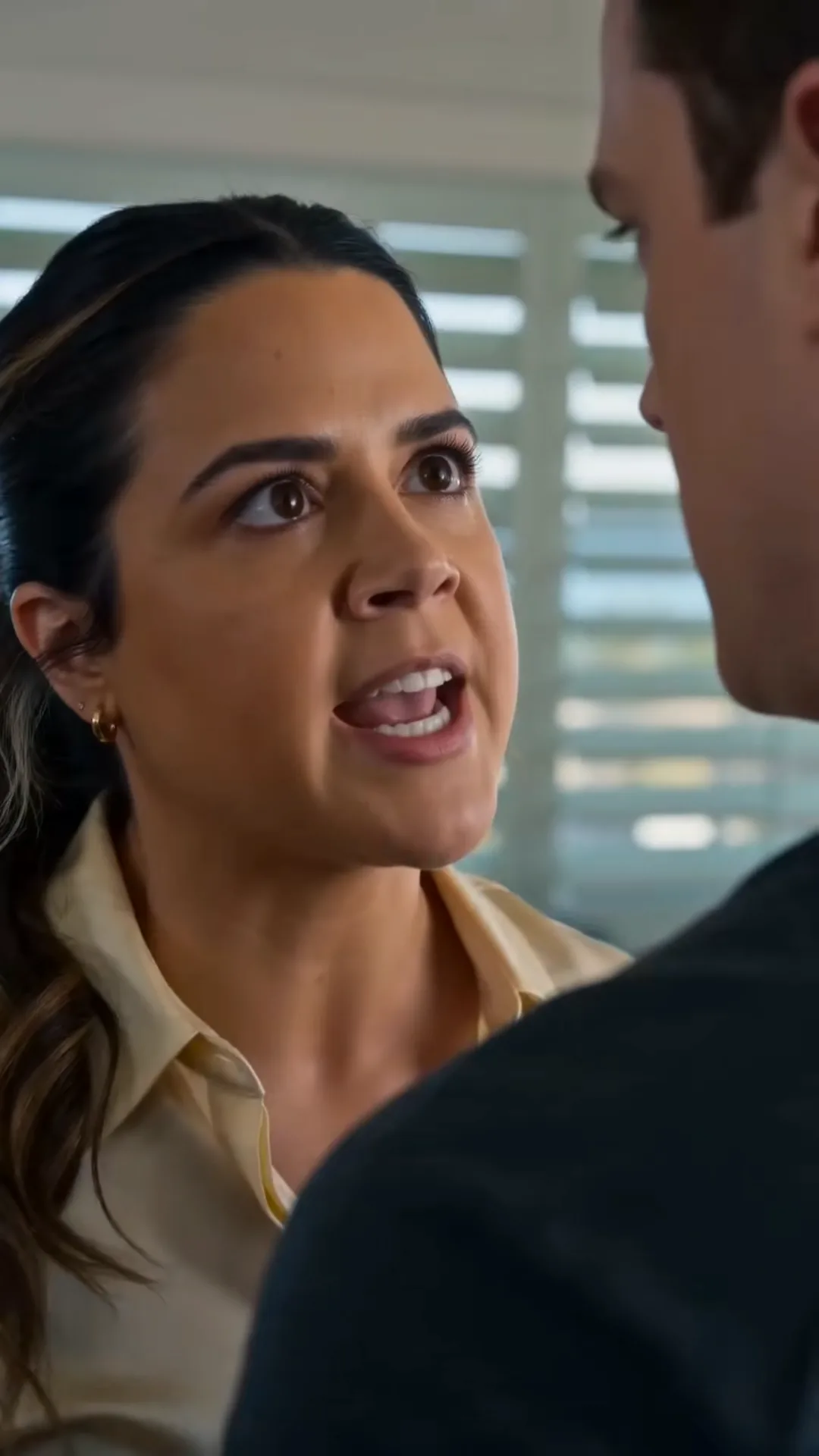
Priya's office smelled like coffee and old paper, the specific smell of a law practice too small to afford the fancy carpeting that swallows sound.
"I pulled what I legally could," she said, sliding a folder across the desk. "Which isn't much, since you're not on the accounts. But public records don't need permission."
Sarah opened the folder.
Property records. A deed transfer, filed fourteen months ago, adding Diane Cross as a joint owner on the Birchwood Lane house — the house Eleanor had owned outright since her husband's death, the house with no mortgage, the house worth, according to the county assessor, just north of four hundred thousand dollars.
"She put Diane on the deed."
"Your mother put Diane on the deed," Priya corrected gently. "Or someone with power of attorney put Diane on the deed, using your mother's signature, which may or may not have been a signature your mother actually understood she was giving."
Sarah's finger traced the notary stamp at the bottom of the page.
A name she didn't recognize. An office address two counties over — nowhere near Birchwood Lane, nowhere near any notary Eleanor would have walked into on her own.
"Mobile notary," Priya said, following her gaze. "They come to you. Convenient, if you're, say, escorting someone through a signature they might otherwise ask questions about."
---
There was more in the folder.
A UCC filing — a lien, technically, though what it secured was murkier — attached to Eleanor's investment account at a firm Sarah had never heard of, established nine months ago.
A change-of-beneficiary form for Eleanor's late husband's small life insurance policy, the one meant, for thirty years, to be split evenly between Jimmy and Sarah when Eleanor eventually passed.
Filed six months ago.
New beneficiary: Diane Cross. One hundred percent.
Sarah read the line three times before it settled all the way into her body.
"She wrote me out completely?"
"She, or someone advising her, wrote both of you out," Priya said. "Jimmy's name isn't on it either. Just Diane's."
That detail sat strangely in the room.
If this had simply been greed — a wife maneuvering to inherit through her husband — Jimmy's name would still be somewhere on the paperwork, a beneficiary alongside or instead of his sister. Cutting him out too meant something else. Something colder. Something that suggested Diane wasn't building a nest egg for her marriage.
She was building one for herself.
"Does Jimmy know?" Sarah asked, and hated the small, foolish hope still hiding inside the question — the hope that her brother might still be salvageable, might be as much a victim of this house's architecture as their mother.
"I can't tell you what's in his head," Priya said. "I can tell you what's on the page. And on the page, he's the one who signed the deed transfer. He's the one whose name is on the power of attorney that authorized the investment account changes. His signature's on almost everything."
He mostly just signs where she points.
Grace's words, from behind the bank, weeks ago, echoed back with new and terrible weight.
---
Sarah drove to the county courthouse the next morning and requested Eleanor's guardianship and capacity filings — a long shot, but worth checking, because sometimes the most damning document in an elder-abuse case wasn't a financial one.
Sometimes it was medical.
There was nothing on file. No guardianship petition. No capacity evaluation.
Which meant, technically, legally, Eleanor Cross was a competent adult who had signed away her house, her investment account, and her husband's insurance policy of her own free will.
That was the cruelest part of what Priya had been trying to explain from the very first phone call.
Undue influence didn't always look like a crime on paper. It looked like a signature. A competent woman's signature, on documents a court would presume, absent other proof, she understood and wanted.
The proof had to come from somewhere else.
It had to come from the people who'd watched the pressure applied — the grip on the wrist, the mobile notary who never asked Eleanor a single question alone, the four months of missed Tuesdays at the card shop, the narrated feelings at a dinner table that rewired what a woman believed about her own mind.
"We need a paper trail and a human trail," Priya said, closing the folder. "The documents prove opportunity. They don't prove coercion. For coercion, we need someone who saw it happen. Someone credible. Someone a court — or a detective, honestly, before it ever gets near a court — would believe."
Sarah thought of a seven-year-old under a bed.
Of an old woman saying please four times, out loud, into a phone held by a child small enough to fit in a shadow.
"I might have that," she said quietly.
"Sarah." Priya's voice sharpened, not unkindly, but with the particular caution of a lawyer watching a friend walk toward a cliff. "If your source is a seven-year-old, that complicates things. Courts are careful with child witnesses. It has to be handled right, or it gets thrown out, or worse, it gets used against you — used to say you're coaching her, or that a kid's word can't be trusted."
"I'm not going to put Lily on a stand."
"Then what are you going to do?"
Sarah looked down at the deed transfer, at the notary stamp from two counties over, at a signature that was technically her mother's and technically meant nothing about what her mother had actually wanted.
"I'm going to go back," she said. "And I'm going to see it myself."
---
That night, she called Mrs. Oduya to check on Lily one more time before bed, and got, instead of the retired teacher's warm voice, three rings of nothing and then voicemail.
Panic, quick and electric, before she remembered — Thursday. Lily's regular custody swap. She was with her father this week, safe, boring, uneventful, exactly as scheduled.
Sarah exhaled and sat back against the motel headboard, files spread across the bedspread like the night before, like every night for two weeks now.
She thought about the phrase Priya kept using — human trail.
The files were a skeleton. Dates, transfers, signatures, numbers. True, all of it, and useless, most of it, without a body of testimony wrapped around the bones.
She needed to see the house with her own eyes.
Not sneak past it in a car with the windows up, cataloging a mailbox moved ninety feet toward the street.
She needed to walk back inside — as a daughter returning, unannounced, the way daughters do — and let the house show her, in real time, exactly what it had become.
She thought of her mother's whisper, the one Lily had described without understanding why it existed.
She thought of Jimmy signing where Diane pointed, pen moving without a mind attached to it anymore.
And she thought, with a clarity that frightened her a little, that whatever she walked into when she finally opened that door, she needed to be ready to see it exactly as it was — not the house from her childhood, not the family she wished were still intact, but the thing three years of silence had actually built.
She closed the folder.
She picked up her keys.
Somewhere in the back of the closet at the motel, still folded in her suitcase, was the good coat her mother had given her the Christmas before she left — dark green wool, a little too formal for a courthouse hallway, entirely appropriate, it turned out, for walking back through a front door she hadn't opened in three years.
She hung it by the door where she'd see it in the morning.
Tomorrow, she told herself.
May you like



Tomorrow, or the day after — whenever the files ran dry and only the house itself could tell her the rest.
---







