Chapter 10 - After the Marble
The ambulance that came for Vivian that night was not, in the end, dramatic.
No sirens on the long gravel drive, no flashing lights bouncing off the glass walls — Daniel had asked for that specifically, quietly, on the phone, once he'd finally gotten both children settled and had a moment alone in the kitchen to make the calls that needed making.
"She needs help," he told the calm voice on the other end of the line. "Not an emergency. Not a scene. Just — help. Tonight, if you can."
They came without sirens.
Vivian went with them without arguing, which frightened Daniel more, in its way, than if she had fought it — the exhausted, almost relieved compliance of someone who has been holding a weight alone for so long that even a stranger's hands, professional and unfamiliar, offering to take some of it, feel like mercy rather than intrusion.
She hugged both children before she left.
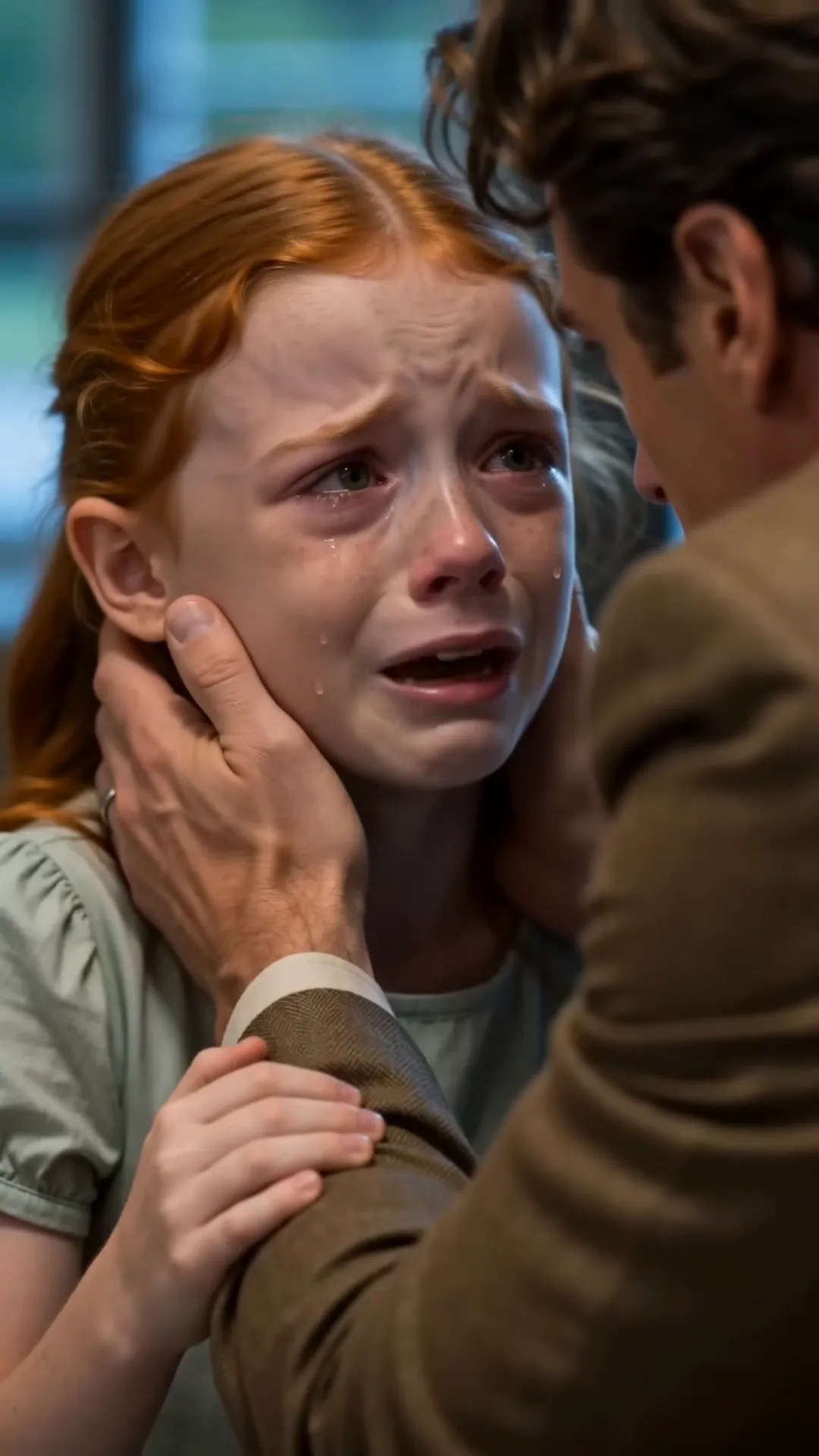
She held Emily's face the way Daniel had held it on the marble, and said, very quietly, "I'm sorry, baby. I'm going to get better. I promise this one for real."
Emily did not have the private mathematics to know, yet, whether this promise would hold where the others had eventually broken.
She said "okay" anyway, because some promises, she was learning, deserve to be believed at least once more before you decide how much weight to actually put on them.
The house, in the days that followed, changed in small, specific ways.
Daniel canceled the relocation offer — not immediately, not in a single dramatic phone call, but over the course of several long conversations with the recruiter, explaining that his family currently needed him rooted somewhere familiar far more than they needed a fresh start somewhere new, that uprooting everything right now would be one upheaval too many stacked on top of another.
He took a different position instead, one based entirely in the home office three miles from the house, a title with less prestige and a smaller number attached to it, and he signed the paperwork for it on the same kitchen island where, days earlier, a wine glass had slipped from someone's fingers and left a small dark stain that never fully came out of the tile grout, no matter how many times the housekeeper scrubbed at it.
Emily got new crutches — the old ones retrieved from the gravel by the pond the morning after, cleaned and returned to her, but replaced within the week by a set she got to decorate herself, stickers finally chosen and applied, small stars and a single defiant dinosaur running down one aluminum pole.
She stopped counting the stairs quite so often.
She still counted things sometimes — the private mathematics did not disappear overnight, habits built over months of vigilance do not dissolve simply because the reason for the vigilance has, for now, eased — but the numbers changed their character. She counted, instead of danger signs, the ordinary good things: how many nights in a row her father tucked her in himself instead of calling from an airport. How many times Theo laughed at something silly during an ordinary Tuesday dinner. How many days it had been since anyone in the house had needed to whisper a knock-code through a closed door.
That last number kept climbing, slowly, steadily, and stayed climbing.
Vivian came home six weeks later — the same span of time, Emily noted privately, as the cast had taken to heal, though she did not mention this particular coincidence out loud to anyone, filing it away instead in the part of her that still, quietly, kept records.
Her mother was different in ways that were hard to name but easy to feel.
She still had bad days. Daniel learned to recognize them the way Emily always had — the particular tightness around the eyes, the too-careful way she moved through certain afternoons — except now, on those days, someone actually said something out loud about it, instead of everyone silently rearranging the house around an unspoken rule.
"I'm having a hard day," Vivian would say sometimes, plainly, at dinner. No performance in it, no dinner-party polish covering it over.
"Okay," Daniel would say. "What do you need?"
It was such a small sentence. It had taken an entire family nearly falling apart on a marble hallway floor for anyone to finally think to ask it.
On the six-month anniversary of the night in the hallway — a date nobody marked on any calendar, but one that Emily, predictably, kept private track of — the family stood together by the ornamental pond one evening, the low landscape lights just beginning to switch on along the water's edge.
Theo, three months older now and considerably more sure-footed, crouched at the pond's edge to look at the fish, exactly as he had that terrible afternoon.
Emily did not throw herself forward this time.
She simply crouched down beside him, one hand resting lightly on the back of his shirt — not gripping, not bracing for disaster, just present, just watching — while behind them both their parents stood together in the gathering dusk, close enough to reach either child in under two seconds if it ever came to that again.
"Fish," Theo announced, pointing.
"I see it," Emily said.
The marble hallway behind them, visible through the glass wall of the house, caught the last of the evening light and threw it back in soft, ordinary gold — no longer a shallow, glowing river swallowing a family's silence, just a floor, in a house, where four people were slowly, imperfectly, learning to say the true things out loud before the true things had to be dragged out of them by an emergency.
Emily glanced back once at the house.
She was not counting anything in particular. She was simply looking, the way a person looks at a place they have decided, cautiously but genuinely, to trust again.
May you like



Then she turned back to her brother, crouched beside him in the low gold light, and let him show her the fish for the third time, as though it were the very first.
THE END







