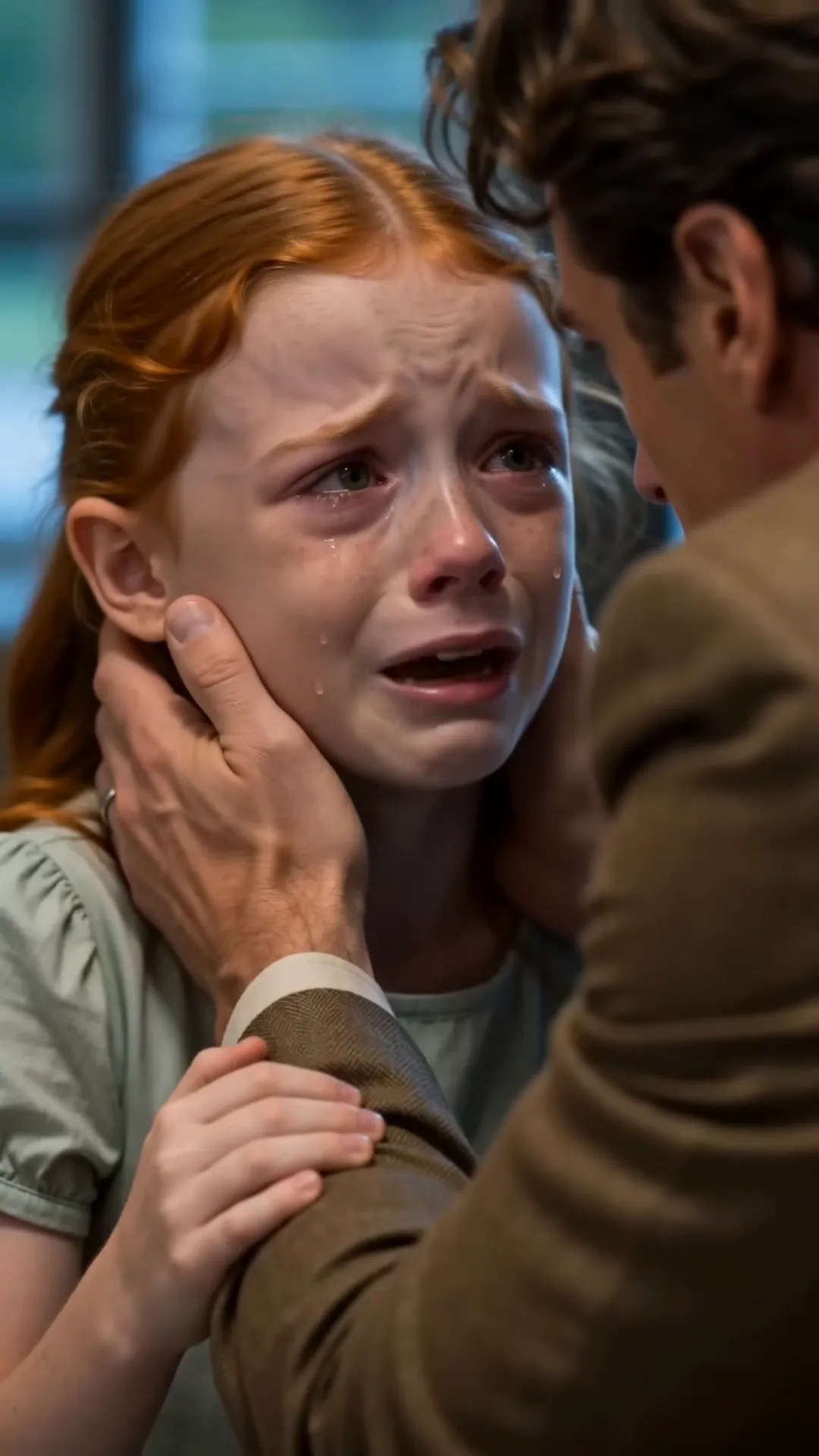
Chapter 2 - Small Mathematics
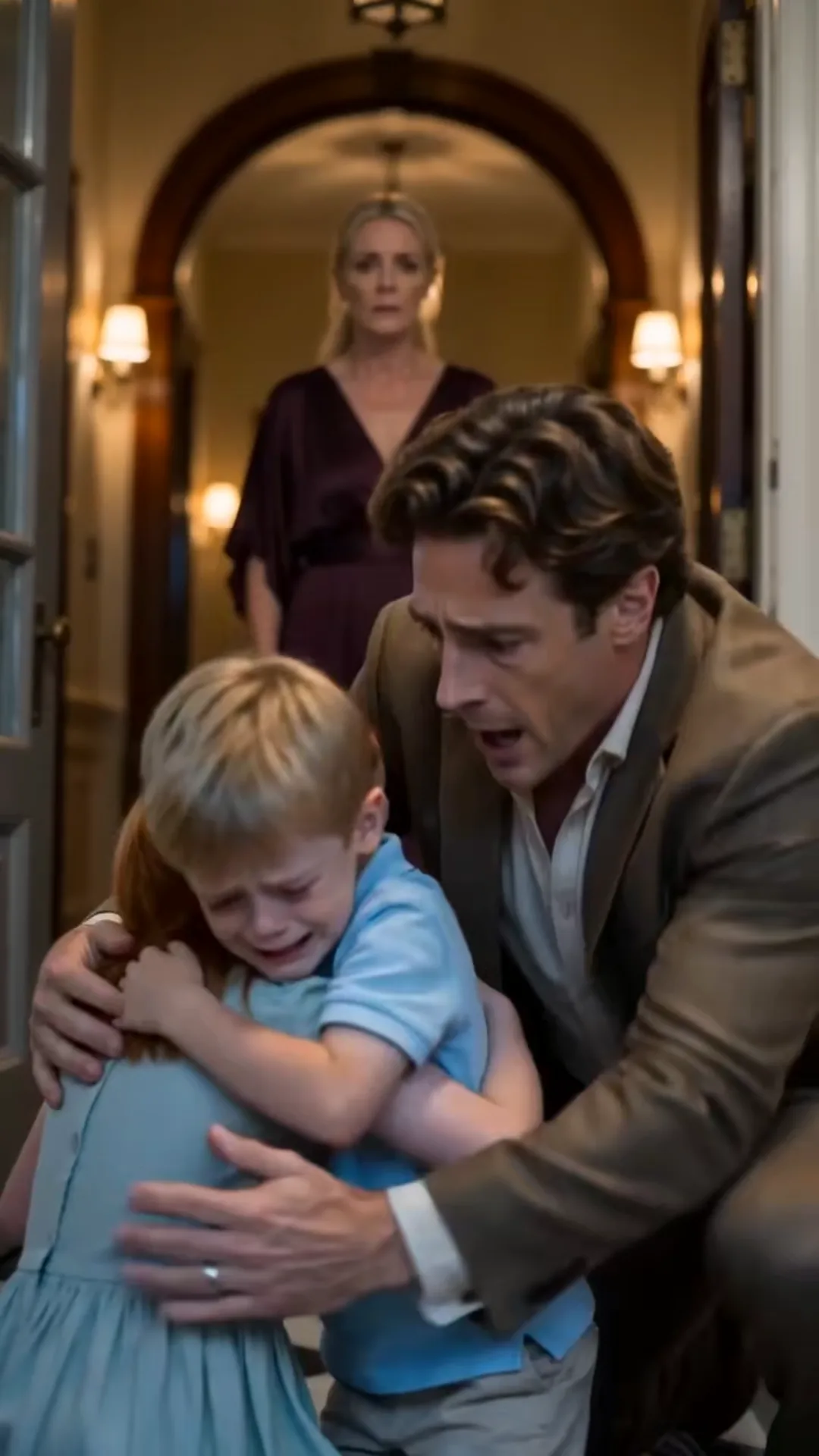
Six weeks earlier, Emily invented a game with numbers.
She did not tell anyone it was a game. She simply began doing it, quietly, the way children build private systems to survive rooms adults have stopped paying attention to.
The game went like this: count everything twice.
Count the stairs going up — fourteen — and count them again coming down, just to be sure fourteen was still fourteen, that nothing about the house had changed its mind while she wasn't looking.
Count the minutes between when her mother closed the bedroom door and when the bedroom door reopened.
Some days it was forty minutes. Some days it was one hundred and ninety.
She did not know yet that a number like one hundred and ninety, for a woman locked alone in a room with the blinds drawn, could mean something had gone quietly, dangerously wrong on the other side of that door. She only knew that longer numbers made her chest feel tight, the way it felt right before she was about to be in trouble for something she hadn't done yet.
She counted her brother's naps too.
Theo napped best against her shoulder, which meant that on the days her mother's door stayed closed for a long number, Emily would sit on the playroom rug with Theo's whole small weight leaned into her side, and she would count his breaths instead — one, two, three — because breath-counting steadied her hands, and because as long as she was counting his breaths, she was, in some small technical sense, watching him, and watching him was the job nobody had officially given her but that she had quietly assigned to herself anyway.
Their father was in Singapore that week.
Then Frankfurt.
Then somewhere Emily could not pronounce, a city with too many consonants crowded together, and each time he called on the phone his voice sounded far away in two different ways — far away because of the ocean between them, and far away because of something else, something Emily didn't have a word for yet but would later learn was called distraction.
"How's my girl," he would say, always the same four words, always slightly rushed, like someone reading a line off a card taped to the inside of a hotel bathroom mirror.
"Good," Emily would say, always the same one word back.
She never told him about the numbers.
It did not occur to her that the numbers were information he might want. She thought of them the way she thought of her secret left-handed drawings, or the rock collection under her bed — private things, not lies exactly, just things that belonged only to her, kept safe by never being spoken aloud.
The fall happened on a Tuesday.
She had been racing down the stairs — fourteen steps, she'd counted them a thousand times, she knew exactly where her feet needed to land — except that on this particular Tuesday, there was a small plastic horse from Theo's toy barn sitting on the ninth step, left there sometime in the last hour by hands too small to know better, and Emily's descending foot found the horse instead of the stair.
She remembers the falling more clearly than the landing.
She remembers thinking, mid-air, in the strange slow-motion clarity that terror sometimes grants children, I have to turn so it isn't my head.
It wasn't her head.
It was her left shin, which struck the stair-edge at an angle nature had never designed a shin to strike anything at, and the sound it made was a sound she would hear again sometimes at night for months afterward, a flat wet snap that did not belong in a house with marble floors and clean glass walls.
Her mother had been in the bedroom.
Door closed. Number uncounted, because Emily had been running, not counting, for the first time in weeks she had simply been a child running down stairs without doing the math first, and this was the exact fifteen seconds the universe had chosen to make her pay for the lapse.
She screamed for a long time before the door opened.
When it finally did, her mother's face looked the way a photograph looks when the film has been left too long in a hot car — present, recognizable, but subtly wrong, colors slightly bled out of it, focus slightly soft.
"Emily," she said, and her voice cracked in the middle the same way, eerily, the father's voice would crack six weeks later in a hallway lit up like a shallow river. "Emily, baby, what did you do."
Not what happened to you.
What did you do.
Emily, even at seven, even through the enormous pain radiating white and hot up through her leg, noticed the difference between those two sentences. She filed it away the way she filed the numbers — quietly, without comment, in the part of her that was already, far too early, learning how to keep records nobody else was keeping.
The hospital was very bright and very cold.
Her father flew home from wherever the too-many-consonants city was, landed at two in the morning, arrived at the hospital still wearing his travel suit, and knelt by her bed the way, later, he would kneel on marble — quickly, entirely, like a man dropping to his knees was simply what his body did whenever his daughter needed him lower than he currently stood.
"Sweetheart," he said. "I'm here. I'm here."
He would say those two words again, differently arranged, six weeks from that night.
I'm here.
He did not ask, in the hospital, why the bedroom door had been closed for one hundred and ninety minutes that afternoon. He did not ask why his wife's version of the story — she was racing, I told her not to race — did not quite match the particular flatness in his daughter's eyes when she told it.
He was too relieved that the leg would heal.
He booked a shorter trip for the following month, told himself that counted as fixing something, and did not notice that fixing a travel schedule and fixing whatever had actually gone wrong in that bedroom were two entirely different repairs, requiring two entirely different tools, and that he currently possessed only one of them.
Emily came home with a cast and two aluminum crutches sized for a child, bright white, unstickered because she had not yet decided which stickers were good enough to put on something so important.
Her mother sat beside her on the couch that first night home and said, very softly, in a voice with something new folded into it — something careful, something rehearsed —
"Emily. Sweetheart. Let's not tell Daddy about how loud the house gets sometimes when he's away. It would just worry him. And we don't want to worry Daddy, do we."
Emily looked at her mother's hands.
They were shaking very slightly, the way a glass of water shakes on a table when someone walks heavily somewhere else in the house — small vibration, invisible cause.
"Okay," Emily said.
She did not fully understand, at seven years old, what she had just agreed to.
She only understood that it was a rule now, the way count the stairs was a rule, the way watch Theo's breathing was a rule — a private, unspoken law laid down inside a house that looked, from every window, like the safest, brightest, most polished place a child could possibly grow up in.
That night she added a new number to her private mathematics.
She began counting the days since her mother had last really laughed — not the polished laugh she used at dinner parties, not the laugh that appeared like a light switching on for guests, but the other one, the crooked one, the one that used to happen by accident when Theo did something ridiculous with spaghetti.
She got to nineteen days before she lost count and had to start over.
She would end up starting over several more times before the night in the hallway finally came, and every time she restarted, the number she reached before losing count again crept slightly higher.
Nobody but Emily was keeping this particular ledger.
May you like



That, more than the broken shin, more than the closed doors, more than anything else in that entire glass-and-marble house, was the fact that would eventually break something even larger than a bone.
---