Chapter 4 - Water Sound
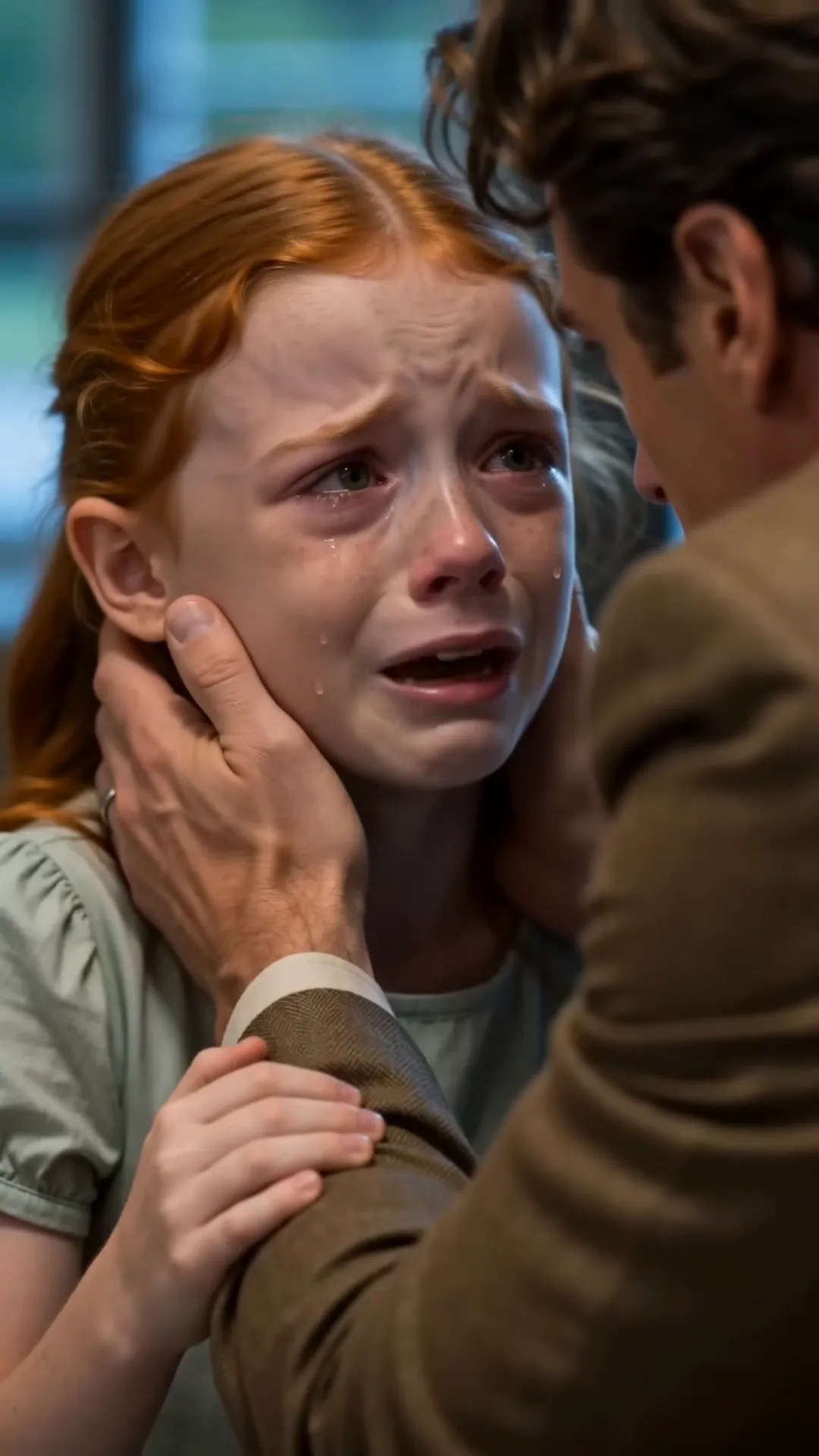
The day it finally happened began like any other quiet-hour afternoon.
Their father had left for the airport that morning before either child was fully awake — a trip described as short, three days, back by the weekend, the black leather bag packed the night before and set by the front door like a promise standing upright on its own two feet.
Emily counted his goodbye kiss to Theo's head as one full second longer than usual.
She did not know why she noticed this. She only knew that her private mathematics had, over the months, become extremely sensitive to small variations, the way a seismograph needle trembles at tremors too faint for a human hand to feel through the floor.
By noon, the tightness had appeared around their mother's eyes.
By one o'clock, the wine glass was out, turning slowly on its stem at the kitchen island while their mother stood by the window that overlooked the long front drive and the ornamental pond near the gate, saying very little, answering Emily's questions about lunch in single syllables.
"Mommy, can Theo have the orange or the apple."
"Whichever."
"Mommy, is it quiet-hours already?"
A pause. The glass turning.
"Just for a little while, baby. Go play with your brother."
Emily took this as the signal it was and steered Theo toward the sunroom, dragging her crutches across the marble with the particular rhythm she'd perfected — swing, drag, swing, drag — a sound Theo had started calling "Emmy's music" because he liked how steady it was, how it never sped up or slowed down no matter what else in the house was doing.
They built a tower out of blocks. They knocked it down. They built it again.
At some point — Emily would later try, and fail, to pin down exactly when, because time in that sunroom always moved strangely during quiet hours, thick and slow like syrup — she realized Theo was no longer beside her.
She called his name once, not loud, because the rules of quiet had trained her not to raise her voice inside the house even in the early stages of alarm.
No answer.
She called again, louder this time, alarm stage two, and swung herself up onto the crutches faster than she'd ever moved on them before, faster than the doctor had said was probably wise for the healing bone, and went looking.
Not in the playroom.
Not in the kitchen, where her mother still stood by the window, glass now empty, eyes now closed, standing so still she might have been part of the architecture.
Emily did not stop to shake her mother awake. Some instinct — not yet named, but already fully formed — told her that whatever was happening to her mother right now was a slower emergency than whatever might be happening to Theo, and only one of those two emergencies could be handled first.
She found the front door standing open.
Not wide open. Just a hand's width, the exact gap a curious eighteen-month-old could squeeze a small determined body through if he had recently learned to work a door handle and had absolutely no concept yet of consequence.
Beyond the door: the long white gravel drive.
Beyond the drive: the ornamental pond, shallow, decorative, lined with smooth gray stones, the kind of water feature landscapers install because it photographs beautifully and nobody ever really thinks about what water — any water, even decorative water eight inches deep — can do to someone who does not yet know how to lift his own head back up.
Theo was crouched at the pond's edge.
He had found something fascinating in the water — a fallen leaf, a flash of an ornamental fish, something small and bright — and he was leaning forward on his palms the exact way toddlers lean toward anything that interests them, weight tipping slowly, inexorably, forward, with absolutely no sense that gravity was a thing that applied to him personally.
Emily did not remember deciding to run.
She remembered the crutches hitting the gravel wrong, twice, nearly pitching her sideways, and she remembered making the decision — instant, wordless, entirely without hesitation — to throw the crutches away from her body entirely and go the last fifteen feet on her own legs, cast and all, because crutches on loose gravel were too slow and slow was the one thing this particular fifteen feet could not afford to be.
The pain when the plastered leg took weight was enormous.
She felt it arrive somewhere behind her eyes before she felt it in the leg itself, a white flash, and she screamed — not for help, there was no time to scream for help, just a pure animal sound pushed out by the impact — and she reached her brother's collar with both hands at the exact moment his palms slid the final inch on the wet stone rim.
She did not catch all of him.
She caught enough of him.
He went half into the water — one arm, his chin, a startled inhale of pond water that made him cough violently against her chest — while she went down hard onto her good knee on the gravel, holding him against her, both of them soaked on one side, both of them shaking.
He began to scream.
Not the fear-of-water scream, not yet — that came a moment later, delayed, the way children's fear often arrives a beat behind the actual danger — but first the scream of pure outraged surprise, the universal toddler protest against any interruption of an interesting moment, water on his face, sister's arms too tight, the whole world suddenly gone wrong for reasons his small mind could not yet organize.
Emily held on.
She did not look back toward the house to see if her mother had woken, had seen, had come running.
She already knew, with the flat certainty of the private mathematics, that no one was coming.
She got her good leg under herself. She could not stand on the broken one, not now, not with the pain screaming up into her hip with every attempted shift of weight, so she did the only thing left available to a seven-year-old with one working leg and a soaked, howling brother clinging to her collar —
she crawled.
Knee, hand, knee, hand, dragging the plastered leg behind her across the gravel like something that no longer quite belonged to her, Theo's arms locked around her neck so tightly she could barely breathe, both of them making noise now, her silent shaking breath and his enormous unrestrained wailing combining into something that should have been loud enough to wake the entire street.
It was not loud enough to wake her mother.
By the time Emily reached the front step, her palms were scraped raw from the gravel, one knee of her dress torn through, and Theo had climbed, entirely on his own initiative, up onto her back — some instinct in him understanding that her arms needed to be free now, that this was a piggyback situation, that his job was to hold on and her job was to move.
She got herself upright using the door frame.
She looked back once at the abandoned crutches lying in the gravel, silver against white stone, twenty feet away, and made the calculation — one more piece of private mathematics, done in less than a second — that going back for them cost more than leaving them behind.
She went into the house without them.
Her mother was still standing at the window, in almost exactly the position Emily had left her, except that her wine glass had slipped from her fingers at some point and lay unbroken on the kitchen floor tile, a small dark stain spreading slowly outward from its open mouth.
"Mommy," Emily said.
No answer.
"Mommy," she said again, louder this time — the rule of quiet finally, completely, breaking, snapping like the small horse-toy step that had broken her leg six weeks earlier — "Mommy, wake up, please, Theo almost—"
Her mother's eyes opened.
They found Emily slowly, the way eyes find things after surfacing from somewhere very deep, and for one terrible moment there was no recognition in them at all — just the blank, drifting look of someone who has been very far away and has not yet fully returned to the room she is standing in.
Then recognition arrived, and behind it, arriving a half-second later, horror.
"Emily. Oh my god. Emily, your leg—"
"Theo fell in the pond," Emily said. Her voice was flat now, the private-mathematics voice, the voice of someone reciting facts because reciting facts was the only thing keeping the facts from becoming feelings yet. "He's okay. I got him. But we need — Mommy, we need to sit down, my leg—"
Her mother crossed the kitchen in three unsteady steps and folded down onto the floor in front of both children, and for one long moment nobody spoke, nobody moved, the three of them simply breathing in the enormous silence that follows any disaster that has, by the narrowest possible margin, been averted.
"I fell asleep," her mother whispered. Not to Emily. Not really to anyone. "I just— I closed my eyes for a second, I didn't—"
"It's okay," Emily said, because that was what you said, that was the rule, comfort came before questions, always, in this house.
It was not okay.
Both of them, in their different ways, already knew this.
May you like



And it was into this house — gravel-scraped knees, torn dress, a toddler still hiccuping pond water, a mother kneeling on tile with her hands shaking and her face doing the slow-film-melting thing it did — that their father would walk, unannounced, three hours earlier than expected, because his connecting flight in Frankfurt had been cancelled and he had, on some instinct he did not yet understand himself, decided to simply come home instead of rebooking.
---







