Chapter 4 - Someone Else's Arms
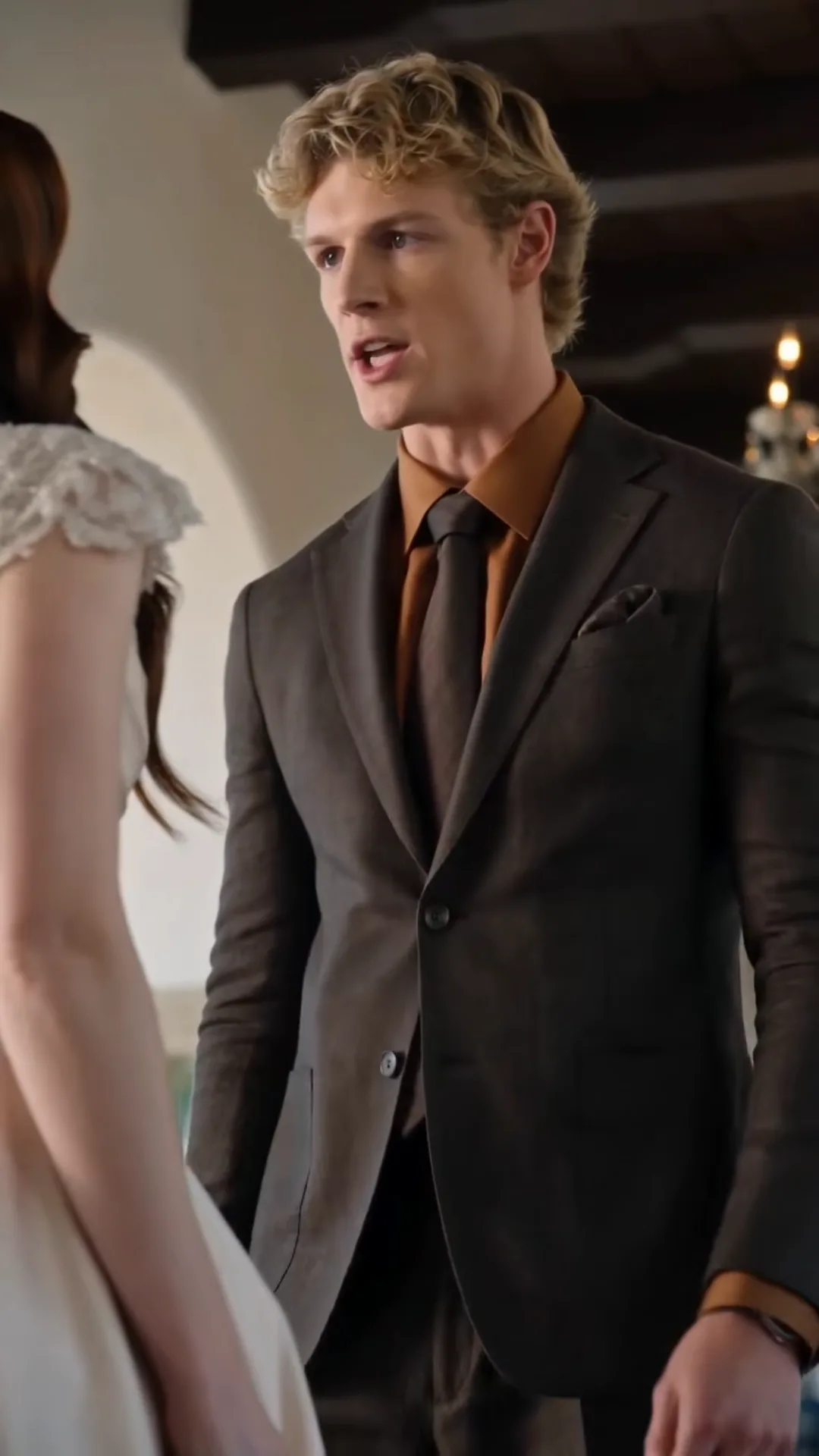
Rosa had been forty feet away when she saw the boy go down.
She would tell herself later that she'd known before it happened — that something in the set of Isabela's shoulders, crossing the ballroom, had warned her the way a held breath warns you of a scream — but the truth was simpler and worse. She had been carrying a tray of empanadas toward the buffet table, half-listening to two cousins argue about a wedding gift, and when she looked up, Mateo was already crumpled against the pillar with his hand pressed to his face.
She didn't remember setting the tray down. Later, someone told her it had shattered on the marble, three dozen little pastries scattered like confetti, and she had simply stepped over the mess without noticing.
She crossed the ballroom faster than a woman her age should have been able to move in low heels on polished stone, weaving between guests who parted for her with mild, uncomprehending frowns — a maid running, in this house, was itself a kind of alarm bell, though none of them understood yet what it meant.
"Mateo." She dropped to her knees in front of him, heedless of her uniform, heedless of anything except the small shaking shape of the boy she had raised, in every way that mattered, for the better part of two years. "*Mírame, cariño.* Look at me."
He lowered his hand from his cheek just enough for her to see it — the skin already blooming an angry red, the shape of fingers ghosted faintly beneath the swelling, unmistakable to anyone who had ever seen a slap land before.
Something went cold and very still inside Rosa's chest.
She had suspected. God help her, she had suspected for weeks — the way Mateo flinched when doors opened too fast, the way he'd started checking rooms before entering them, the small bruise on his forearm three weeks ago that he'd explained away as a fall from the garden wall, a story so smooth and quick that even at seven he'd clearly rehearsed it. She had suspected, and she had watched, and she had told herself she needed proof before she did anything that might cost her the only job that let her stay close enough to protect him at all.
Now she had proof, blooming red and unmistakable on a child's face in the middle of a wedding.
"Está bien, cariño," she murmured, gathering him against her chest, one hand cradling the back of his head, careful not to press against the injured side of his face. "Mami está aquí. Está bien."
It's okay, sweetheart. Mommy's here. It's okay.
She wasn't his mother. Everyone in the house knew that, including Mateo, including Rosa herself. But the word had slipped out of her the same way mamá had slipped out of him a moment ago, aimed at whoever might be listening, true in every sense except the biological one.
Mateo's small hands fisted in the front of her apron, and he pressed his face — the unhurt side — against her shoulder, and cried in the way children cry when they finally, finally feel safe enough to stop holding it in.
Around them, the party continued its slow orbit, mostly oblivious, a few guests glancing over with the mild curiosity people reserve for other families' minor dramas before turning back to their champagne.
Rosa held him and rocked slightly and felt something building in her chest that was not sadness — sadness she'd carried for months already, sadness had become almost comfortable, a familiar weight — but rage, hot and sudden and entirely unlike her.
She had scrubbed floors in this house. She had ironed shirts for a man who barely remembered her name most days. She had swallowed insults from a bride forty years her junior with a smile because the alternative was losing her position, losing her proximity to the one small person in this enormous cold house who actually needed her.
She was done swallowing.
"Who did this," she said, not a question, her voice low and flat in a register Mateo had never heard from her before.
Mateo didn't answer. He didn't have to. His eyes flicked, just for a half-second, toward the dance floor, toward the woman in white lace laughing again under the chandelier as though nothing at all had happened, as though a boy weren't sitting on the floor forty feet away with the mark of her hand rising on his face.
Rosa followed his gaze, and her jaw tightened.
"Okay," she said quietly, mostly to herself. "Okay."
She had not noticed, in the chaos of gathering him up, that a shadow had fallen across them both — tall, broad-shouldered, blocking the chandelier light so completely that for a moment the marble beneath them dimmed.
She looked up.
The man in the black suit stood over them, jaw set, eyes fixed not on Rosa but on the boy in her arms, on the red mark spreading slowly across a small cheek, and something in his expression made Rosa's breath catch, because she recognized it — not the face exactly, though something about the set of the brow tugged at a memory she couldn't yet place — but the feeling behind the face. She had seen that same barely-contained fury only once before in her life, on a man long gone from this house, a man whose photograph still sat, forgotten, in a drawer nobody opened anymore.
"How long," the man said, crouching down to their level, voice low, controlled, terrifyingly calm, "has this been happening."
Rosa hesitated only a moment before answering, because something in his voice told her that hesitation, tonight, would be its own kind of failure.
"Weeks," she said. "Maybe longer. I only had proof tonight."
The man's gaze moved to Mateo's face, taking in the mark, the tear-streaked cheeks, the small hands still fisted in Rosa's apron.
"Mateo," he said, and something shifted in his voice on the name, something Rosa couldn't quite identify — recognition, maybe, or grief, or both at once. "Do you know who I am?"
Mateo lifted his head slightly from Rosa's shoulder, studying the stranger's face with the wary, assessing look of a child who has learned not to trust kindness on sight.
"No," he whispered.
The man's mouth tightened — not with anger this time, but with something that looked, for just a moment, dangerously close to heartbreak.
"No," he agreed quietly. "I suppose you wouldn't."
He rose to his full height, and something in the way he stood — shoulders squared, weight settled, a stillness that carried more menace than any shout could have — made the nearest guests finally begin to notice that something in the golden ballroom had shifted, that the air itself had changed temperature.
"Rosa," the man said, without turning to check that he had the name right, as though he'd simply known it all along, "take him somewhere quiet. Get ice for his face. I need to speak with someone."
Rosa nodded, gathering Mateo more securely against her, rising unsteadily to her feet.
"And Rosa," the man added, already turning toward the dance floor, toward the woman in white lace still laughing under the chandelier, oblivious to the storm now walking toward her in a tailored black suit. "Whatever happens in the next five minutes — you have my word. Neither of you will ever have to be afraid in this house again."
Rosa watched him go, watched the crowd part instinctively around him the way water parts around something that has decided, finally, to move.
She didn't know yet who he was.
But she recognized, in the set of his jaw and the color of his eyes and something indefinable in the way he'd said the boy's name, exactly whose blood he shared.
May you like



And she began, quietly, carrying Mateo toward the terrace doors, to pray that she was right.
---







