Chapter 9 - What Gold Rooms Remember
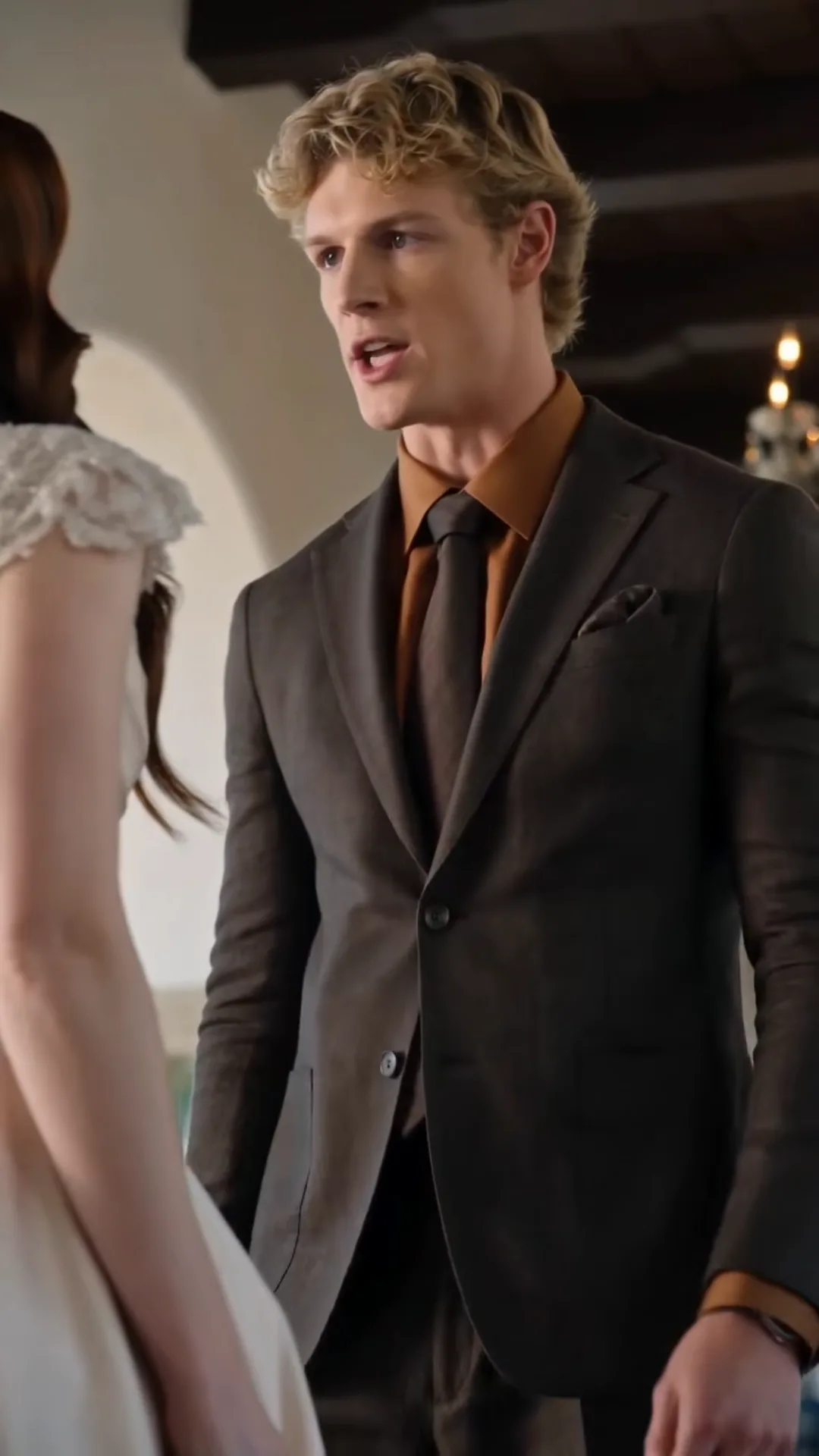
The house was quiet by two in the morning.
The last guests had trickled out sometime after midnight, murmuring to each other in the parking valet line about what they'd witnessed, already reshaping the story into something they could tell at dinner parties for years — did you hear what happened at the Alcántara wedding — a phrase that would outlive the marriage itself by a wide margin.
Rosa sat on the edge of a narrow bed in the small room off the kitchen where she and Mateo had slept for the past six months, an ice pack wrapped in a dish towel pressed gently against his cheek. He'd finally stopped flinching every time she adjusted it, his breathing gone slow and even, though his eyes stayed open, fixed on the ceiling, turning the night's events over in the particular relentless way children process things too large for them.
"Is she really gone?" he asked, for perhaps the fourth time since they'd retreated from the ballroom.
"She's gone," Rosa confirmed.
"For good?"
"For good."
He was quiet for a moment, absorbing this, his small fingers picking at a loose thread on the blanket.
"Is he really my uncle?" he asked next. "The man in black?"
Rosa set the ice pack down gently on the nightstand and took both of his hands in hers, holding them still. "He is," she said. "You don't remember him because you were very small the last time he visited — before your mother passed, before things in this family became complicated in the way grown-up things sometimes do."
"Why didn't he come sooner?"
It was the question Rosa had been dreading, because the honest answer was complicated and unflattering to nearly everyone involved — a family fractured by an old inheritance dispute, a father too proud and too weak to ask for help, an uncle who had, by his own admission tonight, heard rumors and waited too long to act on them.
"Sometimes," Rosa said carefully, "grown-ups let old arguments matter more than they should, for longer than they should. That's not your fault. None of tonight was your fault, do you understand me? Not one second of it."
Mateo's eyes filled again, though this time the tears came slower, quieter, the exhausted aftermath rather than the initial shock. "She said I was a burden."
"She was wrong," Rosa said, fierce enough that Mateo's eyes widened slightly at the force of it. "She was wrong about that, and she was wrong about almost everything else she ever said to you in this house. You hear me? A burden doesn't try as hard as you try every single day just to be small enough not to bother anyone. That's not a burden, mijo. That's a child who deserved so much better than what he's gotten."
A soft knock sounded at the door, and both of them looked up to find Damián standing in the frame, having changed out of his black suit jacket at some point, sleeves rolled to the elbow, looking, for the first time all evening, less like an avenging figure out of a telenovela and more like an exhausted, uncertain man in his thirties trying to figure out how to talk to a child he barely knew.
"May I come in?" he asked.
Rosa glanced at Mateo, who, after a moment's hesitation, nodded.
Damián crossed the small room and lowered himself carefully onto the edge of the bed, keeping a careful distance, as though aware that his sheer size and the events of the evening had earned him no automatic right to closeness.
"How's the ice working?" he asked.
"It's cold," Mateo said, which wasn't really an answer, and Damián's mouth twitched with something that wasn't quite a smile but was trying to be.
"That's generally the idea," he said.
Silence settled between them, not entirely comfortable, but not hostile either — the particular quiet of two people who both wanted to say something and hadn't yet found the shape of it.
"I looked at photographs of you tonight," Damián said finally, "on the drive over. I hadn't seen your face since you were three. I wanted to know if I'd still recognize you."
"Did you?"
"Instantly," Damián said. "You have your mother's eyes. I'd know them anywhere."
Mateo's fingers stilled on the blanket thread. "Nobody talks about her here," he said quietly. "Papá doesn't like it when I ask."
Something moved across Damián's face — old grief, carefully managed. "I'll talk about her with you," he said. "As much as you want. She was my sister-in-law, and before that, one of the kindest people I ever knew. You should get to hear about her from someone who loved her."
Mateo studied him for a long moment, the way children study adults when deciding, in real time, whether a promise is the kind that gets kept.
"Are you going to leave again?" he asked. "After tonight? Once everything's — fixed?"
"No," Damián said, and there was nothing performed in it, none of the smooth reassurance of a man simply telling a frightened child what he wanted to hear. "I should have been here two years ago. I let old arguments with your father keep me away, and that was a mistake I intend to spend a long time correcting. I'm not going anywhere, Mateo. Not this time."
"Promise?"
"I don't make promises I haven't already decided to keep," Damián said. "So yes. I promise."
Mateo considered this with the particular gravity of a seven-year-old weighing an oath, and then, slowly, he reached out and set his small hand against Damián's much larger one, resting on the blanket between them — not quite a handshake, not quite anything with a name, but a gesture of tentative trust extended across a distance that had taken two years and one terrible night to close.
Rosa, watching from the doorway now, pressed a hand briefly to her mouth, blinking hard.
Outside, in the abandoned ballroom, the chandeliers still burned, forgotten, throwing gold light across empty tables and a six-tier cake nobody had cut, across a marble floor that had, for one brief and terrible evening, hosted both the worst and — in its strange, delayed way — the best thing that had happened to a small boy in longer than anyone in that house cared to count.
The gold room did not remember kindly.
May you like



But sometimes, it seemed, gold rooms could still be made to answer for what they'd allowed.
---







