Chapter 8 - The Bow
It was not a deep bow, nor a theatrical one.
It was simple — a slight inclination of the head, one hand resting briefly against her chest, the small formal gesture of someone acknowledging a hierarchy that had existed all along, invisible until the exact moment it mattered.
"Joven amo," Rosa said, her voice carrying clearly across the silent ballroom, still steady despite the boy in her arms, despite the tears drying on her own cheeks that nobody had noticed until now. "Lamento llegar tarde."
Young master. I'm sorry I took so long.
The words landed in the ballroom like a second slap, this one aimed at every guest who had spent the evening treating a maid's warnings — had there been any, had anyone even asked her — as beneath their notice.
Isabela, still on the floor, stared up at Rosa with an expression of dawning, horrified comprehension.
"You knew," she whispered. "You've known this whole time who he was."
"I've known him since he was younger than Mateo is now," Rosa said quietly, without malice, simply stating a fact that had apparently been sitting in plain sight the entire time, unnoticed by everyone except the one person in the house nobody had bothered to really see. "I was housekeeper to his mother, before she passed. Before this family split in the way families like this one always eventually split, over money, over pride, over which brother was born on the correct side of a marriage license."
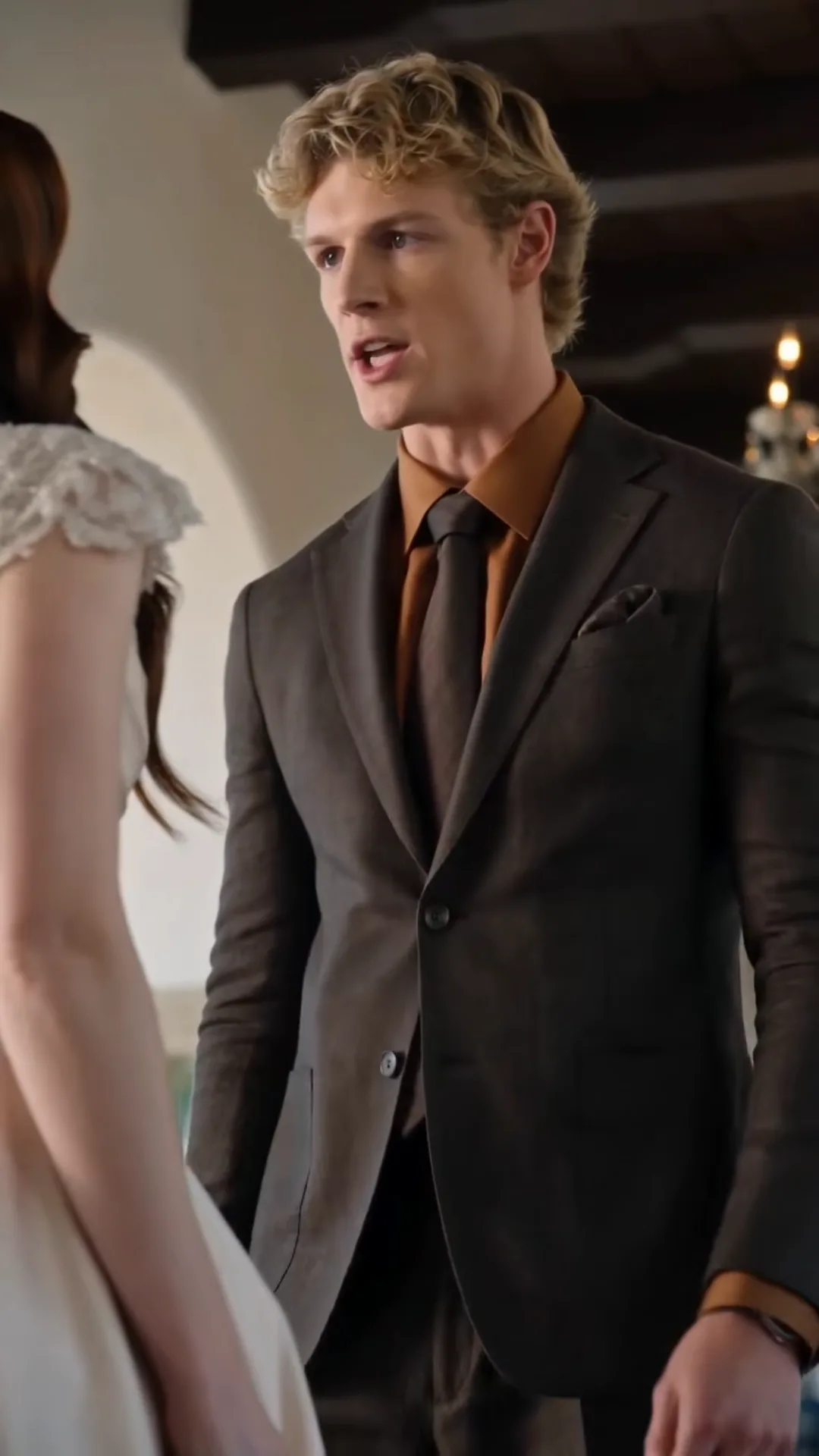
Damián's jaw tightened almost imperceptibly at that, though he said nothing, his attention still fixed on Isabela sprawled on the marble floor.
"You could have told me," Isabela said, and there was something almost plaintive in it now, the last collapsing scaffolding of the woman who had walked into this ballroom four hours earlier believing herself the most powerful person in the room. "You could have warned me who actually held the money in this family, instead of letting me—"
"Instead of letting you what," Rosa said, and for the first time that night her voice sharpened, cutting clean through the plaintive note in Isabela's own. "Instead of letting you hit a child anyway, just with better information about the consequences? You didn't slap that boy because you didn't know who his uncle was. You slapped him because you thought no one who mattered would ever find out."
The words settled over the crowd like a verdict.
Isabela had no answer for that, because there wasn't one — not one that wouldn't confirm, in front of a hundred and forty witnesses, exactly the truth Rosa had just spoken aloud.
Damián crouched down, not toward Isabela, but past her, extending a hand toward the housekeeper instead — an offer to take some of the boy's weight, though Rosa, after a moment's consideration, simply shifted Mateo slightly rather than releasing him entirely, as though some part of her wasn't yet ready to let go.
"Mateo," Damián said gently, his voice utterly transformed from the cold, controlled tone he'd used with Isabela — softer now, careful, the voice of a man approaching something fragile. "Can I see your face?"
Mateo turned slightly in Rosa's arms, revealing the bruise more fully in the chandelier light — dark now, spreading, the unmistakable shape of a hand pressed into a child's cheek.
Something crossed Damián's face that he didn't bother to hide from the watching crowd — a flash of pure, unguarded grief, there and gone in an instant, replaced by something steadier.
"I should have come sooner," he said, quiet enough that it seemed meant only for the boy, though the whole ballroom, silent and straining to hear, caught every word anyway. "I heard rumors. I should have acted on them the first time, not waited for proof."
"You're here now," Mateo said, small and hoarse, the first full sentence he'd spoken since the slap that wasn't simply an answer to a direct question.
Something in Damián's throat worked visibly before he answered. "Yes," he said. "I am. And I'm not leaving again."
Behind them, forgotten for a moment in the quiet weight of the exchange, Isabela had managed to push herself upright, though she remained seated on the marble floor, her dress ruined at the knees, her carefully constructed evening lying in pieces around her more thoroughly than any physical fall could have accounted for on its own.
"Someone help her up," Damián said finally, without looking at her, without any particular warmth in the instruction — simply the automatic decency of a man who, however furious, was not interested in leaving a woman sprawled on a floor in front of a crowd. Two guests stepped forward hesitantly to assist her, though neither one met her eyes as they did it.
"This isn't over," Isabela said, once she was standing again, swaying slightly, one hand braced against the nearest table. "I'm his wife. Legally, I have rights in this—"
"You have the right to leave with your belongings and a taxi fare," Damián said, finally turning to look at her directly. "Everything else, you signed away the moment you decided a slap was an acceptable form of house discipline in front of witnesses. My lawyers will be in touch with Héctor about the marriage itself. That's between the two of you now. But the boy," and here his voice hardened again, absolute and final, "the boy is no longer any part of your concern. Not tonight. Not ever again."
Isabela looked past him one last time, toward Mateo, still held securely in Rosa's arms, his bruised cheek turned slightly away from her now, as though even in his exhaustion he understood he no longer needed to face her.
Whatever she saw in that small, turned-away profile seemed to finally extinguish the last of her fight.
She said nothing else. She simply gathered what remained of her dignity, along with the torn hem of her ruined dress, and walked — unescorted now, guests parting around her in silence far more damning than any shout could have been — toward the grand doors she had entered four hours earlier as a bride, and through which she now exited as something considerably smaller.
The doors closed behind her with a soft, final click.
For a long moment, nobody in the ballroom moved at all.
May you like



Then, somewhere near the back, the orchestra's conductor, uncertain what else to do, lifted his baton, and a slow, careful arrangement began again, guests drifting back into motion like a tide resuming after an unexpected stillness, though the mood of the evening — its gold, its grandeur, its careful choreography — had shifted permanently into something none of them would forget for years.
---







