Chapter 10 - The New Table
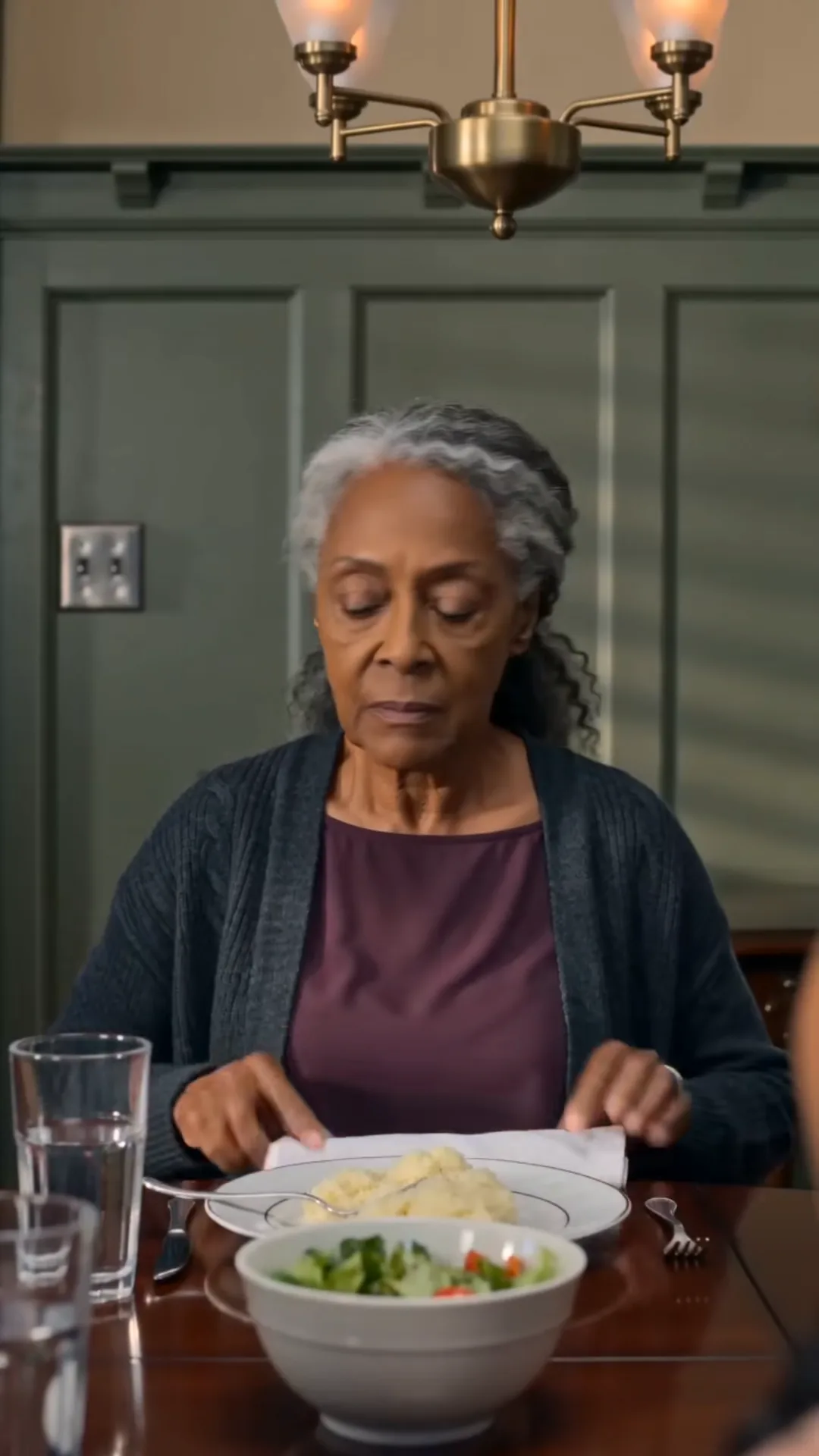
Sunday arrived gray and mild, the particular soft light of early autumn falling through the same white front door with its small glass panes, church-colored, exactly as Carolyn remembered.
She knocked this time.
It felt strange, knocking on a door she'd once had a key to. It also felt, she decided, standing on the porch in a coat she'd chosen carefully that morning, entirely correct — the honest shape of what this house was to her now. Not her home anymore. A place she was choosing, deliberately, to visit.
Lily opened the door before anyone else could reach it, launching herself forward so fast Carolyn barely had time to brace before small arms wrapped tight around her waist.
"You came," Lily said, muffled against Carolyn's coat. "You actually came."
"I said Sunday," Carolyn said, smoothing one hand over her granddaughter's hair. "I keep my word."
"I fold my own laundry now," Lily announced, pulling back, radiating the particular pride of a child who has been waiting all week to deliver this exact piece of news. "And Dad's laundry too, sometimes, because he's still bad at it. Come see the table. We made it different."
---
The dining room had, indeed, been made different.
Not dramatically — the same dark wood table, the same white plates — but rearranged in small, deliberate ways that told Carolyn everything she needed to know about the week that had passed since she'd last sat in this room.
A single place setting, at what had once always been assumed as her working position closest to the kitchen, had been moved instead to the head of the table.
A small vase of peonies sat beside her plate, slightly clumsy in their arrangement, clearly assembled by hands unpracticed at the task.
Mark stood near the kitchen doorway, uncharacteristically nervous, a dish towel still slung over one shoulder from whatever he'd been doing in the kitchen that Carolyn understood, with quiet satisfaction, he had not once in fourteen months previously bothered to do himself.
"Carolyn," he said, and something in his voice had changed — less easy, less unbothered, carrying instead the particular weight of a man who had spent the last week genuinely reckoning with something about himself. "I owe you an apology. A real one, not the kind I gave you at that table two weeks ago." He glanced briefly at Lily, then back at Carolyn, and continued anyway, unwilling, apparently, to let his daughter's presence soften what needed saying. "I dismissed you. Repeatedly, probably, long before that dinner — I just finally said it loud enough that night for everyone to actually hear it. I'm sorry. I'm going to keep being sorry, actively, in ways you can actually see, for a long time. Not just tonight."
Carolyn studied him for a long moment.
"Thank you," she said finally. "That's a good start."
---
Dinner was different in every way that mattered.
Denise had cooked — clumsily, in places, a slightly overdone roast that made her laugh at herself in a way Carolyn hadn't heard from her daughter in years, but cooked nonetheless, entirely by her own hand, without once expecting Carolyn to step in and fix it.
Mark served the plates. Cleared them, too, when the meal was finished, carrying dishes to the kitchen with the visible concentration of a man determined to get an unfamiliar task exactly right.
Lily, halfway through the meal, looked up from her own plate with the same flat, direct gaze she'd once turned on Carolyn at this very table two weeks earlier — except entirely transformed now, warm instead of defiant.
"Grandma," Lily said. "Can I tell you something I figured out?"
"Always."
"I think grown-ups forget people the same way I forget to say thank you," Lily said, working through the thought slowly, in the particular careful way she worked through all her biggest ideas. "Not because they don't care. Just because the person's always there, so it feels like they'll always be there, so nobody says thank you loud enough, or often enough, until one day the person isn't there anymore, and then everybody remembers all the thank-yous they forgot to say."
The table went quiet — not the old, uncomfortable silence of two weeks earlier, but something gentler, everyone at the table absorbing the particular clarity only a child seemed able to offer, undiluted by adult self-consciousness.
"That's exactly right," Carolyn said softly, reaching over to squeeze her granddaughter's small hand. "That is exactly, precisely right, sweetheart. I don't think I could have said it better myself."
---
After dinner, while Mark and Lily cleared the last of the dishes together in the kitchen — Lily narrating each step of the process with great seriousness, Mark following her instructions with visible, humbled attention — Denise walked her mother out to the porch.
The evening light had gone soft and gold, the particular color that only ever seemed to exist in the final hour before dusk, catching warm across the white siding, across the small glass panes of the front door.
"Same time next Sunday?" Denise asked.
"Same time next Sunday," Carolyn confirmed. "As a guest. Every time, from here forward."
"As a guest," Denise repeated, and something in the phrase, spoken aloud between them now for the second time, seemed finally to settle fully into place — a new shape for an old relationship, deliberately built this time instead of simply inherited.
Carolyn descended the porch steps toward her car, parked in the driveway where it belonged this time, chosen and returned to on her own schedule rather than abandoned mid-meal in the dark.
At the bottom of the steps, she paused and looked back — not with the fear of that first departure, two weeks earlier, wondering whether anyone behind that door had even noticed she was leaving.
This time, she looked back and found Denise still standing on the porch, watching her go with an expression that held nothing careless in it at all. Behind her, through the glass panes of the door, Carolyn could see Lily's small shape moving through the golden kitchen light, still talking, still narrating, still teaching her father something new about the invisible labor of love.
Carolyn got into her car.
She did not think, this time, about the keys cold in her palm, or about the weight of thirty-one years given away and never properly thanked for.
She thought instead about her new apartment waiting two blocks from the library, about the watercolor easel she'd already ordered, delivery expected Tuesday, about the specific, quiet pleasure of a Saturday morning that would belong, from now on, entirely and only to her.
She drove home — her home, the small one, the new one, chosen freely rather than folded quietly into someone else's need — and understood, pulling into her own driveway under her own porch light, that she had not lost her family that night two weeks ago at all.
She had simply, finally, found the edges of herself again.
And this time, she intended to keep them.
Inside her small apartment, she set her coat on the hook by the door — her own hook, chosen and hung by her own hand — and stood for a moment in the quiet, unfamiliar comfort of a space that answered to no one else's schedule but hers.
On the counter sat a single unopened box, delivered that afternoon: the watercolor easel, still in its packaging, waiting for a Saturday morning that hadn't arrived yet but would, soon, uninterrupted and entirely her own.
She made a cup of tea, sat by the window overlooking a street she was still learning the sounds of, and allowed herself, for the first time in longer than she could remember, the simple luxury of an evening with absolutely nothing expected of her at all.
Tomorrow there would be laundry to fold in a house that was no longer hers, and a granddaughter learning to fold her own instead. There would be a table she'd sit at as a guest, finally, properly honored rather than quietly assumed.
But tonight belonged only to Carolyn.
May you like



She intended, from here forward, to keep a good many evenings exactly that way.
— END —







