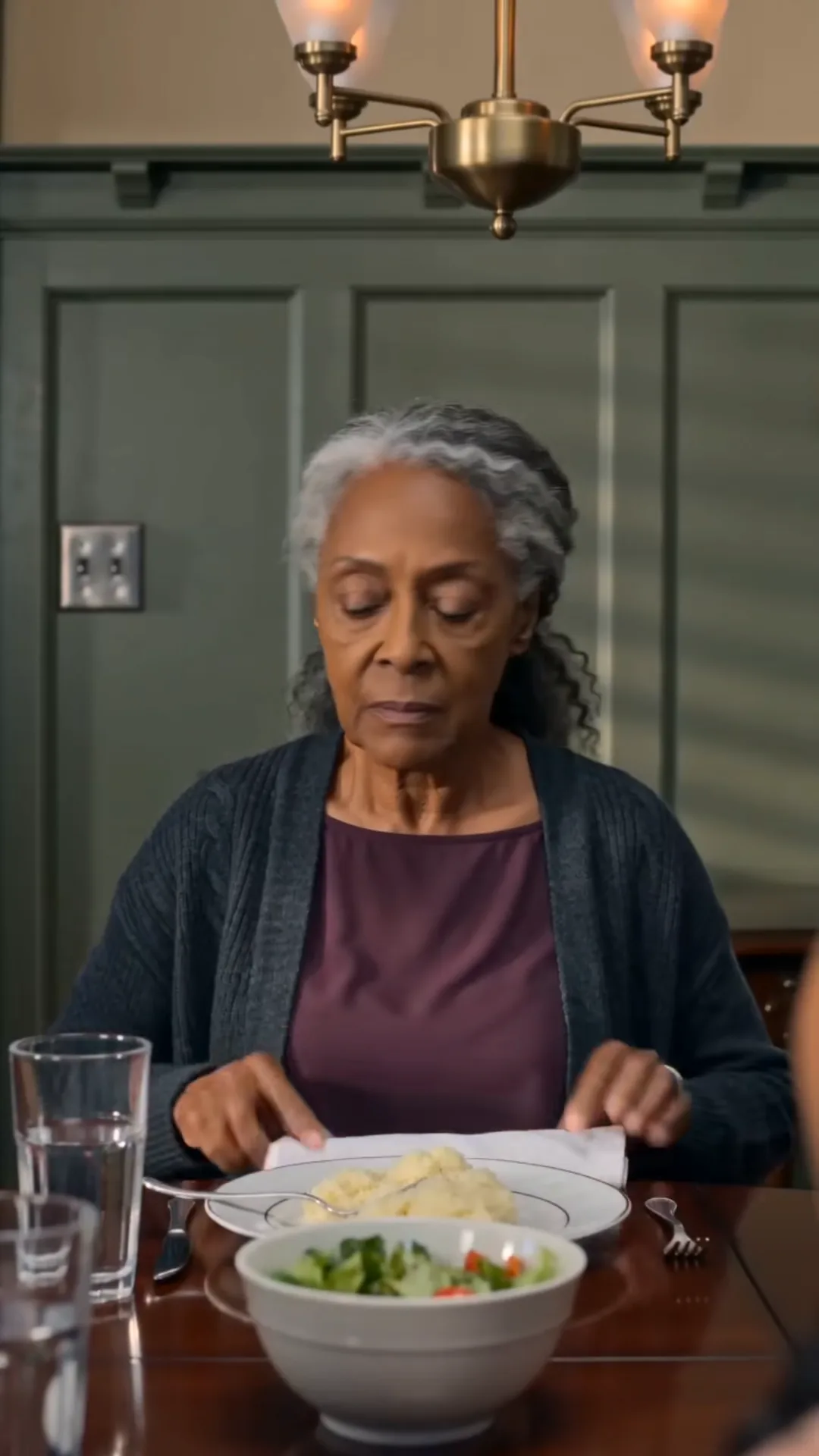
Chapter 2 - The Counter
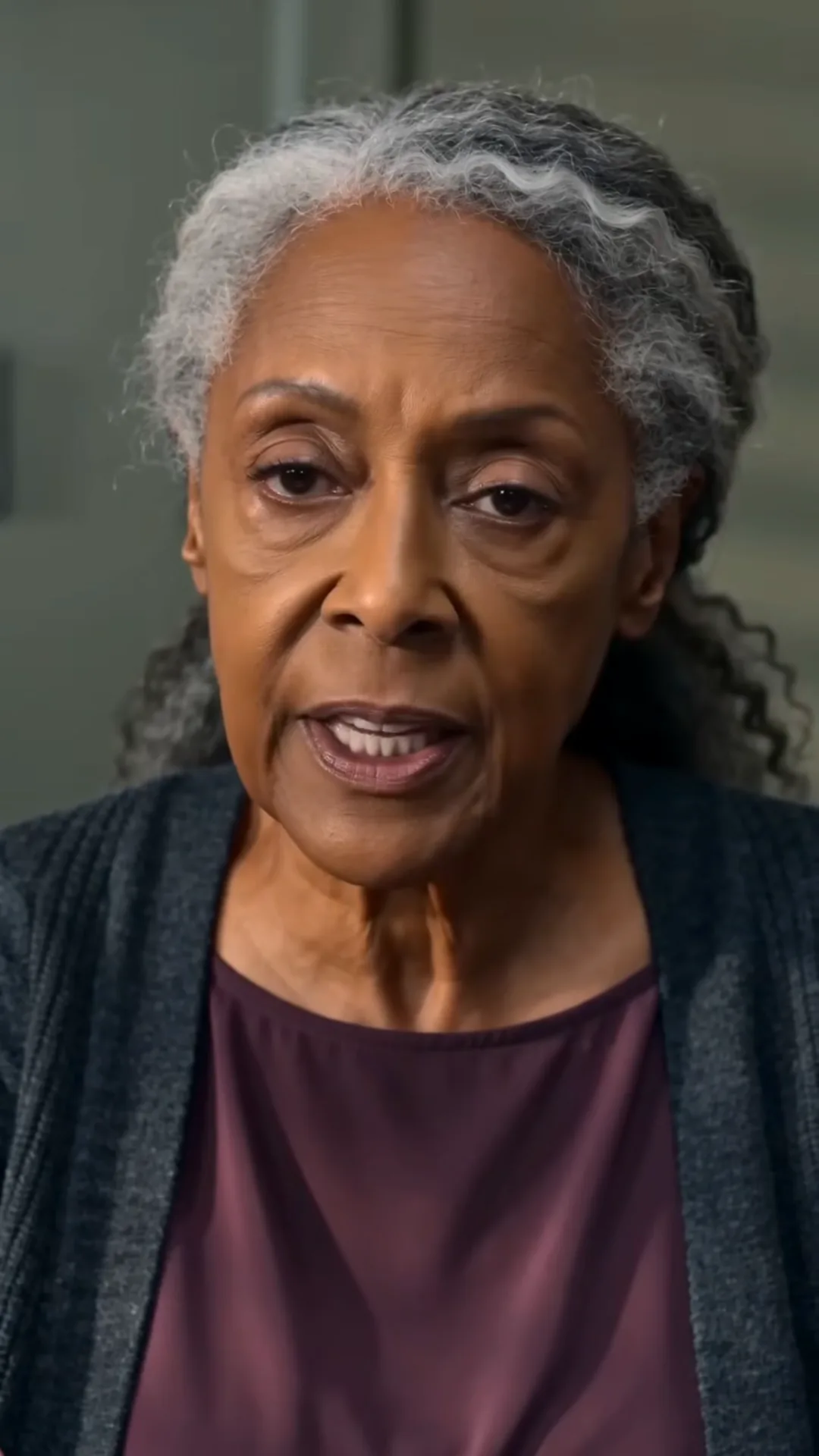
The kitchen was cooler than the dining room, and quieter, and for one long breath Carolyn simply stood in it.
Her kitchen, technically, in the way that mattered — the way that meant she'd stocked it, scrubbed it, learned which cabinet hinge squeaked and which burner ran hot. Not her kitchen in the way that mattered on paper, on the deed, on anything a lawyer would recognize.
Fourteen months ago she had sold the house on Larkspur Avenue — thirty-one years of her own life folded into boxes and given away or auctioned off in a single overwhelming weekend — because Denise had called her crying about daycare costs, about Mark's hours getting cut, about how much easier everything would be if Mom just moved in, just for a while, just until things stabilized.
Things had stabilized eleven months ago.
Carolyn had stayed anyway.
She looked now at the refrigerator, at the crowded gallery of magnets and photographs that had, without her quite noticing when, become mostly her doing — Lily's school portraits, arranged by Carolyn in careful chronological rows; a grocery list in Carolyn's own careful handwriting, half the items crossed off in Carolyn's own careful hand; a drawing Lily had made her back in the spring, a stick-figure family standing beneath a crayon sun, Carolyn drawn slightly taller than everyone else, labeled in wobbly seven-year-old letters: GRANDMA MY BEST FRIND.
She had cried a little, privately, the day Lily gave her that drawing.
She did not cry now.
She simply looked at it for a moment — really looked, the way you look at something for what might be the last time, though she hadn't yet let herself think the sentence all the way through — and then she reached past it.
Her keys hung on the small brass hook by the coffee maker, exactly where she left them every single night, in the exact spot she'd chosen herself the week she moved in, because a person needs at least one small corner of a house to still feel like a decision they made.
She took them.
The metal was cold against her palm. Solid. Real, in a way nothing said at that dinner table had felt real in longer than she wanted to admit.
---
From the dining room, muffled through the doorway, she could hear the low murmur of a conversation resuming — Mark's voice, easy, unbothered, already moving on; Denise's voice, quieter, uncertain, trailing behind his the way it so often did lately.
Carolyn had noticed that, across these fourteen months. The way her daughter's voice had gotten smaller in her own house, the same way Carolyn's had gotten smaller inside it too — as if there wasn't enough air at that table for two women to breathe deeply at the same time, and only one of them, apparently, had been chosen to keep doing it fully.
She thought about calling out a goodbye.
She thought about walking back in, retrieving her napkin, sitting back down, finishing the potatoes, absorbing the small daily erosion the way she had absorbed it for fourteen months running, because that was easier, because that avoided a scene, because Denise had enough on her plate already without her own mother adding weight to it.
She thought about all of that, standing at the counter with her keys cold in her palm.
Then she walked to the front door instead.
---
The front door had a row of small glass panes set into white wood, the kind that let evening light spill through in soft geometric patches across the entry rug — a detail Carolyn had loved the very first day she'd toured this house with Denise and Mark, three years before any of them lived in it together, back when she was simply a mother helping her daughter house-hunt, offering opinions nobody was obligated to take.
She'd told Denise, that first day, that the light through this door reminded her of the church she'd married in.
She had not thought about that memory in months.
She thought about it now, hand on the cool brass handle, and found it strange — the particular cruelty of a house remembering things about you long after the people inside it had stopped bothering to.
Behind her, faintly, she heard Denise's chair scrape back.
"Wait," Denise called, voice carrying now, sharper with something that might have been alarm. "Where are you going? We aren't done eating."
Carolyn paused.
For one half-second, standing in that warm patch of church-colored light, she almost turned around.
Almost.
She thought of the word sensitive, the way Mark had said it — offhand, effortless, a word men like Mark had probably been handing to women like Carolyn her entire life, a small verbal shrug that turned every legitimate hurt into an overreaction before the hurt had even finished happening.
She thought of Lily's flat, satisfied little stare across the table.
Mom says you deserve it.
Whatever else was true tonight, Carolyn understood one thing with sudden, total clarity, standing in that doorway: she had spent fourteen months making herself small enough to fit inside other people's patience.
She was done doing that tonight.
---
She opened the door.
Evening air came in cool and clean against her face, entirely unlike the warm, thick, chandelier-lit air of the dining room behind her — a different atmosphere altogether, like stepping from one country into another.
She stepped through.
On the porch, she stopped, and turned — not because Denise had called out again, though she had, twice now, voice climbing toward something close to panic — but because some old, stubborn part of Carolyn needed to see the house one more time before she left it, the way you look back at anything you've built with your own two hands before walking away from it.
The door was already swinging shut behind her, slow on its hinge, catching the last of the porch light across the glass.
Through the narrowing gap, for one final second, she caught sight of the dining room beyond — Mark still seated, unbothered, refilling his water glass; Lily, small and confused, looking back and forth between her empty chair and her parents' faces, finally beginning, faintly, to understand that something had actually happened tonight, something bigger than a scolding about posture.
Denise stood frozen in the kitchen doorway, one hand still raised mid-gesture, her mouth open around a word she hadn't managed to finish saying.
Then the door clicked shut, and the image was gone, and Carolyn stood alone on the porch in the cooling evening light with her car keys in her hand and thirty-one years of a life she'd already given away once, and absolutely no intention, this time, of walking back inside just because someone on the other side of that door had finally noticed she was missing.
She walked to her car.
She did not look back again.
She sat behind the wheel for a moment before starting the engine, hands resting at ten and two out of old habit, and looked once more at the house through her windshield — porch light glowing warm and steady, indifferent to whatever had just happened beneath it.
Somewhere behind that door, she knew, Denise was likely already moving, already reaching for her own phone, already beginning the first of what would become, over the following days, a long string of unanswered calls.
Carolyn started the car.
The engine turned over smooth and familiar beneath her, one small, reliable thing in an evening that had upended almost everything else, and she backed slowly out of the driveway she had walked up fourteen months earlier believing, with her whole worn and hopeful heart, that she was moving toward more family instead of less of herself.
She did not yet know where she was driving.
May you like



She only knew, pulling out onto the quiet evening street, that for the first time in longer than she could remember, the decision of where to go next belonged entirely, uncomplicatedly, to her.
---