Chapter 5 - The Motel Room
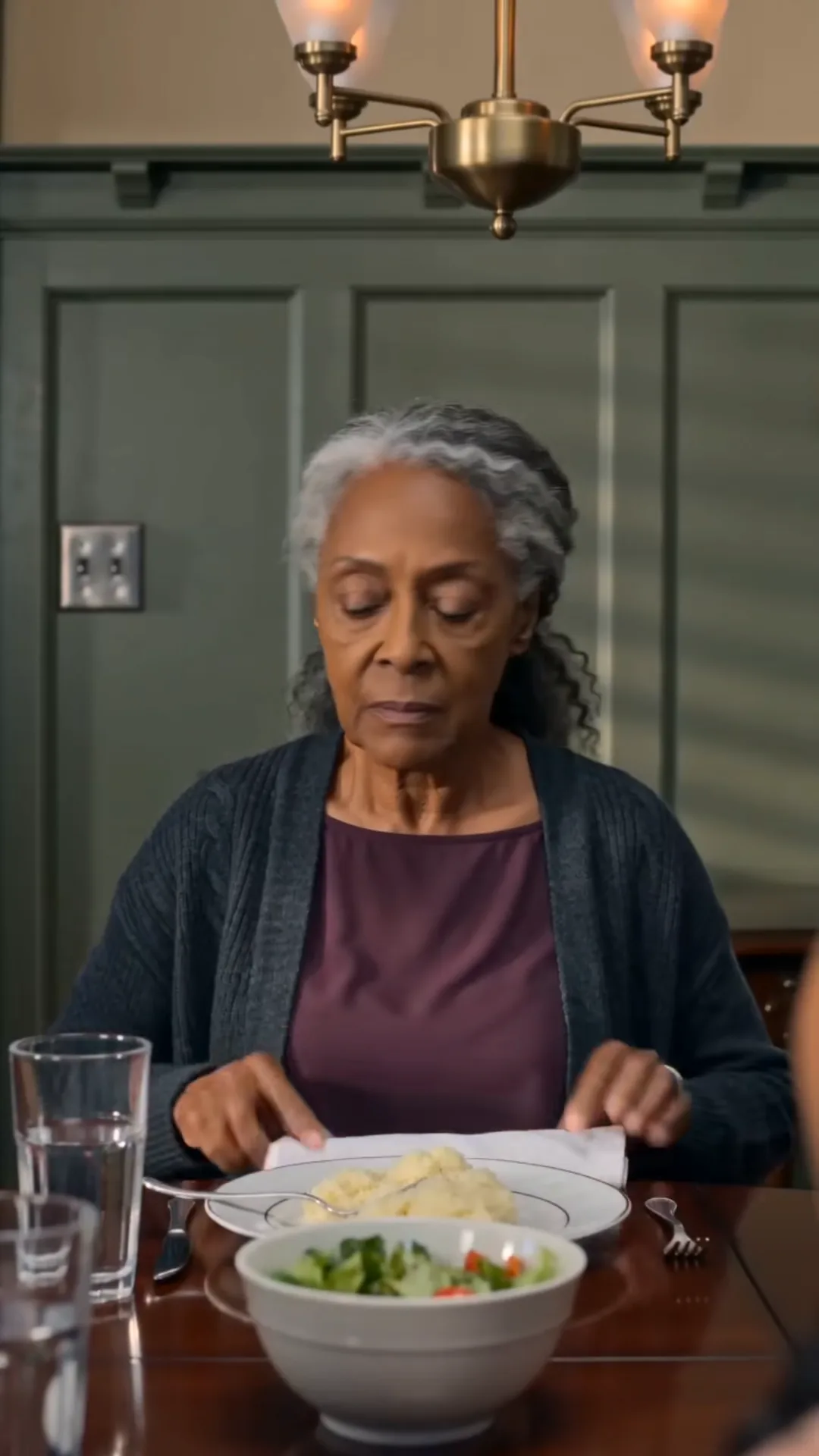
Carolyn stayed at the motel for three nights before she let herself answer any of the calls.
Not out of spite. She kept returning to that distinction, turning it over like a smooth stone whenever guilt tried to creep in and convince her otherwise. Not spite. Just the simple, necessary work of sitting inside a feeling long enough to actually understand its full shape before letting anyone talk her back out of it early.
The room was small and beige and entirely, blessedly unremarkable — a bed, a television she didn't turn on, a window overlooking a parking lot she found, unexpectedly, soothing to watch. Strangers coming and going, entirely unconcerned with Carolyn Whitmore, entirely unaware that a woman was in the middle of quietly reconstructing herself two floors above their comings and goings.
She had brought almost nothing with her. A single overnight bag, packed on the second morning when she finally drove back — carefully, at an hour she knew the house would be empty, using the spare key she'd never surrendered — to collect a few days' worth of clothes, her medication, the framed photograph of Walter from her nightstand.
She had not gone looking for Denise. She had not left a note.
She had simply taken what belonged to her, and left everything else exactly as she'd found it.
---
On the second night, she called her sister Jean, three states away, the first person Carolyn had spoken to honestly about any of this in fourteen months.
"You sold the house," Jean said, once Carolyn had finished the whole story — the dinner, the fork, the word sensitive, the drive with no destination. Jean's voice carried the particular gentle exasperation of a younger sister who had warned against exactly this, years ago, and had been waiting patiently, without ever once saying I told you so, for the moment it might finally be useful to bring up again. "You gave up thirty-one years of a home you loved, to help her, and somewhere along the way she just — stopped seeing you as anything but the help."
"I don't think she meant to."
"I know she didn't mean to. That's the part that makes it so hard to be angry at her properly." Jean sighed, and Carolyn could picture her exactly, sitting in her own kitchen three states away, phone tucked against her shoulder the same way their mother used to hold it decades ago. "Carrie, listen to me. You are allowed to have given generously and still be furious about how it was received. Those two things aren't in conflict. People act like gratitude and grievance can't sit in the same room together. They can. They have to, sometimes, or the grievance just quietly poisons the whole house."
Carolyn thought about that long after they'd said their goodbyes.
Gratitude and grievance, sitting in the same room together.
She thought she understood, finally, what fourteen months in that house had actually cost her — not the money, though the money mattered too, four hundred dollars a week in groceries she'd never once been asked to itemize or reimbursed for; not even the labor, though the labor had been real and constant and largely invisible.
What it had cost her was the specific, quiet dignity of being asked instead of assumed. Of being thanked instead of expected. Of being seen, even occasionally, as a woman with her own remaining life to live, rather than a permanent, convenient solution to someone else's scheduling problem.
---
On the third morning, she finally turned her phone face-up and read through fourteen unanswered messages, most from Denise, two from Mark, and one — the only one that made her laugh out loud, alone in her small beige room — from Lily, sent through Denise's phone, dictated in the particular blunt honesty only an eight-year-old could manage.
Lily says: I am sorry I said the mean thing. I did not know it was going to make you leave forever. Please don't leave forever. Also I found your reading glasses under the couch, they are safe.
Carolyn read it three times.
Something in her chest, still tender from three days of careful, deliberate feeling, softened around the edges — not all the way, not enough to erase what had happened, but enough to remind her why she'd stayed in that house fourteen months to begin with.
She had not left because of Lily.
She wanted, urgently, for Lily to eventually understand that distinction, when Lily was old enough to hold something that complicated. That an eight-year-old's careless echo of an overheard sentence had simply been the final small weight on a scale that had already, quietly, been tipping for over a year — not the cause, only the moment the imbalance finally became impossible to ignore.
She did not call Denise back that day.
She called the motel's front desk instead, and extended her stay through the weekend.
Some rooms, she was learning, needed to be sat in fully before you were ready to walk back out of them into anything else.
---
That evening, sitting by the window with the parking lot going gold and then gray in the fading light, Carolyn opened her laptop and did something she had not let herself consider in fourteen months.
She looked up apartment listings.
Small ones. One-bedroom, mostly, in the modest, walkable part of town near the library she used to take Lily to on Wednesdays, before Denise decided that particular joy was expendable. Places with their own kitchens, their own front doors, their own quiet corners that would belong to no one but Carolyn herself.
She had enough, she realized, doing the careful arithmetic she hadn't allowed herself to do since selling the house on Larkspur — enough from that sale, still sitting mostly untouched in a savings account, to rent something modest and entirely her own for years, if she chose to.
She had never once let herself imagine choosing to, across fourteen months of assuming her only remaining role in the world was the one currently being taken for granted at someone else's dinner table.
She sat with the listings open long into the night, not deciding anything yet, exactly, but feeling, for the first time in longer than she wanted to admit, the specific, quiet electricity of a woman beginning to imagine a future that belonged entirely to herself.
Outside, the parking lot lights buzzed on, one by one, strangers coming and going below her window, none of them aware that two floors up, a grandmother who had spent sixty-eight years making herself smaller for other people's comfort had just spent an entire evening, for the first time in longer than she could remember, imagining how much space she might actually be allowed to take up.
She closed the laptop eventually, sometime past midnight, and lay back against the unfamiliar motel pillows with Walter's photograph propped on the nightstand beside her, facing the bed the way it always had at home.
"You'd tell me I waited too long," she said quietly, to the photograph, to the empty room, to whatever remained of thirty-one years of marriage that still occasionally felt close enough to talk to. "You always did hate watching me shrink for other people. I used to think that was you being protective. I think now it might have just been you seeing something true that I wasn't ready to see myself."
The room offered no answer, of course. Only the low hum of the air conditioner, and the distant sound of a car door somewhere in the parking lot below, and the particular, settling quiet of a woman finally, fully alone with her own unhurried thoughts for the first time in longer than she cared to count.
May you like



She slept better that night than she had in fourteen months.
---







