Chapter 8 - Mark
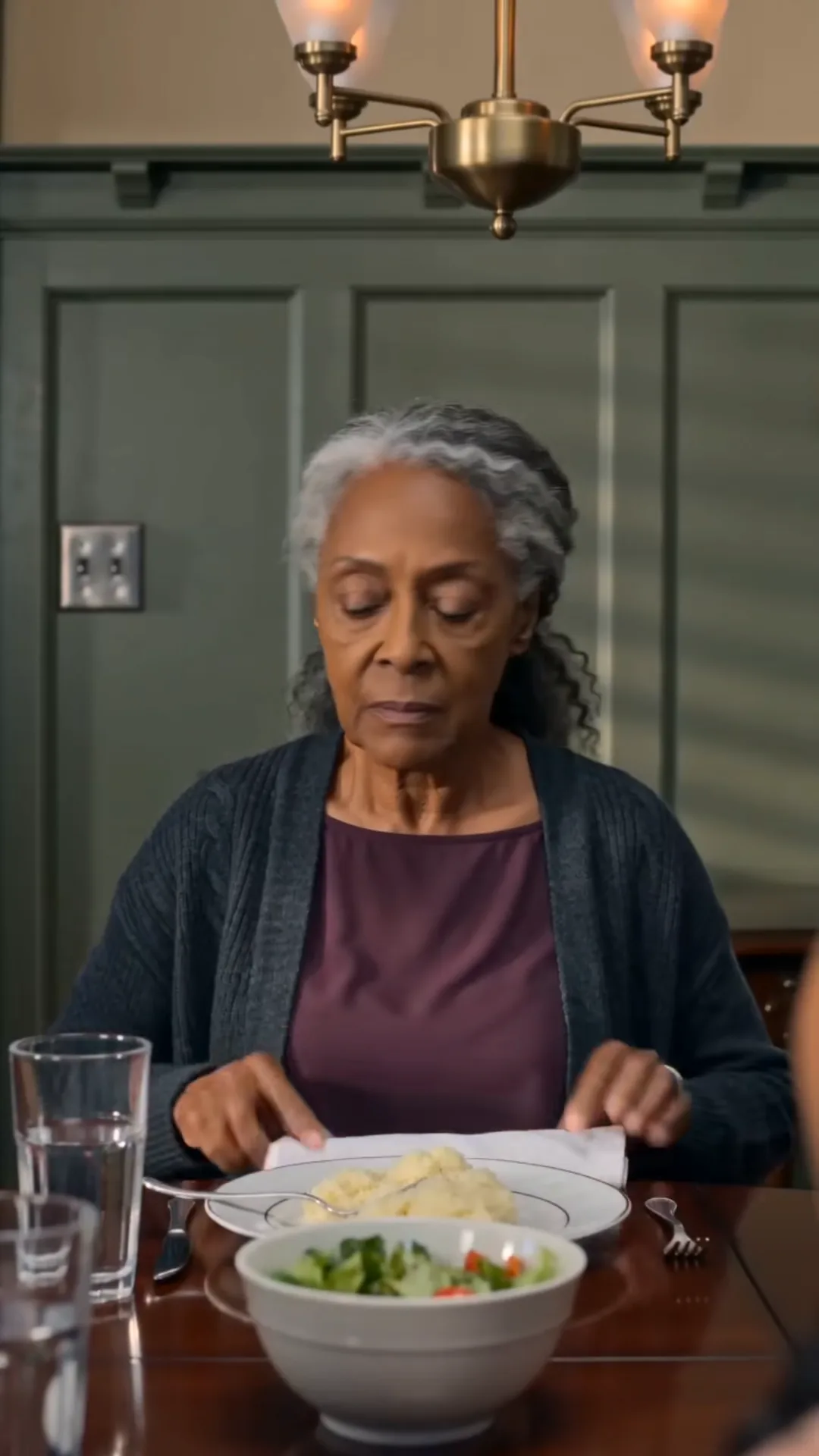
Mark did not understand, for the first several days, why everyone was making this so complicated.
He'd said one offhand thing at dinner. His mother-in-law had overreacted, left in a huff, and now, apparently, the entire household was reorganizing itself around her feelings — laundry lessons, careful texts, Denise crying quietly in the bathroom when she thought he wasn't listening.
He found it, if he was honest with himself, faintly ridiculous.
He did not say this out loud, at first. Some instinct — self-preservation, mostly, rather than genuine insight — told him this particular opinion would not land well in his current household.
He kept it to himself for six days.
Then, on the seventh night, over a dinner he and Denise ate mostly in silence, he finally said it anyway.
"I think we're all being a little dramatic about this," Mark said, setting down his fork. "She left because she was embarrassed a kid talked back to her. That's not a five-alarm family crisis. That's a Tuesday."
Denise looked at him for a long moment.
"That's the second time you've called it a Tuesday," she said quietly. "Do you know how many Tuesdays my mother has quietly absorbed in this house without either of us noticing?"
---
Mark didn't have an answer for that. He shifted in his seat, uncomfortable in a way he wasn't used to being at his own dinner table.
"I just think," he tried again, more carefully, "that this is getting blown out of proportion. She's family. Family forgives stuff. That's the whole point of family."
"Family also doesn't get to treat someone like free help and then act shocked when she stops volunteering for it," Denise said. Her voice wasn't raised. It was steadier than Mark had heard it in years, which unsettled him more than any amount of shouting could have. "Mark, when's the last time you thanked my mother for anything? Genuinely thanked her. Not a passing 'thanks, Carolyn' on your way out the door. An actual, specific thank-you, for an actual, specific thing she did for this family."
Mark opened his mouth. Closed it again.
He genuinely could not remember.
"That's what I thought," Denise said, not unkindly, though the words landed with real weight anyway. "I couldn't either, until I really sat and tried. And I'm her daughter. I'm supposed to be the one person in this house who never stops noticing her."
---
Mark thought about his own mother that night, lying awake long after Denise had fallen asleep beside him.
His mother had died when Mark was twenty-six — sudden, a heart attack in her own kitchen, gone before he'd ever gotten around to half the things he'd assumed he still had decades of time to eventually say to her.
He remembered, with sudden, uncomfortable clarity, a conversation almost identical to this one, years before he'd met Denise — his own father, dismissing some complaint his mother had raised about feeling invisible in her own house, waving it off with almost the exact same careless ease Mark himself had used at that dinner table a week ago.
Relax, Carolyn echoed strangely in his memory, except it hadn't been Carolyn's name at all, back then. It had been his own mother's name, in his own childhood kitchen, dismissed by his own father in almost identical language, and Mark had sat at that table as a teenager and said nothing, done nothing, simply absorbed the pattern the way children absorb every pattern modeled in front of them, whether anyone intends to teach it or not.
He had grown up and married a woman with a different mother, in a different house, and had somehow, without ever once noticing the repetition, recreated the exact same dynamic in his own dining room, twenty-some years later, this time with himself cast in his own father's role.
He got up quietly, careful not to wake Denise, and sat alone in the dark kitchen for a long while, turning the realization over slowly, uncomfortably, the way a person turns over any truth about themselves that arrives decades later than it should have.
---
The next morning, he found Lily at the kitchen table attempting, once again, to fold laundry — better now, six days of determined practice showing in the crisper lines of her folds, though still crooked at the corners in a way that made Mark's chest tighten unexpectedly.
"Why are you doing that?" he asked, sitting down across from her.
"So Grandma doesn't have to do the invisible magic anymore," Lily said, not looking up, entirely matter-of-fact. "Mom said magic is really just somebody working hard where you can't see it. I'm trying to learn the hard part myself."
Mark sat with that sentence for a long moment.
"Can you teach me?" he asked finally, surprising himself as much as it clearly surprised his daughter, who looked up with wide, startled eyes.
"You don't know how to fold laundry?"
"Not really," Mark admitted, feeling, for the first time in longer than he could remember, genuinely embarrassed by something true about himself. "I think I've spent about twenty years assuming it would just — happen. Without me ever learning how."
Lily considered him seriously, the same gravity she'd been bringing to every important conversation lately, then held out a wrinkled t-shirt.
"Okay," she said. "First you have to lay it down flat like this—"
Mark took the shirt from his daughter's small hands, and for the next twenty minutes, in his own kitchen, learned — clumsily, imperfectly, twenty years overdue — one small piece of the invisible labor that had apparently been holding his entire household together the whole time, without a single word of proper thanks from him.
It wasn't an apology.
But it was, he understood, sitting there folding shirts badly beside his daughter, the actual beginning of one — the kind Denise had tried to explain to Lily days earlier, the kind that showed rather than simply told.
He thought, for the first time all week, that he finally understood what everyone had been trying to tell him.
He thought, uncomfortably, of his own father, and resolved — quietly, privately, without announcing it to anyone — that whatever pattern had traveled down through that kitchen decades ago would end here, at this table, with this daughter, learning this lesson while there was still time for it to matter.
Lily, still narrating each fold with great seriousness, glanced up at him partway through the next shirt.
"You're actually pretty bad at this," she informed him, entirely without malice, the flat honesty of an eight-year-old who had not yet learned to soften true things for the sake of adult feelings.
"I know," Mark said, and found himself laughing — a real laugh, surprised out of him, the first one all week that didn't carry any defensiveness underneath it. "I'm going to keep practicing anyway. Even if I stay bad at it for a while."
"That's what Mom said Grandma probably did too," Lily said. "Practiced for years before it got easy. Maybe you just need years."
May you like



"Maybe I do," Mark agreed, and reached for another shirt, determined, this time, not to let the years pass without him.
---







