Chapter 6 - What Lily Understood
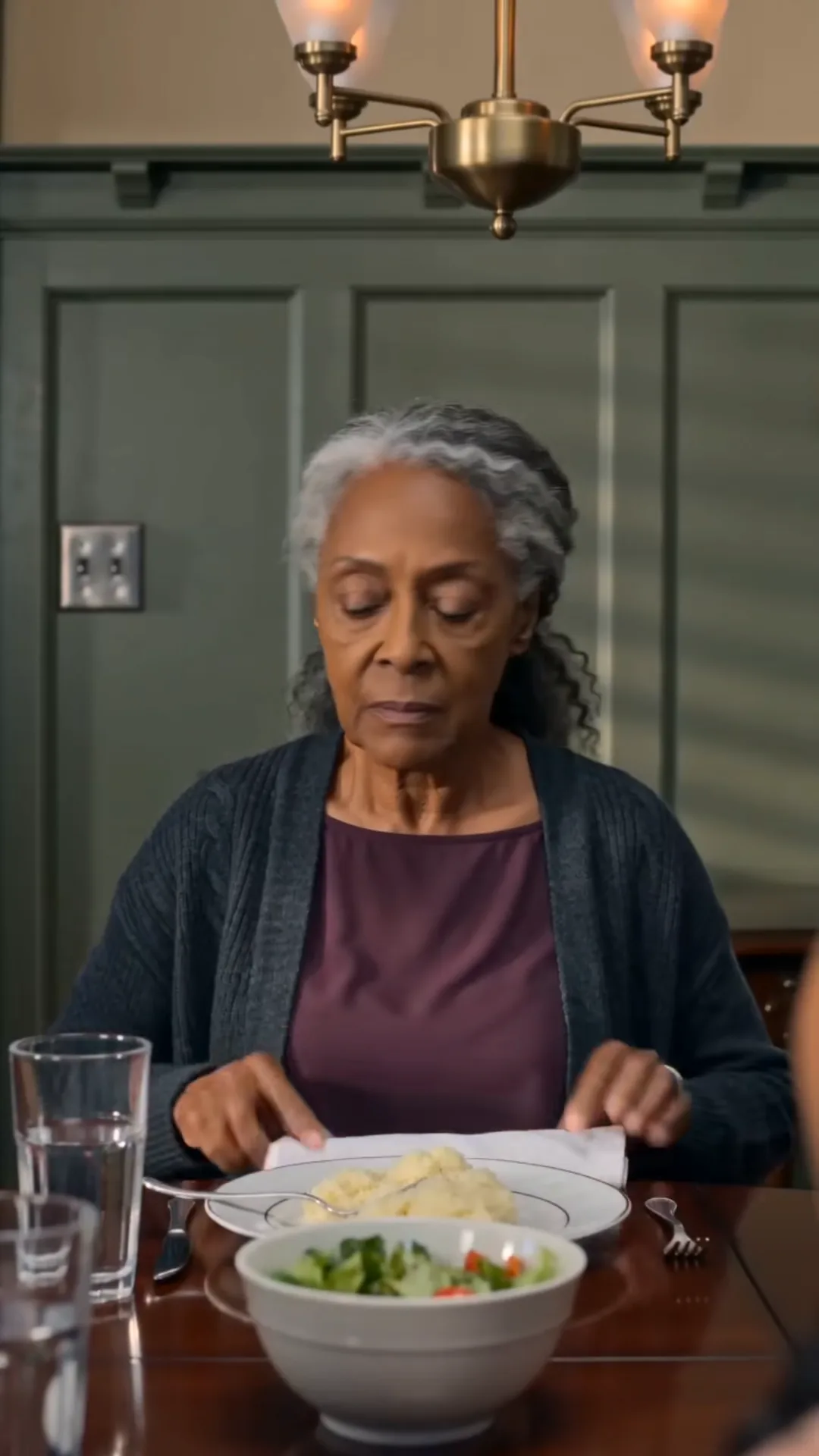
Nobody explained things to Lily properly.
That had always been the family's habit, long before this particular week — grown-up conversations conducted in lowered voices behind half-closed doors, important things folded down into simplified, child-sized versions that usually left out the exact parts that would have actually helped her understand.
Lily filled in the gaps herself, the way children always do, piecing together a working theory of the world from fragments never meant for her ears.
This time, her theory was mostly right.
---
"Did I break Grandma?" Lily asked her mother, four days after the dinner, apropos of nothing, looking up from the cereal she'd been eating in careful, distracted circles.
Denise set down her coffee. "What do you mean, sweetheart?"
"Like a plate. When you drop a plate, it breaks, and even if you glue it back together it still has the crack." Lily poked her spoon at a soggy piece of cereal, not looking up. "I think I said the crack thing to Grandma. At dinner. I think that's why she's not here."
Denise felt her chest tighten in a way that had become familiar over the past four days — a specific ache located somewhere between guilt and love, the two feelings having become, since that dinner, almost impossible to fully separate.
"You didn't break Grandma," Denise said carefully, kneeling down to Lily's eye level, the way the parenting books always suggested and which Denise, this week, was finally trying to actually practice instead of just reading about. "Grandma is a person, not a plate. People don't break from one thing someone says. But people do get tired, sometimes, from a lot of small things happening again and again, over a long time. And I think Grandma got tired, honey. Of all of us — me and Daddy included, maybe even more than you — not noticing everything she does for this family."
Lily considered this with the particular gravity she brought to complicated ideas.
"Like how she does my laundry," Lily said slowly, working it out loud, "and I never say thank you because I don't even see her do it. I just have clean clothes and I don't think about where they came from."
"Exactly like that."
"That's kind of like magic, though," Lily said, frowning. "Magic doesn't need a thank you."
"Grandma's not magic," Denise said gently. "She's just a person who loves us so much, she made herself almost invisible doing things for us. And I think that felt like magic to all of us, because we never had to see the work. But it wasn't magic. It was just her, working really hard, every single day, without anyone noticing."
---
Lily was quiet for a long moment, chewing thoughtfully on nothing at all, cereal forgotten.
"I want to see her," she said finally. "Can we go see her?"
"I don't know if she's ready for that yet, sweetheart."
"Why not? I already said sorry. Through your phone."
"Saying sorry once doesn't automatically fix something big," Denise said, surprising herself with how naturally the sentence came out, as though some part of her had already been working out this exact explanation, for herself as much as for her daughter. "Sometimes sorry is just the very first step. Then you have to actually show the person, with what you do differently afterward, that the sorry meant something."
Lily's small forehead scrunched again, working through this new, more complicated version of an apology than the ones she was used to — the quick, transactional kind exchanged over stolen toys and shoved siblings on a playground, resolved in under a minute and immediately forgotten.
"So I have to show Grandma I'm different," Lily said slowly, "not just tell her."
"That's exactly right."
"How do I show her?"
Denise thought about it — really thought about it, longer than the question probably warranted from an eight-year-old, because she realized, sitting there on the kitchen floor with her daughter, that she didn't entirely know the answer for herself yet either.
"I think," she said finally, "we start by noticing things. All the things Grandma used to do that we stopped seeing. And then we do some of them ourselves, so she knows we finally understand how much she was carrying."
---
That afternoon, without being asked, Lily attempted to fold her own laundry for the first time in her life.
It did not go well. Shirts emerged from the effort more crumpled than before she'd started, sleeves inside out, a small mountain of failed attempts growing on her bedroom floor.
Denise found her there an hour later, sitting cross-legged amid the wreckage, close to tears with frustration.
"I can't do it right," Lily said. "Grandma always made it look easy."
Denise sat down on the floor beside her daughter, picked up a wrinkled t-shirt, and instead of simply doing it herself the way she might have a week earlier, she showed Lily, slowly, patiently, the exact fold Carolyn had probably used a thousand times without either of them ever once watching closely enough to learn it.
"She probably practiced this for years before it looked easy," Denise said. "Everything that looks like magic is usually just years of somebody quietly practicing something hard, until nobody else has to see the difficulty anymore."
Lily nodded slowly, folding another shirt — better this time, though still crooked at the collar.
"I'm going to get good at this," she announced, with the fierce, sudden determination only children seem able to summon over something so small. "And then when Grandma comes back, I'm going to fold all my own laundry forever, so she doesn't have to do the invisible magic anymore."
Denise smiled, though something in her chest ached at the phrase when Grandma comes back, spoken with such unshakable, uncomplicated certainty by a child who hadn't yet learned that some things, once broken, required more than a laundry fold and a child's good intentions to properly mend.
She hoped, watching her daughter carefully square another wrinkled shirt into something resembling a fold, that Lily's simple certainty would prove to be right.
She was no longer entirely certain, herself, that it would be — and that uncertainty, more than anything Mark had said at that table five days earlier, was what finally pushed Denise to pick up her phone that evening and type a message to her mother that wasn't an apology dressed as a demand for return, but something else entirely.
Something closer, for the first time in fourteen months, to an actual question about what her mother needed, rather than what the family needed from her.
Lily, unaware of the message being composed downstairs, kept folding shirts late into the evening, humming the same tuneless little song she'd hummed over her peas that first cursed dinner, though this time, Denise noticed, the humming carried something different in it — not the careless satisfaction of a child who'd gotten away with something, but the quiet, industrious contentment of a child learning, one crooked fold at a time, what it actually meant to try.
"Mom," Lily said eventually, holding up a shirt for inspection, "do you think Grandma will notice the folding is better? Or will it just look like a shirt to her?"
"She'll notice," Denise said, with more certainty than she entirely felt. "Grandma notices everything. That's sort of the whole problem, honey. She notices everything about all of us, and for fourteen months, none of us noticed her back."
May you like



Lily considered this, folding one more shirt in silence, and then set it carefully atop the small, crooked pile — proof, however imperfect, of an eight-year-old's earnest attempt to close a gap she hadn't meant to open in the first place.
---







