Chapter 1 - The House That Learned to Whisper
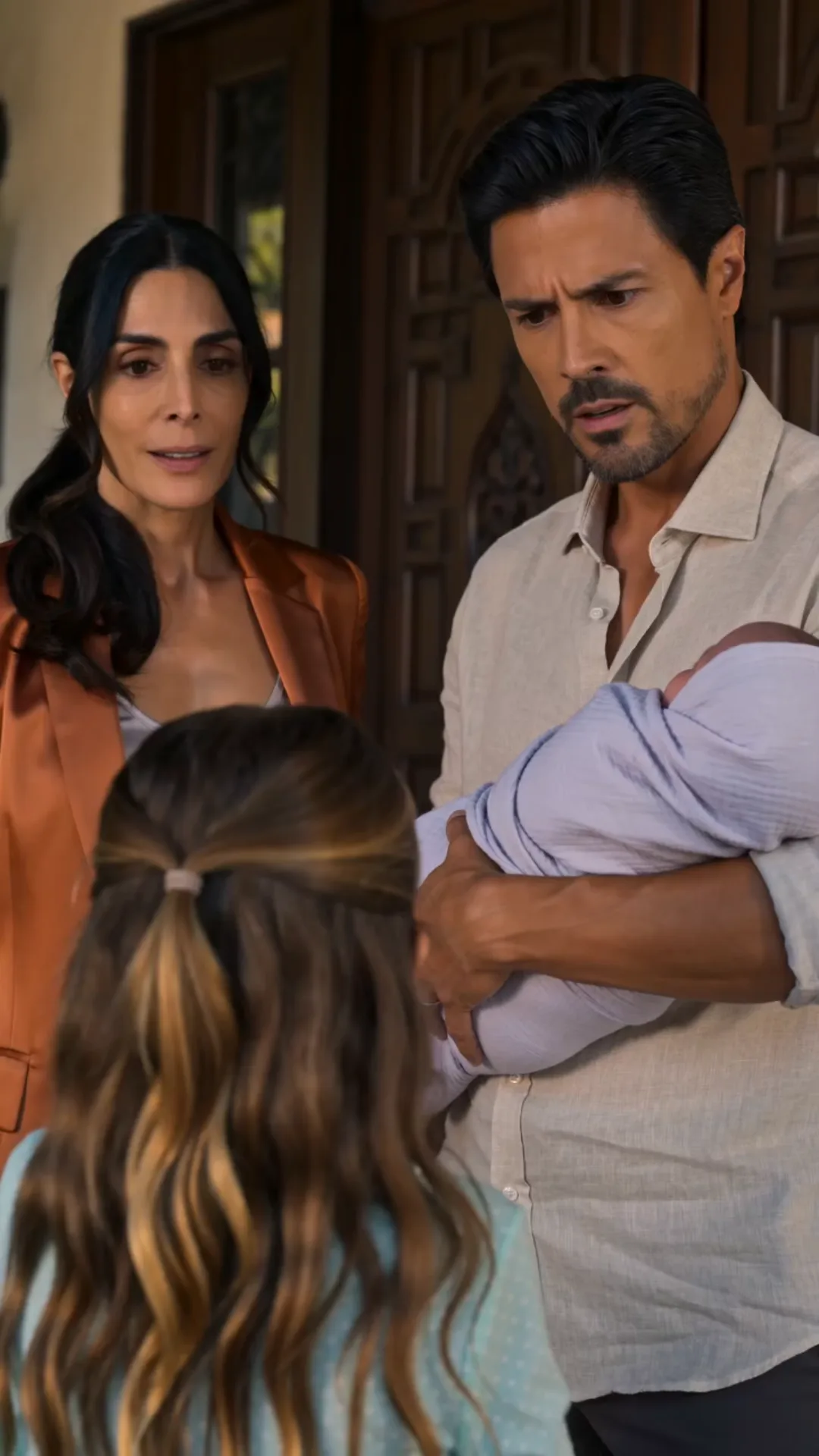
The apartment smelled like lavender detergent and formula.
Mateo noticed that first, every morning.
Before the coffee. Before the news. Before anything.
Lavender, and underneath it, something sour he couldn't name.
He told himself it was the diapers.
---
Sofia's door had a paper star taped to it.
Faded now. Corners curling like old leaves.
Her mother had put it there, four years ago, back when the apartment smelled like something else entirely — like her mother's shampoo, like Sunday pancakes, like a life that hadn't ended yet.
Mateo still knocked before opening that door.
Even now. Even though it was his own apartment, his own daughter's room.
Some habits were a kind of apology.
---
Renata didn't knock.
She said it wasn't necessary, that they were family now, that a locked heart needed an open door.
She said a lot of things like that.
Warm things. Magazine things.
Mateo had liked those sentences once. He'd fallen for them, actually — the way she talked about blending families like you'd blend a smoothie, effortless, sweet, good for you.
He hadn't noticed, back then, that Sofia never once corrected her.
Never once said that's my mom's mug.
Never once said no.
---
The baby had come in March.
Nora. Six pounds, four ounces. A tuft of black hair like her father's.
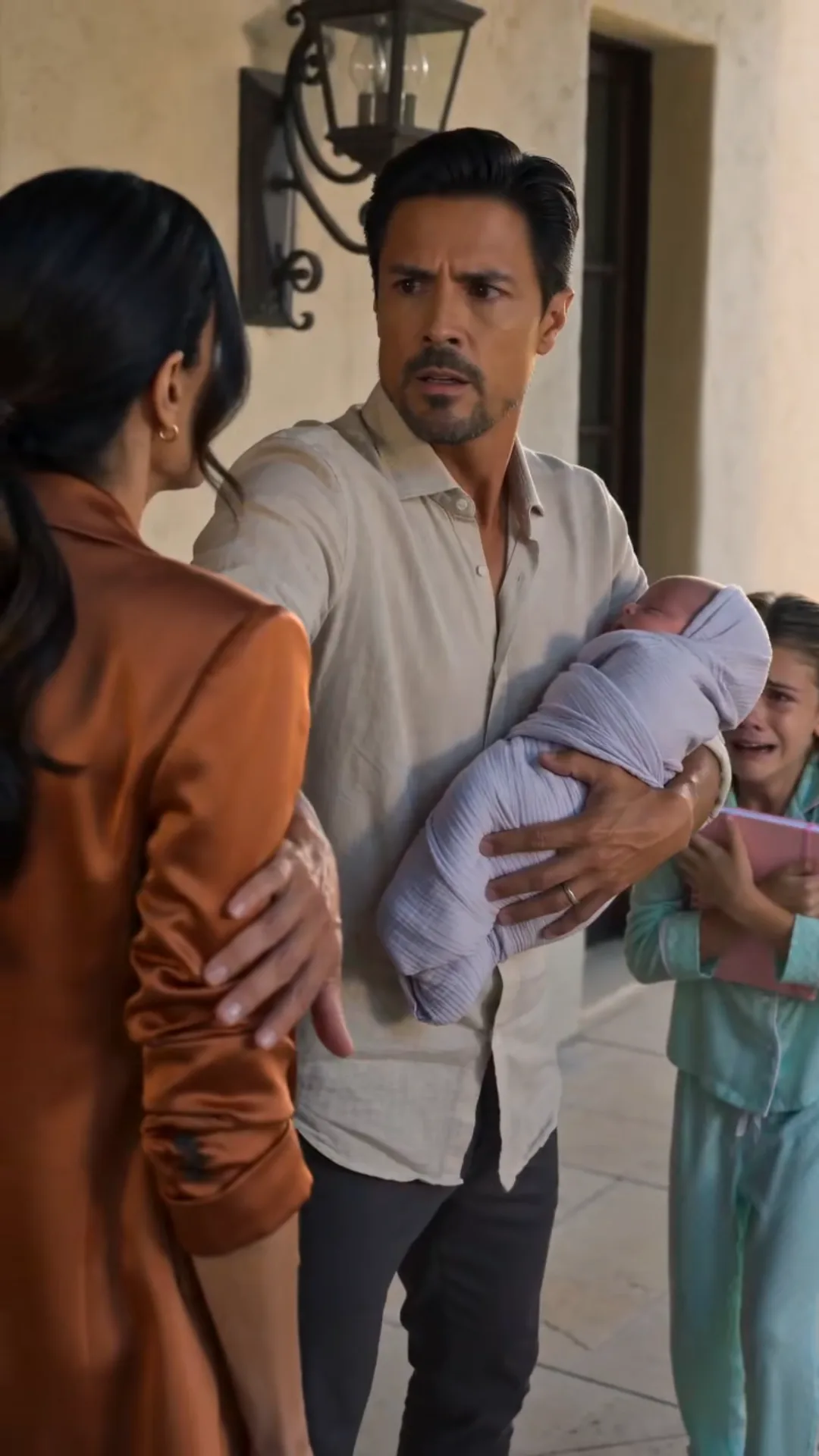
Sofia had held her exactly once, in the hospital, for eleven seconds, before Renata lifted the baby back into her own arms and said, careful, sweetheart, she's not a doll.
Sofia hadn't asked to hold her again.
Mateo remembered that detail now.
He hadn't understood it at the time.
---
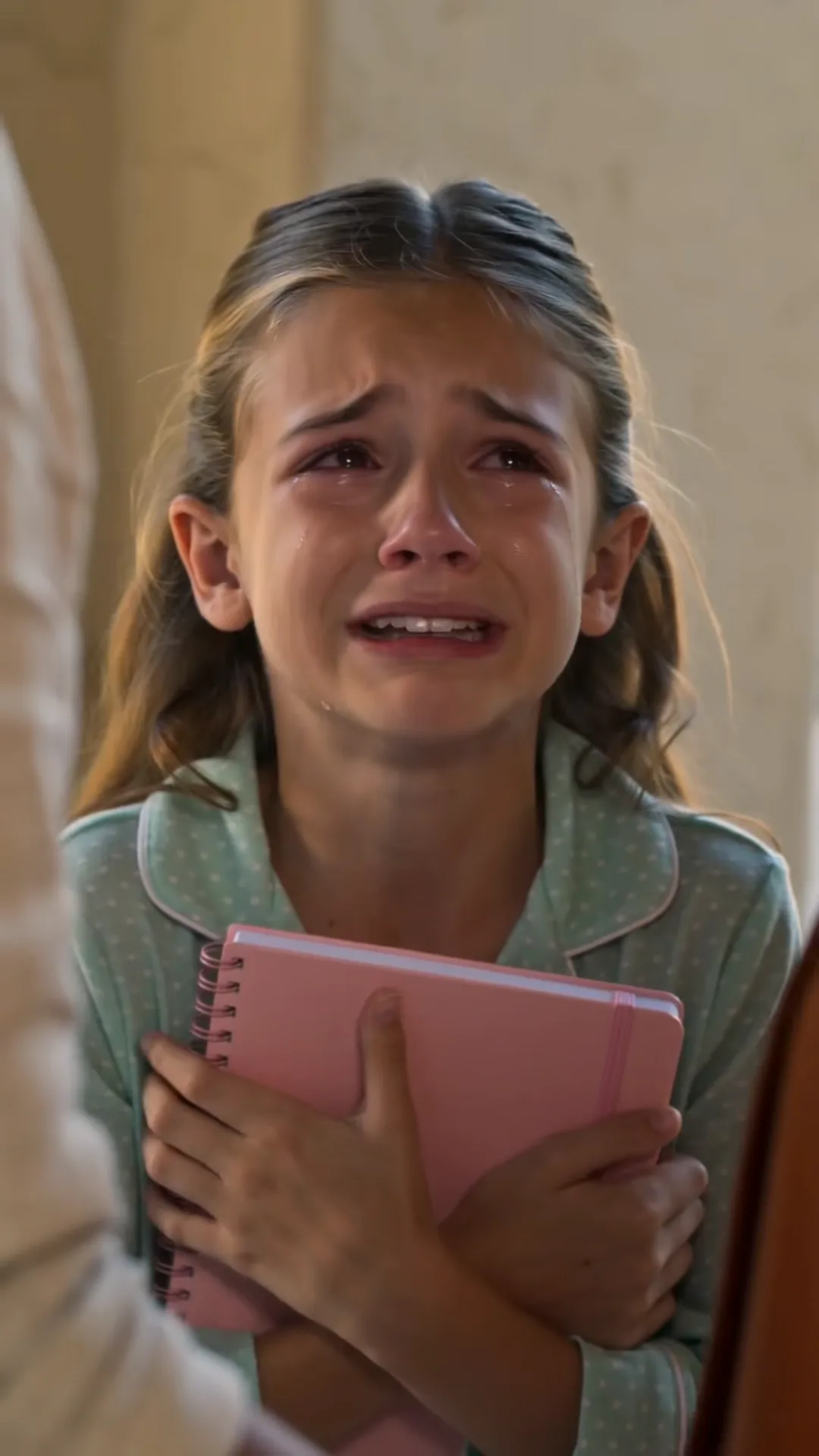
The pink notebook showed up in October.
Small. Spiral-bound. A unicorn sticker half peeled off the cover, its horn worn down to plastic from being touched too many times.
Sofia carried it everywhere.
To the table. To the car. To bed, tucked under her pillow like a splint for something broken.
Mateo asked her once what she wrote in it.
"Stuff," she said.
"Good stuff or bad stuff?"
Sofia had looked at him for a long moment, the way children look at adults when they are deciding whether the adult can be trusted with the truth.
"Just stuff," she said again, and closed the cover.
He let it go.
He would spend the rest of his life wishing he hadn't.
---
Renata called it a phase.
Kids that age get moody, she said, stirring formula in slow, patient circles. She misses attention. New baby, you know how it is.
And Mateo, tired, drowning in two a.m. feedings and mortgage statements, had nodded.
Because it was easier to believe a phase than to believe the alternative.
Because the alternative had no name yet.
Because naming things makes them real, and some part of him — some cowardly, comfortable part — did not want them to be real.
---
But there were signs. Small ones. The kind you only see afterward, lined up like stones across a river you didn't know you'd have to cross.
Sofia flinching when Renata raised a hand to fix her own hair.
Sofia eating dinner faster than a seven-year-old should, like a girl clearing her plate before someone could take it.
Sofia's night-light, unplugged one morning, its cord wound so tight around itself it left a mark on the outlet.
Small things.
Deniable things.
The kind of things you can explain away at two in the afternoon with the sun coming through the kitchen window, and the kind of things that keep you up at three in the morning when the house goes quiet enough for you to actually hear it.
---
Mateo started noticing the quiet, in November.
The particular quality of it.
Not peaceful. Not safe. A held-breath kind of quiet, the kind a house makes when somebody in it has learned not to make noise.
He noticed Sofia had stopped singing in the shower.
She used to sing badly and loudly, off-key, something from a cartoon, and he used to bang on the door and yell encore, encore just to hear her laugh.
She hadn't sung in three months.
He hadn't asked why.
That, more than anything, was the thing he could not forgive himself for later — not the not-knowing, but the not-asking.
---
Renata was good at rooms.
She could walk into any room and reorganize its temperature. Warm it, if company was there. Cool it, the second the door shut.
Mateo saw the warm version. Almost exclusively.
He saw a woman who packed Sofia's lunches with little notes — have a great day, sweet girl! — in handwriting so careful it looked printed.
He didn't see what happened to those lunches at 3 p.m., when Sofia, alone at the kitchen table doing homework, would find the notes still folded inside, unread, uneaten apple slices browning beside them, because Renata had told her that morning, quietly, in the hallway where the baby monitor couldn't hear, that the notes were only for when people were watching.
---
He was, in his own accounting, a good father.
He read to Sofia at night. He came to the parent-teacher conferences. He remembered her allergy to peanuts and her fear of the vacuum cleaner and the exact way she liked her eggs.
He would have said, if you'd asked him in September, that he knew his daughter.
He did not know that by October she had started sleeping with her shoes by the bed.
Just in case.
Just in case of what, she couldn't have told you. Only that some part of a seven-year-old's body had begun preparing, quietly, methodically, for a night when she might need to run.
---
The pink notebook filled up fast.
Page after page, in the round, uneven print of a child who had only recently mastered cursive capitals for her own name.
Some pages were drawings. A house with too many windows. A woman with no mouth. A man — always the same man, always holding a small blue bundle — standing just outside a doorway, always facing the wrong direction, always about to walk away.
Some pages were words.
Sofia wasn't ready to say them out loud yet.
But she had decided, somewhere in the long, quiet weeks of that autumn, that if she couldn't say them, she would write them, and if nobody read them today, somebody would read them eventually.
She was seven.
She already understood that grown-ups don't always look. But she'd learned, too, that paper waits. Paper doesn't get tired. Paper doesn't change its story to keep the peace.
---
By December, the notebook had a second sticker — a small padlock, cut out of a magazine, taped crookedly over the front, like a warning.
Private, she'd written under it, in red marker. Do not touch. Emergency only.
She didn't know yet what emergency meant, exactly.
She only knew that some nights, when Renata's voice went flat and careful in a way that made the air in the apartment feel thinner, Sofia would open the notebook under her blanket with a flashlight and write down everything — the words, the exact words, and what her body did when she heard them — because some instinct in her, some ancient animal wisdom children are born with and adults spend a lifetime forgetting, told her:
Someone will need this. Keep it safe until they do.
---
Mateo did not know any of this yet.
He knew the smell of lavender.
He knew the paper star on the door.
He knew his daughter had stopped singing, and he had noticed, the way you notice a light bulb dimming, without yet understanding that somewhere behind the wall, a wire had already begun to fray.
He did not know that in eleven days, in a hallway with beige walls and warm yellow light, his daughter would finally, finally decide to stop writing the truth down.
May you like



And start saying it out loud instead.
---