Chapter 7 - What the Notebook Couldn't Say
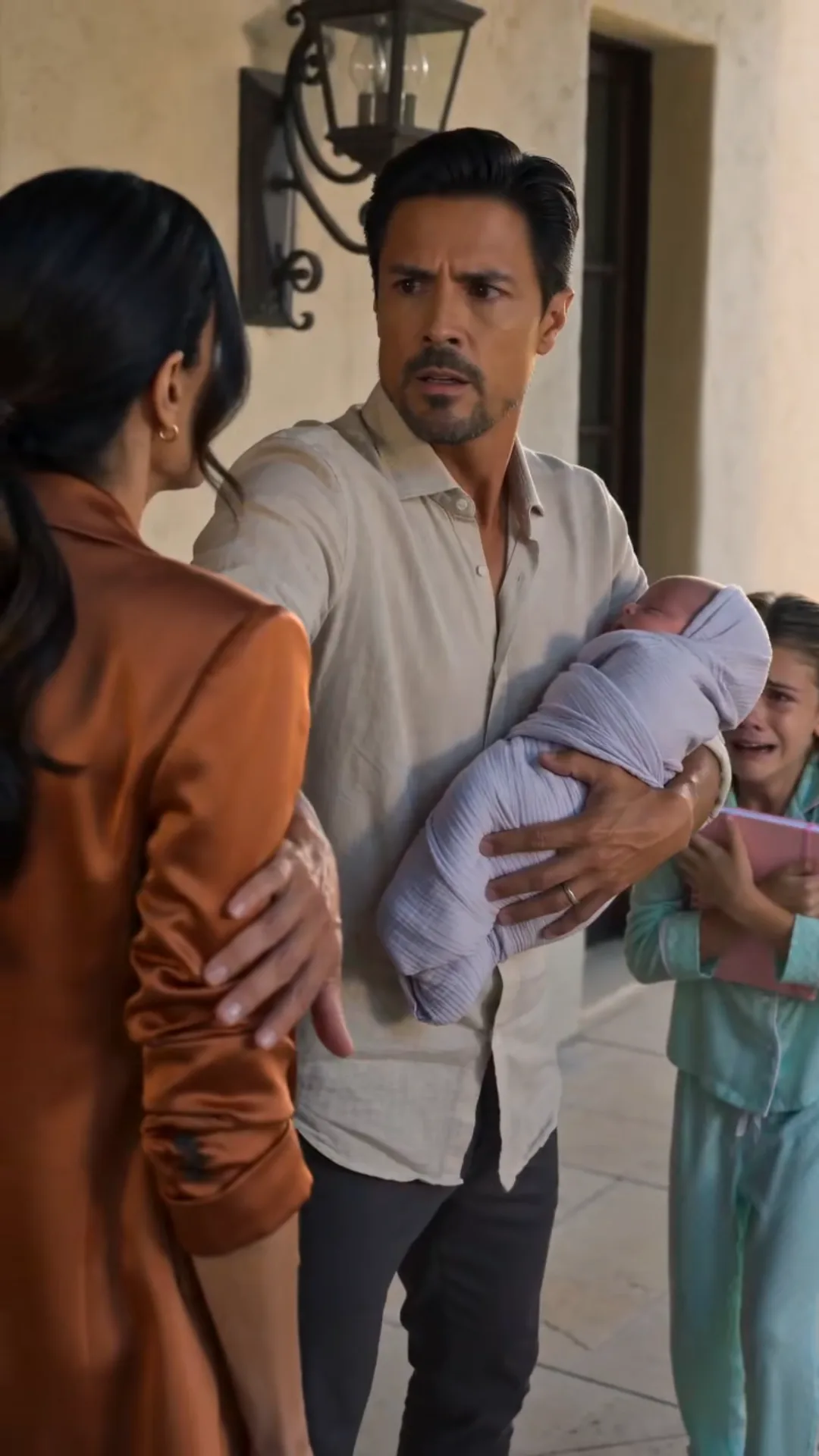
The days after were not clean.
Mateo had imagined, in some naive corner of his mind, that confronting the truth would feel like relief — a door thrown open, light pouring in, over.
Instead it felt like surgery. Necessary, but slow, and full of pain that arrived in waves he couldn't predict.
---
Renata left that first night, suitcase in hand, face composed all the way to the door, the performance holding right up until the last possible second — and then, just before she stepped into the hallway, something slipped.
"You'll regret this," she said, low, meant only for him. "You have no idea what you're throwing away."
Mateo looked at her for a long moment.
"I know exactly what I almost threw away," he said. "It's standing in my living room. I found it just in time."
She left without another word.
---
The apartment felt strange in her absence. Too quiet in a different way now — not the held-breath quiet of the last four months, but the disoriented quiet of a house recalibrating to a threat that had finally, actually left.
Sofia slept in her own room that night for the first time in weeks without her shoes by the bed.
Mateo checked on her at midnight and found her sleeping on her side, one arm flung loose across the blanket, mouth slightly open, entirely, blessedly unguarded.
He stood in the doorway for a long time, just watching her breathe.
---
He called a family lawyer the next morning. Then a child psychologist, a woman named Dr. Abara with a calm voice and a waiting room full of soft-colored beanbags, who specialized, her website said, in "supporting children through disrupted trust."
Sofia's first session lasted forty minutes.
She came out holding the notebook, Dr. Abara's expression carefully neutral in the way of someone who has just read something serious and is choosing her words with great care.
"She's remarkably resilient," Dr. Abara told Mateo privately, after Sofia had gone to the waiting room to draw. "But resilience isn't the same as unharmed. She's going to need consistency. Predictability. And she's going to need you to keep believing her, out loud, often, even when it's uncomfortable."
"I will," Mateo said. "For the rest of her life, if that's what it takes."
---
The notebook itself became, oddly, a kind of anchor for both of them.
Sofia kept writing in it — not out of fear now, but out of habit, and slowly, over the following weeks, the entries changed shape.
January 10th. Dad believed me. I didn't think anyone would.
January 22nd. We got a new night-light. I don't need it as much but I like having it.
February 3rd. Dad asked me every single day this week if I was okay. Some days I said no. He didn't get mad. He just said thank you for telling me.
Mateo read these entries only when Sofia offered them, page by page, in her own hands, at her own pace.
He never once tried to take the notebook from her again.
He understood now, with a clarity that would never entirely leave him, exactly what it meant to a child to have something taken by force — and exactly what it meant, instead, to be handed the truth willingly, one careful page at a time.
---
There were harder days too.
Days when Sofia flinched at raised voices on television. Days when she asked, out of nowhere, at dinner, whether Mateo was going to get tired of her the way Renata said he would.
"Never," he told her, every single time, without hesitation, without impatience. "Not in a hundred years. Not in a thousand."
"You have to keep saying it," Sofia said once, matter-of-fact, the way children state things that are, to them, simply obvious. "I forget sometimes. It's not your fault. I just forget."
"Then I'll keep saying it," Mateo said. "Every day. For as long as you need."
He meant it as a promise.
It became, over the following year, something closer to a ritual — every night, before lights out, three words, unchanging: I believe you.
---
Nora grew, unaware for now of any of it, into a baby who reached for her sister's hand before anyone else's, as though some infant instinct had registered, in that terrible hallway, exactly who had stood firm and who had lunged.
Sofia would carry her sometimes, gently, humming — badly, off-key, the same cartoon song she used to sing in the shower, back before the house had taught her to go quiet.
She sang it again, for the first time in months, on a Tuesday in February, and Mateo, hearing it from the kitchen, had to set down the dish in his hands and simply stand there, listening, until the ache in his throat passed.
Small proof.
May you like



The house was learning to be safe again.
---







