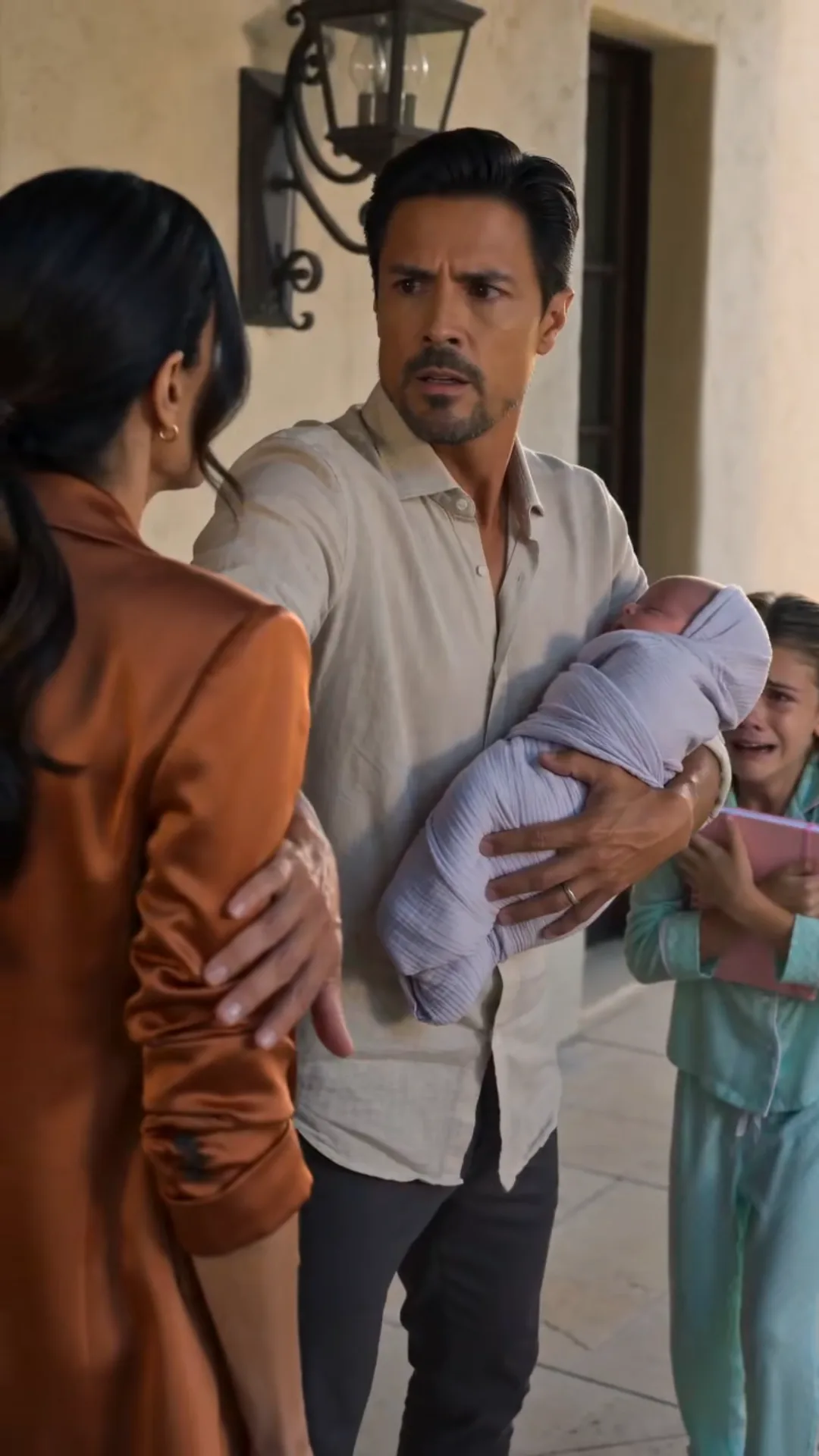
Chapter 2 - The Sound a House Makes When It's Lying
The trouble, later, would be explaining the timeline.
Not to police. Not yet. Just to himself, lying awake, trying to rebuild the exact order of small cruelties that had led to that hallway.
It had started, he thought, with a broken hair clip.
---
It was nothing. A plastic butterfly clip, one wing snapped clean off, found on the bathroom floor in November.
Sofia's clip. Her mother had bought her a set of them, the year before she died, six butterflies in six colors, and Sofia treated them like relics, like the last artifacts of a country that no longer existed.
She cried when she found the broken one. Not loudly. Sofia had already learned, by then, the art of crying quietly, the kind of crying that fits inside a closed fist.
"It fell," Renata said, when Mateo asked. "I stepped on it by accident, reaching for a towel."
Sofia said nothing.
She looked at the broken wing in her palm, then at Renata, then at her father, and something in her face closed like a door being eased shut so it wouldn't slam.
Mateo believed the accident.
Accidents were easier to live inside than the alternative.
---
Then there was the matter of the closet.
Small thing. Almost nothing. Sofia's coat, moved from the hallway closet — the one with the good hooks, the ones at kid height — into her own bedroom closet, on a hanger too high for her to reach without a stool.
"She kept leaving it on the floor," Renata explained, when Mateo noticed his daughter dragging a step-stool down the hall one frozen morning in December. "I'm teaching her responsibility."
It sounded reasonable.
Everything Renata said sounded reasonable, if you only heard the sentence and not the seven-year-old standing beside it, silently recalculating, every single day, how many extra seconds of cold she'd have to survive because a coat now lived somewhere she couldn't reach without help she wasn't sure she was allowed to ask for.
---
Small things. Deniable things.
That was the architecture of it, Mateo would understand far too late — not a single wall, but a thousand bricks, each one so small you could hold it in your hand and say, this isn't a wall, this is just a brick.
Sofia was the only one standing close enough to see them stacking.
---
December 14th. A Tuesday.
Mateo remembered the date because it was the day Nora had her two-week checkup, and Renata had asked him, sweetly, if he'd mind picking Sofia up from school so she could get to the pediatrician on time.
He'd said of course.
He liked those afternoons. Just him and Sofia, the two of them in the car, the radio low, Sofia narrating her day in the specific, digressive way of seven-year-olds — a story about a boy named Diego who ate paste, a complaint about long division, a question about whether dogs dream.
That Tuesday, she was quiet the whole ride.
"Rough day?" he asked, at a red light.
"No."
"You sure?"
A pause. Long enough that he glanced over.
"Dad," she said. "If somebody does something and says sorry — but keeps doing it — is that still sorry?"
He'd laughed, a little, the easy laugh of a man who thought his daughter was being philosophical for the sake of being seven.
"Depends what they did," he said. "Why? Somebody at school?"
"No," Sofia said, looking out the window. "Not at school."
The light turned green.
He drove on.
He would think about that unfinished sentence for the rest of his life, the way you think about the one road you didn't take, wondering where it would have led.
---
There is a particular guilt reserved for fathers who ask the wrong follow-up question at exactly the wrong moment, and then let the silence answer for them.
Mateo would carry that guilt like a stone in his coat pocket, worn smooth from years of turning it over.
But in December, he did not know to carry anything yet.
In December, all he knew was that his daughter had gone quiet in a new way, a way that felt less like sadness and more like calculation, like a small animal that had started counting exits.
---
Renata, for her part, was never unkind in front of him.
That was the design of it, though Mateo wouldn't understand the word design until much later, until a family counselor used it in a sentence that made his stomach drop through the floor.
Some people design their cruelty around the audience, the counselor would say, months from now, in a beige office with a box of tissues angled just so on the table. They're not impulsive. They're precise.
In December, Mateo only knew that Renata was warmest exactly when someone was watching, and coolest exactly when no one was.
He had started, without fully admitting it to himself, watching for the gap between those two temperatures.
He had started, without fully admitting it, keeping score.
---
The scorecard filled slowly.
A voice, sharp and low, cut off the second his key hit the lock.
A silence at dinner that Sofia broke only in monosyllables, her eyes flicking toward Renata before every answer, like a student checking a teacher's face for the right response.
A night, near Christmas, when Mateo came home late from a client dinner and found Sofia already in bed, wide awake, staring at the ceiling.
"You're not asleep," he said, sitting on the edge of the mattress.
"I was waiting for you."
"For what?"
Sofia's fingers found the corner of her blanket and folded it, unfolded it, folded it again.
"Nothing," she said. "I just like knowing you're home."
He kissed her forehead and told himself that was a sweet thing for a daughter to say.
He did not ask why a seven-year-old needed to confirm, every single night, that her father had made it safely back inside the walls of their own apartment.
---
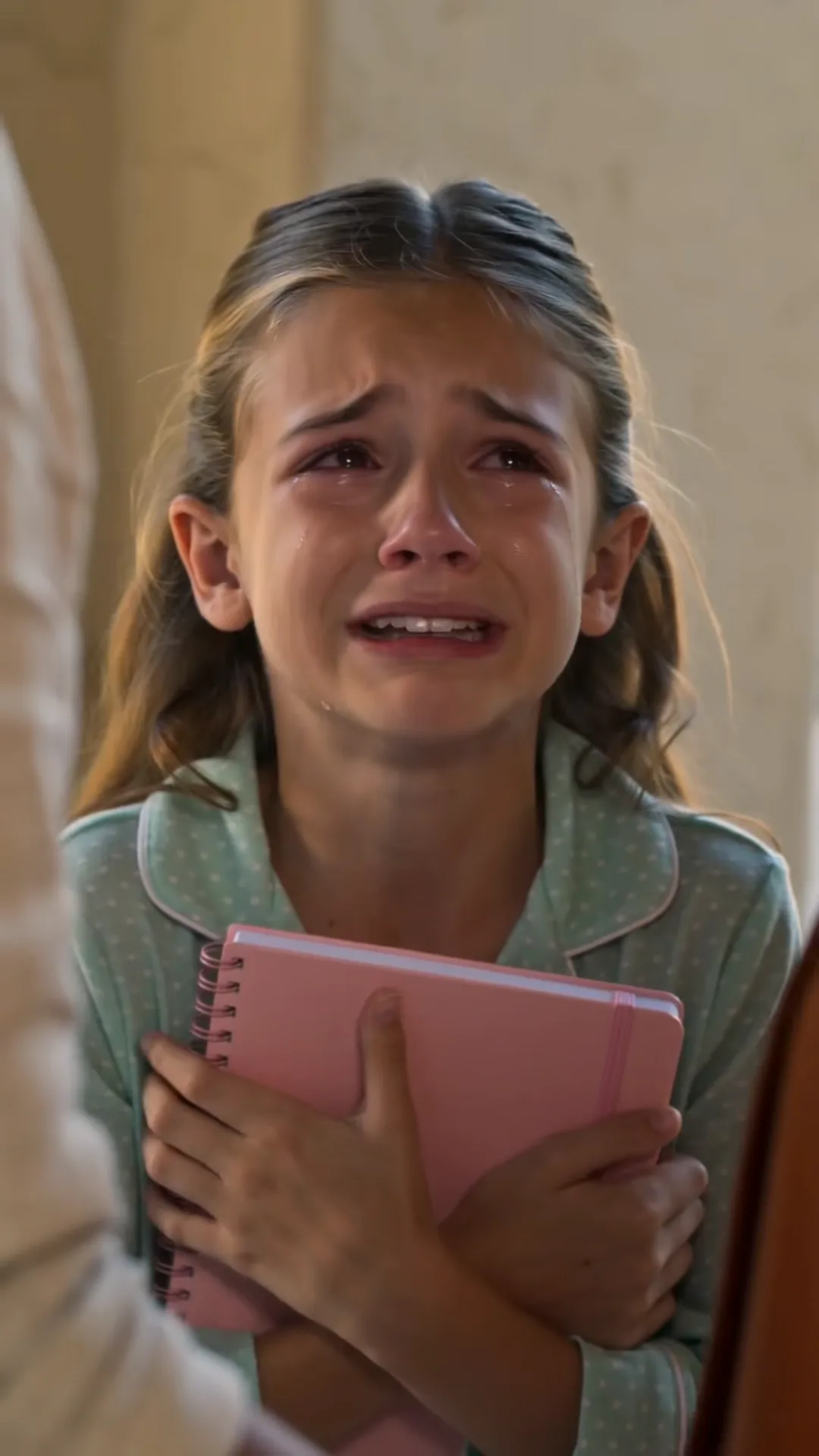
The notebook grew heavier with each of these unspoken things.
Sofia had started keeping it under her pillow instead of in her backpack. She'd started writing at night instead of after school, by flashlight, in a hand that got smaller and smaller as the year went on, as if she were trying to take up less space even on the page.
She wrote about the clip. About the coat. About the sentence Renata had said in the kitchen on the fourteenth, the one that made Sofia's stomach drop the way it does on the top of a roller coaster, right before the fall.
She did not show her father the notebook.
Not because she didn't trust him.
Because some deeper, more frightened part of her — the part that flinched now at raised hands and sudden footsteps — had started to believe that if she said the words out loud and nobody believed her, there would be nowhere left to put them.
Paper, at least, never called her a liar.
---
January came in cold and grey.
Mateo, if you'd asked him, would have said things were fine. Stressful, with the new baby, but fine.
He did not know that his daughter had begun, some nights, sleeping with her bedroom door slightly open — not because she liked the light from the hallway, as she told him, but because a closed door, she had learned, made certain sounds harder to hear coming.
He did not know that she had memorized the creak of the third floorboard outside her room, the one that groaned under weight, and used it now as an early warning system, the way sailors once used the color of the sky.
He did not know his home had become, for the smallest person living inside it, a place that required vigilance.
He would learn all of it. Eventually.
But first, there would be a hallway.
May you like



And a question he should have asked months earlier, finally forced out of him not by his own instincts, but by the sight of his daughter's face, in warm yellow light, looking at him like he was the last door left unlocked in a house on fire.
---