Chapter 1 - The House That Never Warms
The house was built to be photographed.
Not lived in.
White marble everywhere. Floors that echoed. Ceilings so high the chandeliers looked like frozen stars.
Sofia used to count her footsteps down the hallway.
Eleven, from her room to the bathroom.
Fourteen, if she walked on the black tiles only.
She liked games like that. Games with rules. Games where nothing could surprise her.
Today she counted wrong.
Twice.
---
Her mother used to hum while brushing Sofia's hair.
Some tune with no name. Something made up on the spot, half Spanish lullaby, half nonsense.
Sofia still hummed it sometimes. Quietly. Under her breath, like a secret she wasn't sure she was allowed to keep.
She hadn't hummed it in three months.
Not since the ambulance lights turned the marble floor red and blue and red again.
---
Valentina moved into the house two months after the funeral.
Nobody explained why.
Adults never explained the things that mattered. They explained homework. They explained bedtimes. They never explained why a stranger's perfume started living in the closet that used to smell like Mamá's.
Valentina was beautiful the way magazine covers were beautiful.
Smooth. Untouchable. Like something behind glass.
She had a laugh that never reached her eyes.
Sofia noticed things like that now.
She hadn't used to.
Grief was strange. It didn't just hollow you out — it sharpened you, too. Made you notice the smallest cracks in a smile.
---
"You'll like her," Papá had said, driving home from the airport, Valentina's suitcases stacked in the trunk like they were moving in a stranger.
"She's not trying to replace your mother."
Sofia had looked out the window and said nothing.
Children learn silence faster than adults think.
---
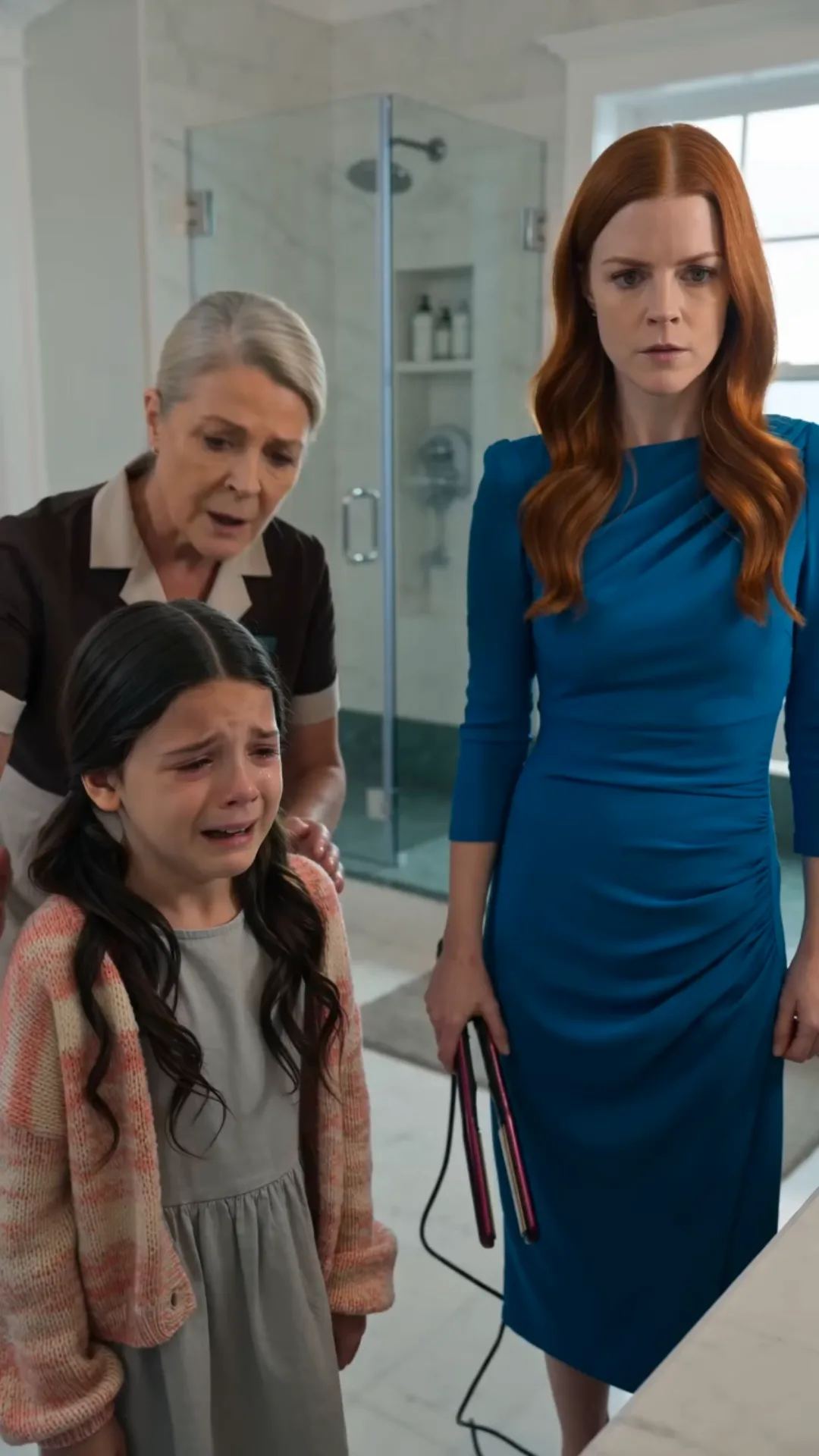
The curling iron was Valentina's.
Rose gold. Expensive. It sat on the marble countertop like a small, coiled snake, cord dangling off the edge, plug swinging an inch above the floor.
Sofia wasn't supposed to touch it.
She hadn't touched it.
She'd only knocked it — by accident, reaching for her toothbrush, elbow catching the cord — and it had clattered into the sink, chipping the edge of the porcelain.
A small sound.
A small crack.
Big enough, apparently.
---
"¿Qué hiciste?"
Valentina's voice came from the doorway before Sofia even turned around.
What did you do.
Not are you okay.
Not did you burn yourself.
What did you do.
Sofia's stomach folded in on itself, the way it always did now around this woman. A small animal instinct. Freeze. Don't breathe wrong.
"It was an accident," Sofia said. Her voice came out smaller than she meant it to.
"Everything with you is an accident."
---
There's a kind of cruelty that doesn't raise its voice.
It just narrows its eyes.
It just lets a silence stretch long enough that a seven-year-old starts filling it with apologies she doesn't understand yet.
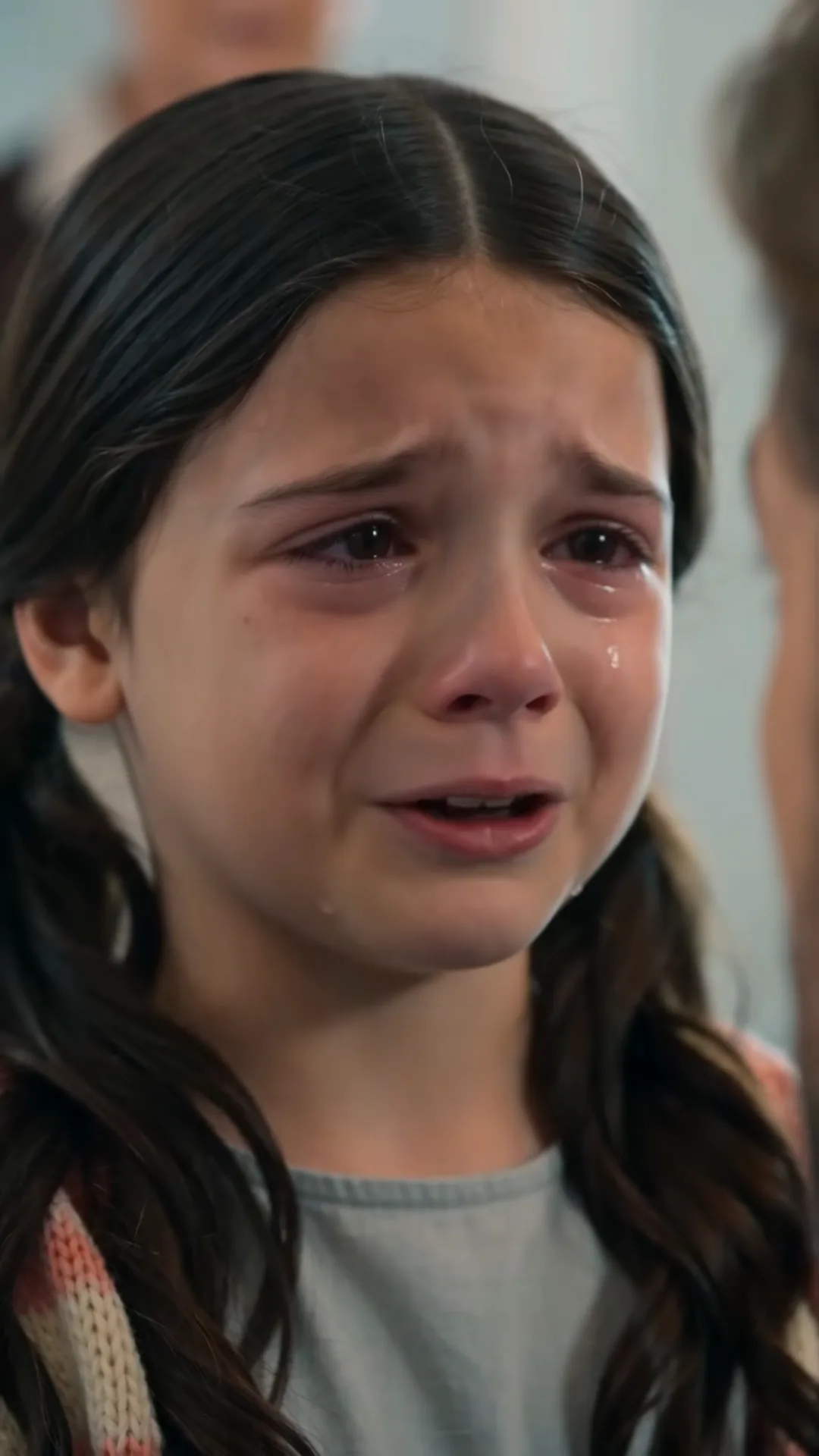
Sofia's chin trembled first. Then her shoulders. Then the tears came, hot and sudden, the kind that arrive before the brain has decided to cry.
She hated crying in front of Valentina.
Valentina's mouth did something almost like satisfaction when Sofia cried. Something Sofia didn't have a word for yet, but her body understood anyway.
Bodies know things faster than language does.
---
Marisol heard the crying from the hallway.
She'd worked in this house for eleven years. Long enough to remember when the countertops held toothpaste tubes with the caps left off, not showpiece perfume bottles arranged like a photoshoot.
Long enough to remember Elena — Señora Elena — humming that same wordless lullaby while braiding Sofia's hair on Sunday mornings.
Marisol crossed the marble floor quickly, her flats slapping softly against the stone, and stepped into the doorway.
She saw it immediately.
Sofia, small and folded into herself against the sink. Valentina standing over her, curling iron dangling from one hand like an afterthought, like a weapon she hadn't decided whether to use.
"Estás segura?"
Are you sure?
The question hung there. Not really about the curling iron at all.
Marisol's hand found Sofia's shoulder. A small, steady weight. The kind of touch that says I am here without needing words.
Valentina's head turned. Slow. Precise.
"No la toques."
Don't touch her.
The words landed like a slap that never made contact — the threat somehow worse for staying only in the air.
---
Marisol didn't move her hand.
That was the detail that mattered. Later, when Sofia tried to remember this day in pieces — fragments, the way trauma likes to store things — she would remember that detail most clearly.
Marisol's hand did not move.
Even when Valentina's voice sharpened. Even when the air in the bathroom went thin and cold, colder than the marble, colder than anything in this house that was built to look expensive and feel like nothing.
Marisol stayed.
That was something. In a house like this, staying was something.
---
Sofia's sweater sleeve was wet from wiping her own face.
Grey and pink, soft wool, a Christmas gift from a Christmas that already felt like it belonged to a different girl.
She stared at the marble floor. At the grout lines between the tiles, thin grey rivers running in perfect straight geometry.
She used to find the house beautiful.
Now she just found it loud. Loud in the way silence gets loud when you're afraid to make a sound in it.
---
Somewhere else in the house — down the long hallway, past the black-and-white checkered floor, past the crystal chandelier that scattered light like broken glass across the walls — a phone had started ringing.
Papá's phone.
Left on the hallway table that morning, forgotten in the rush of a business call he'd taken standing in his socks, tie undone, coffee going cold on the marble beside it.
It had rung four times already.
He hadn't heard it.
Not yet.
---
Valentina crouched, finally, retrieving the curling iron from where it had slid near the drain.
She examined the chip in the porcelain sink with more attention than she'd given the crying child three feet away.
"This countertop," she said quietly, mostly to herself, "was imported."
Marisol's jaw tightened.
Sofia's small fingers curled into the fabric of her sweater sleeve, gripping, the way you grip something when you have nothing else steady to hold onto.
---
Nobody in that bathroom knew yet that within minutes, everything about this ordinary, ugly, small moment — a chipped sink, a curling iron, a crying child — would be swallowed whole by something far bigger.
Nobody knew that four sentences from now, a phone call would end.
A car door would slam.
A man would start running.
And a house built to be photographed would finally, for one unbearable moment, become a house where something true was said out loud.
But first — the ringing phone.
First — the empty hallway, chandelier light trembling faintly on black and white tile, waiting for footsteps that hadn't started yet.
May you like



First — three more seconds of a world where Sofia's secret still belonged only to her.
---