Chapter 7 - What the Stairs Remember
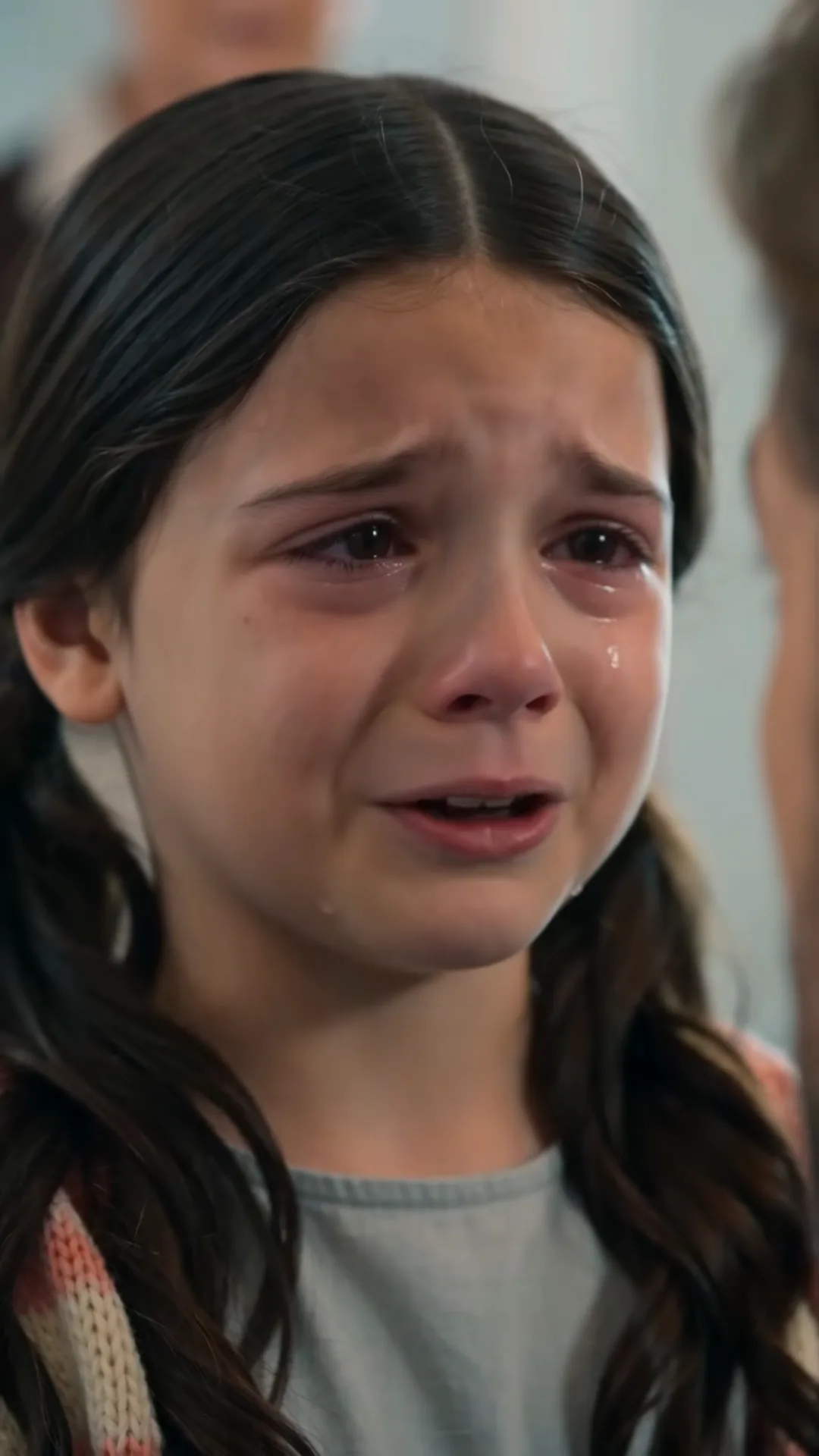
Three weeks passed before Sofia could look at the staircase again without her whole body tensing.
Marisol noticed it first — the way the girl would take the longer route through the kitchen and the side hallway rather than cross the main foyer, avoiding the wide marble steps entirely, even when it meant walking twice the distance to reach her bedroom.
Nobody forced the issue.
Grief, Marisol had learned over eleven years in this house, could not be rushed. It had to be walked through slowly, in its own time, on its own terms.
---
The investigation moved forward in the careful, unglamorous way real investigations do — nothing like the dramatic courtroom reveals of television, mostly quiet phone calls between Mateo and Detective Ibarra, updates delivered in careful, measured language designed not to promise more certainty than the evidence could support.
Phone records confirmed the eleven-minute gap.
A neighbor's doorbell camera, angled just slightly toward the side of the property, had captured a timestamp that corroborated Marisol's account of the argument's volume, if not its content.
None of it was a smoking gun. All of it, together, painted a picture increasingly difficult to explain away as a simple accident followed by understandable shock.
---
Sofia began seeing a child psychologist twice a week — a warm, unhurried woman named Dr. Alaya who kept a basket of soft toys in the corner of her office and never once made Sofia feel like her memories needed to be proven correct before they could be discussed.
"You don't have to convince me of anything," Dr. Alaya told her, during their second session, while Sofia turned a small stuffed rabbit over and over in her hands. "I'm not a detective. I just want to understand what you're carrying, so we can find ways to make it lighter."
Sofia had cried during that session — not the frightened tears of the bathroom, not the relieved tears of the kitchen table, but something new. Something that felt, oddly, like grief finally being allowed to exist without an audience to perform for.
---
"I still hear her sometimes," Sofia told Dr. Alaya one afternoon, weeks into their sessions, staring down at the rabbit's stitched-on smile.
"Your mother?"
Sofia nodded.
"Humming?"
Another nod. "There wasn't any words to it. She just made it up. I used to think it was silly."
"Do you still think it's silly?"
Sofia considered this for a long moment, the particular gravity children bring to questions that adults might rush past.
"No," she said finally. "I think I miss it more than almost anything."
---
Mateo attended every third session, at Dr. Alaya's recommendation — not to hover, but to build a bridge of language between what Sofia felt and what she could say out loud to her father, the two of them slowly relearning how to talk about the unbearable things without either one trying to protect the other from them.
It was in one of these joint sessions that Sofia finally told him about the stairs.
Not just the argument she'd overheard, not just the fall she'd witnessed from the top landing.
The part she'd never said out loud to anyone, not even Detective Ibarra, not even in her initial statement.
---
"I called out," Sofia said, voice very small, eyes fixed on her own hands. "When I saw Mamá fall. I called out for help. But nobody heard me. My voice wasn't loud enough."
The room went very quiet.
"I've thought about it every night," Sofia continued, tears sliding silently down her face now. "If I had screamed louder. If I had run downstairs faster. Maybe—"
"Sofia." Mateo's voice broke as he reached for her hands. "No. No, mi amor. Look at me. None of what happened is your fault. Not one second of it."
---
Dr. Alaya leaned forward gently. "Sofia, can I ask you something? How old were you the night this happened?"
"Seven."
"And how tall are the stairs in your house? How many steps, from the top landing to the bottom floor?"
Sofia thought about it. "A lot. Maybe twenty."
"Do you think a seven-year-old child, at the top of twenty marble steps, in the middle of the night, half-asleep, frightened by shouting — do you think that child had any physical ability to change what happened at the bottom of those stairs?"
Sofia was quiet for a long moment.
"No," she finally whispered.
"Then I want you to try something for me," Dr. Alaya said softly. "Just try, this week. Every time that guilty thought comes — the if only I had thought — try replacing it with what you just said out loud. I was seven. I was at the top of the stairs. There was nothing more I could have done."
---
It wasn't a magic fix.
Grief rarely responds to a single sentence, no matter how true or well-intentioned.
But something in Sofia's shoulders eased slightly that day, a fraction of weight lifted, the beginning of a much longer unburdening that would take months, possibly years, to fully complete.
---
Meanwhile, the legal process around Valentina moved slower than any of them wanted, tangled in the particular bureaucratic patience the justice system demands even when every emotional instinct screams for speed.
Valentina's lawyer argued, correctly under the law, that eleven minutes of shock-induced paralysis, however tragic, did not constitute criminal intent. That grief and panic could produce behavior that looked, in hindsight, damning, without actually being murder.
Mateo understood the legal argument even as every fiber of his being rejected its emotional logic.
"She might not go to prison for this," Detective Ibarra told him honestly, months into the process. "Negligent behavior during a medical emergency is notoriously difficult to prosecute as a criminal act, especially without clear evidence of intent to cause harm."
"So she just walks away," Mateo said.
"Not entirely. There may be civil liability. And frankly, Mr. Vidal, some consequences don't come from a courtroom."
---
She was right, in a way neither of them could have predicted.
The story — a wealthy family, a suspicious death, a young girlfriend's eleven minutes of silence, a child's brave accusation — found its way, inevitably, into local news, then wider circulation, the particular hunger of public attention for exactly this kind of domestic tragedy.
Valentina's name became attached to a story she could never fully outrun, regardless of what any courtroom eventually decided.
Some sentences, once spoken, cannot be taken back.
Not legally. Not socially. Not in the quiet architecture of a person's own conscience, assuming they still possessed one capable of carrying weight.
---
Sofia, for her part, remained largely shielded from the public dimension of the story, Mateo fiercely protective of her privacy in a way that occasionally put him at odds with lawyers eager to use public sympathy strategically.
"She is not a headline," he told one particularly insistent attorney. "She is a seven-year-old girl who has already lost more than any child should have to. She will not become content for strangers."
---
Slowly, in the months that followed, the house began, tentatively, to feel different.
Not healed — grief doesn't work that neatly, doesn't resolve on any convenient timeline — but different. Lighter in some rooms. The kitchen, especially, began to feel like itself again, filled with the smell of Marisol's slightly-too-salty eggs, the particular chaos of ordinary mornings rather than the careful, watchful silence of the previous months.
Sofia started humming again.
Quietly, at first. Under her breath, almost embarrassed by it, as if she needed permission to let the sound exist out loud.
May you like



Mateo heard her one morning in the kitchen, and had to turn away quickly, blinking hard, before she could see how completely that small, wordless tune undid him.
---







