Chapter 6 - The Silence After
Police cars don't announce themselves the way they do in movies.
There were no sirens. No dramatic screech of tires against the circular driveway. Just two unmarked sedans, arriving quietly within twenty minutes of Marisol's call, doors opening with the muted click of professionals who had done this exact walk up exact marble steps more times than they cared to count.
Sofia watched from the window of her bedroom, wrapped in a blanket Marisol had draped over her shoulders, a mug of warm milk untouched on her nightstand.
She felt strangely calm.
The calm of someone who has finally set down something impossibly heavy.
---
Downstairs, the questions began.
Detective Ibarra was a woman in her fifties with tired eyes and a voice that never rose above a careful, measured murmur — the practiced gentleness of someone who had interviewed too many grieving families to ever raise her voice again, even when the situation demanded it.
She sat across from Mateo in the living room, notebook open, while a second officer spoke quietly with Valentina in the study, and a third took Marisol's statement in the kitchen, three separate rooms holding three separate versions of the same terrible night.
---
"Mr. Vidal," Detective Ibarra said gently, "I want to be very clear with you before we go further. An eyewitness account from a seven-year-old, even a detailed one, isn't sufficient on its own to reopen a closed investigation. We'll need to corroborate everything Sofia said with physical evidence, timeline records, phone logs."
"I understand."
"But." The detective's pen tapped once against her notebook. "The original report noted the time discrepancy your housekeeper mentioned. Eleven minutes between estimated time of fall and the emergency call. At the time, it was attributed to shock. Given what we're hearing now, we'll be reexamining that."
---
Mateo nodded slowly, his hands folded tightly in his lap, knuckles pale.
"Is it possible," he asked, his voice barely above a whisper, "that she could have survived? If the call had come sooner?"
Detective Ibarra's expression softened, the careful neutrality of her professional face cracking just slightly with genuine, human sympathy.
"I can't answer that, Mr. Vidal. Only a medical examiner can, and even then, not with certainty. I know that's not the answer you want."
"No," he said. "But it's the truth. I think I've had enough of the other kind."
---
Upstairs, Sofia had fallen asleep sometime around eight, exhaustion finally overtaking the adrenaline that had carried her through the longest day of her short life.
Marisol sat beside her bed for a long time afterward, watching the rise and fall of the girl's small chest, thinking about all the small moments over the past three months she had noticed and dismissed — Sofia's sudden fear of staircases, her nightmares, the way she'd stopped humming the little wordless tune Elena used to sing.
She should have said something sooner.
She would carry that thought for a long time.
---
Valentina was taken in for further questioning that night — not arrested, not yet, the legal distinction mattering enormously to lawyers and barely at all to the exhausted, grieving family left behind in the marble house.
She said very little in the study, according to the officer who interviewed her. Mostly she stared at her own hands.
At one point, quietly, almost too quietly for the officer's recorder to catch, she said something that would later become significant in the reopened investigation:
"I didn't mean for her to fall."
It wasn't a confession.
It also wasn't a denial.
---
The house, once the police cars finally pulled away past midnight, fell into a silence unlike any Sofia had experienced since her mother died.
Not the tense, watchful silence of the past three months — the silence of a child learning to hold her breath around a woman who frightened her.
This silence felt different. Emptier, in a way, but also, strangely, lighter. Like a held breath finally released.
Mateo sat alone in the kitchen long after everyone else had gone to bed, staring at two mugs of untouched coffee, one his, one that had been Elena's favorite, the one with the small chip on the handle that nobody in this house of imported marble had ever bothered to throw away.
---
He thought about the last three months.
About how grief had made him careless — not out of malice, but out of sheer exhaustion, the desperate need to hand some of the unbearable weight of single parenthood to someone, anyone, who seemed capable of carrying it.
He thought about how quickly Valentina had inserted herself into the architecture of their lives. How he had mistaken her competence for care. How he had missed, again and again, the small signs his own daughter had been giving him for months — signs he had explained away as ordinary grief, because ordinary grief was easier to understand than the alternative.
He hadn't protected her.
Not the way he should have.
---
Around two in the morning, he climbed the stairs — the same stairs, the ones he still couldn't look at directly most days — and found Sofia's door slightly ajar, a sliver of hallway light falling across her sleeping face.
He sat on the edge of her bed for a long time, just watching her breathe.
At some point, without fully waking, she reached out and found his hand, small fingers curling around his in her sleep, an old habit from infancy that had apparently never fully disappeared.
"Papá," she murmured, barely conscious.
"I'm here," he whispered. "I'm not going anywhere."
---
She didn't wake fully, but her grip on his hand tightened slightly, as if some part of her, even in sleep, needed the confirmation.
He stayed there until dawn.
---
The following morning, the house felt different in a way that had nothing to do with the absence of Valentina's belongings, quietly removed by two officers under careful supervision the night before.
It felt different because, for the first time in three months, nobody in it was performing anything.
Marisol made breakfast the way she used to — eggs a little too salty, coffee a little too strong, the exact recipe Elena had once teased her about affectionately for a decade.
Sofia ate quietly at the kitchen table, still wrapped in yesterday's blanket, watching her father with an expression that was difficult to name — relief, perhaps, tangled together with something like grief arriving fresh all over again, now that the distraction of fear had finally lifted.
---
"Papá," she said eventually, staring at her half-eaten eggs.
"¿Sí, mi amor?"
"Do you believe me?"
The question landed heavier than its simple phrasing suggested — the question of a child who had spent three months being gently, lovingly disbelieved by every adult around her, told again and again that grief plays tricks, that memory isn't always accurate, that sometimes the mind invents monsters to explain unbearable loss.
Mateo set down his coffee mug.
He crossed the kitchen, knelt beside her chair, and took both her small hands in his.
"I believe you," he said. "I should have believed you sooner. I'm sorry it took this long."
---
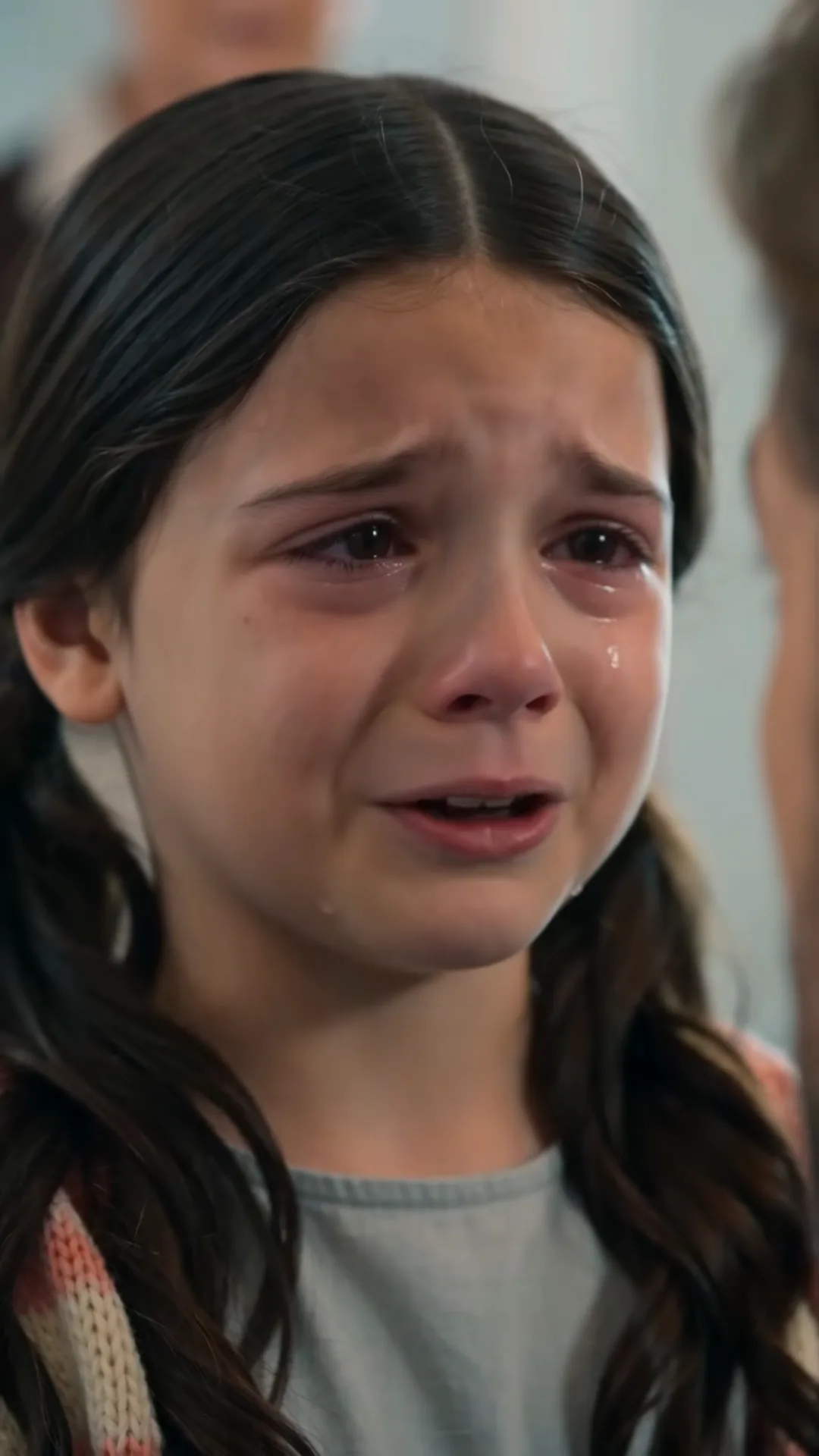
Sofia's eyes filled with tears again — but different tears this time. Not the sharp, frightened tears of the day before. Something softer. Something closer to relief finally allowed to fully arrive.
"I thought," she said, voice trembling, "that if I told you, you wouldn't want her here anymore. And then you'd be alone. And I didn't want you to be alone."
The sentence broke something open in Mateo's chest that he hadn't known was still intact.
Seven years old, and she had been carrying not just the trauma of what she'd witnessed, but the guilt of protecting her father's happiness at the expense of her own safety.
---
"Sofia." He cupped her face gently, the same gesture from the bathroom the day before, but softer now, unhurried. "You will never have to protect me from the truth. Not ever again. Do you understand?"
She nodded, tears spilling freely now.
May you like



"I would rather be alone with the truth," he said, "than surrounded by lies. Always. Every time."
---







