Chapter 8 - Valentina's Ledger
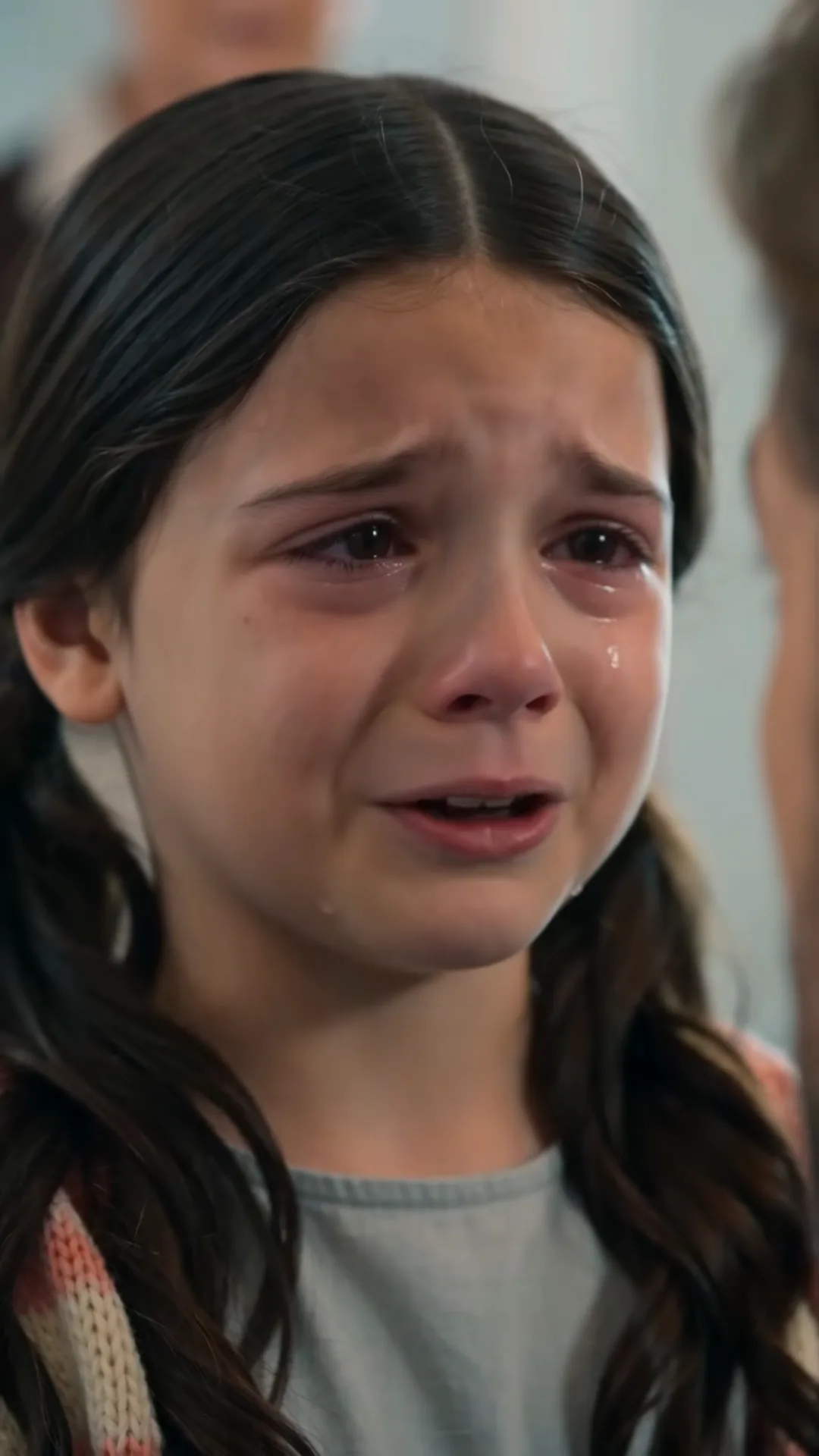
Valentina Cruz had grown up believing that being loved was a transaction.
Her mother had taught her that lesson early and without gentleness — beauty exchanged for security, charm exchanged for stability, the careful management of other people's perceptions exchanged for a seat at whatever table offered the most protection from a childhood defined by scarcity.
By the time she met Mateo Vidal at a charity gala eight months after Elena's initial cancer diagnosis — a detail she had known and calculated, though she would never fully admit this to herself in the mirror each morning — she had perfected the performance so thoroughly that she genuinely struggled, on some level, to distinguish it from feeling.
---
She had not planned to fall in love with the house before falling in love with the man.
But the house had seduced her first, in its own quiet, marble-clad way — the security it represented, the permanence, the specific kind of safety that comes from imported stone and crystal chandeliers, things that could never be taken away the way her childhood had been taken away, apartment by apartment, eviction notice by eviction notice.
By the time Mateo's wife's illness had progressed to its final, devastating stages, Valentina had already begun, quietly, carefully, to imagine herself inside this house permanently.
She would later tell herself this made her opportunistic, not evil.
The distinction mattered enormously to her, even if it meant very little to anyone else.
---
The night of Elena's death had not gone according to any plan Valentina had consciously constructed.
She had come to the house that evening — a decision she would replay in her mind ten thousand times over the following months — under the pretense of returning a borrowed serving dish, though both women had understood, without saying so directly, that the visit carried other unspoken purposes.
Elena, weakened by treatment but sharper than ever in the particular clarity that sometimes arrives alongside terminal illness, had confronted her directly.
"I know what you're doing," Elena had said, standing at the top of the staircase, her voice steady despite the exhaustion visible in every line of her thinning body. "I know what you're waiting for."
---
Valentina had denied it, at first — the automatic reflex of self-preservation, the same reflex that had carried her through a childhood of careful lies about which parent was actually paying rent that month, which relative could actually be trusted.
But Elena had pressed further, her voice rising with an intensity that surprised them both.
"You will not raise my daughter," Elena had said. "Do you understand me? Whatever happens to me, you will not become her mother. I won't allow it."
The words had landed somewhere deep and old in Valentina, striking a wound that had nothing to do with Elena at all, and everything to do with a lifetime of being told, by mothers and stepmothers and foster placements alike, that she was never quite wanted enough to stay.
---
"You don't get to decide that," Valentina had said, her own voice rising to match Elena's, months of careful composure finally cracking under the weight of a lifetime's accumulated insecurity. "You're dying. You don't get to control what happens after."
Elena had turned away from her then — not in retreat, but in dismissal, the specific, devastating dismissal of a woman who had decided the conversation was beneath her continued attention.
She had taken one step down the staircase.
Valentina would spend the rest of her life uncertain of what happened in the half-second that followed — whether her hand had reached out to grab Elena's shoulder in anger, in an attempt to force the conversation to continue, or whether it had been an accident of proximity, two women too close together on a narrow marble step during an argument neither of them had fully controlled.
She genuinely did not know.
She had told herself, in the months since, that she never touched her at all.
But some nights, alone, she was no longer certain that was true.
---
What she did know, with terrible, unambiguous clarity, was what happened in the eleven minutes that followed.
Elena's body, crumpled at the base of the stairs. The terrible silence. The absence of any sound indicating breathing, movement, life.
And Valentina, standing frozen at the top of the staircase, calculating — not the value of a human life, she would insist to herself later, but the catastrophic collapse of everything she had spent eight months carefully constructing, if this scene were discovered to look anything other than a tragic, unrelated accident.
She had waited.
Not out of malice, she told herself.
Out of fear. Out of the specific, self-protective paralysis of a woman who had learned, across an entire childhood, that survival sometimes required letting other people's suffering continue slightly longer than it needed to, if it meant your own position remained secure.
---
By the time she'd finally called for help, composing herself, rearranging the scene slightly, wiping her own tears before dialing with a voice carefully calibrated to sound appropriately shocked, eleven minutes had passed.
She had told herself, in the ambulance, in the hospital waiting room, in the funeral three days later, that eleven minutes wouldn't have mattered.
That Elena's injuries were too severe. That nothing could have been done differently.
She had believed this, mostly, for three months.
It was only now, sitting alone in a rented apartment two months into a suspended legal proceeding, replaying Sofia's small, devastating accusation on an endless loop in her mind, that she allowed herself to consider the possibility that she had been wrong.
That eleven minutes might have been the exact difference between a funeral and a recovery room.
That a seven-year-old girl, half-asleep at the top of a staircase, had understood the moral weight of that gap far more clearly than the adult woman who had actually stood frozen inside it.
---
Sofia's accusation had not been legally precise.
Valentina had not, in any way a court could prove, "killed" Elena Vidal.
But precision, she was beginning to understand in the quiet, unbearable months following her removal from that marble house, was not always the measure that mattered most.
There is a kind of killing that happens slowly, in hesitation, in the eleven minutes between a person needing help and a person deciding whether to give it.
There is a kind of guilt that no acquittal, no dismissed charge, no legal technicality can fully erase — because it doesn't live in the courtroom.
It lives in the body. In sleepless nights. In the particular, permanent knowledge that somewhere, a child had looked directly at her and named, with unerring seven-year-old clarity, exactly what she had done.
---
She wrote Sofia a letter, eventually, months later — never sent, kept folded in a drawer, because she understood, finally, that some apologies exist only to comfort the person offering them, not the person who received the harm.
You were right, the letter said, in part. I don't know if I pushed her. I have asked myself that question every single night since, and I still don't know the answer with certainty. But I know I let her fall. I know I stood there while she needed help, and I let eleven minutes pass because I was afraid of what would happen to me if I moved faster. That fear was not worth more than her life. I understand that now. I understood it too late.
I am sorry I made you carry the truth alone. I am sorry it took a seven-year-old's courage to say what three adults in that house were too afraid to say themselves.
You will grow up to be braver than I ever was.
---
The letter remained in the drawer.
Valentina never sent it.
But she kept it, folded carefully, a private ledger of the one honest reckoning she had allowed herself, in a life otherwise built almost entirely on careful, protective performance.
Some debts, she was beginning to understand, could never be repaid.
May you like



They could only be acknowledged, quietly, alone, in the specific silence that follows every unforgivable choice.
---







