Chapter 10 - What Sofia Chooses to Remember
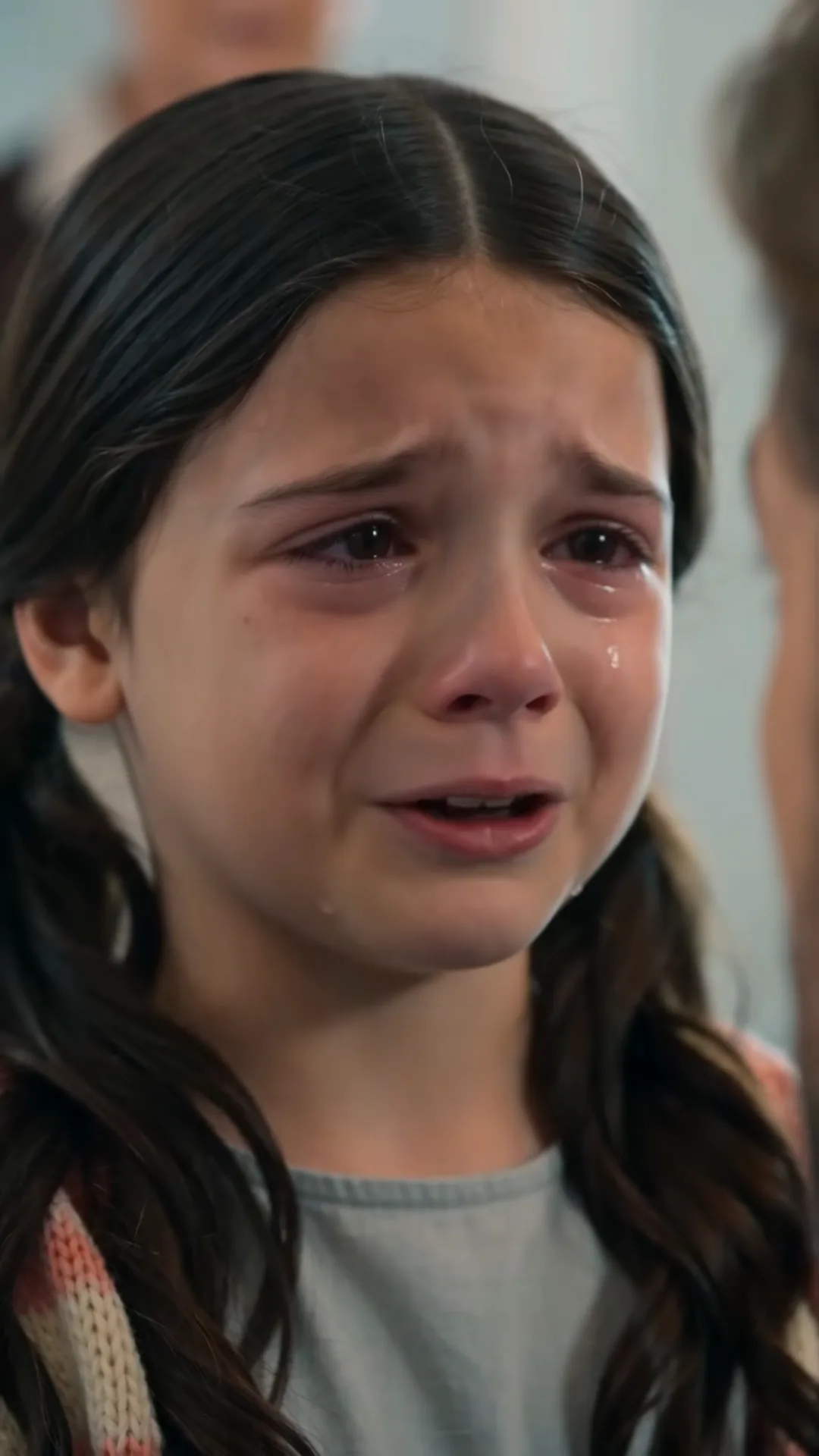
Children remember differently than adults do.
Dr. Alaya had explained this to Mateo during one of their many sessions together, gently outlining the particular way trauma reshapes memory in young minds — not erasing it, but reorganizing it, filing certain details into places that become accessible only slowly, carefully, over years rather than months.
"Sofia will remember this differently at seventeen than she does at seven," Dr. Alaya had told him. "And differently again at twenty-seven. Grief isn't static. It grows with the person carrying it."
Mateo had found this both comforting and terrifying in equal measure — the knowledge that his daughter's understanding of this entire ordeal was still, in many ways, only just beginning.
---
Five years passed.
Sofia turned twelve in a house that had, by then, fully returned to feeling like home rather than a stage set for grief and suspicion. The marble floors remained, the crystal chandelier still scattered fractured light down the long hallway, but the house had accumulated new layers over the old ones — school photos on the refrigerator, a dog named Canela who had somehow convinced Mateo, against his own better judgment, that shedding fur on imported furniture was an acceptable price for the joy she brought into their lives.
Sofia had grown into a thoughtful, watchful child — not fearful, exactly, but perceptive in a way that occasionally startled adults who forgot how much she had already survived by the time most children were still worried about spelling tests.
---
She rarely spoke about that day in the bathroom anymore.
Not because she had forgotten it — trauma of that magnitude doesn't simply fade with time — but because she had, with considerable help from Dr. Alaya and her father, slowly integrated it into a larger, more complete story of who she was, rather than allowing it to remain the defining chapter of her entire identity.
She had a mother who loved her and hummed made-up songs while braiding her hair.
She had survived something no child should have to survive.
She had told the truth when telling the truth was terrifying, and that truth had mattered, had changed something, even if the legal system hadn't delivered the exact justice everyone might have wished for.
All of these things were true simultaneously. She had learned, slowly, that grief and growth could occupy the same body without canceling each other out.
---
On the fifth anniversary of Elena's death, Sofia asked her father a question that surprised him with its directness.
"Do you think Valentina ever thinks about that day?"
Mateo considered the question carefully before answering, unwilling, as always, to offer his daughter easy comfort at the expense of honesty.
"I think," he said slowly, "that some people spend the rest of their lives thinking about the moments they wish they'd handled differently. I don't know if that's justice. But I think it's something."
Sofia nodded, apparently satisfied with an answer that didn't pretend to offer more certainty than the situation allowed.
---
"I don't hate her anymore," Sofia said after a moment. "I used to. For a long time. But I don't think I do now."
"What do you feel instead?"
Sofia thought about this for a long moment, twirling a strand of hair around her finger — a habit she'd apparently inherited from a mother she barely remembered clearly anymore, except in fragments, except in a hummed melody that still lived somewhere deep and permanent in her chest.
"Sad for her, maybe," Sofia finally said. "I think she was scared her whole life. I think being scared made her do something terrible. I don't think that makes it okay. But I don't think I need to carry hating her anymore. I already carried enough."
---
Mateo felt something in his chest loosen at those words — the specific, quiet pride of watching a child develop wisdom that many adults never fully achieve, an understanding of moral complexity that acknowledged harm without collapsing entirely into either forgiveness or endless resentment.
"That's a very grown-up thing to say," he told her.
"I had to grow up a little faster than other kids," Sofia said, matter-of-factly, without self-pity, simply stating an observed fact about her own life. "I think that's okay too, though. I think I turned into someone I like, even with all of it."
---
That evening, as the sun set over the garden where Elena's roses continued their stubborn, annual blooming, Sofia sat on the back porch steps, humming quietly to herself while Canela chased a moth across the grass.
Mateo watched her from the kitchen window, dish towel still in hand, and thought about the specific, quiet miracle of watching a child heal — not completely, not in a way that erased what had happened, but genuinely, in the way that mattered most.
She had survived a mother's death.
She had survived a stepmother-figure's cruelty and, ultimately, culpability.
She had survived the particular loneliness of not being believed, and then the strange, disorienting relief of finally being believed too late to undo the damage already done.
And somehow, through all of it, she had grown into a person capable of humming a made-up lullaby on a quiet evening, capable of feeling something more complicated than hatred toward the person who had wronged her family so completely.
---
There is a particular kind of ending that doesn't resolve neatly.
Real grief rarely does. Real justice, in cases like this, rarely arrives in the tidy, satisfying packages fiction sometimes promises.
But there is another kind of resolution available, quieter and perhaps more durable than legal consequence or dramatic confrontation — the resolution of a child who learns to carry her history without being defined entirely by its worst chapter.
The resolution of a father who learns, painfully, to see his daughter's fear clearly rather than explaining it away for the sake of his own convenience.
The resolution of a house that slowly, patiently, relearns how to hold ordinary joy alongside its inherited grief.
---
Sofia would grow up.
She would go to school, make friends, eventually fall in love and make mistakes and build an entire life independent of the marble house and everything that happened within its cold, beautiful walls.
She would carry Elena with her always — not as a wound, eventually, but as a foundation. A hummed melody. A specific, permanent understanding that even very young people are capable of enormous courage, if given, eventually, the safety to speak their truth out loud.
And somewhere, in a city far away, in a life rebuilt from the wreckage of eleven unforgivable minutes, a woman named Valentina would occasionally hear a song with no words, hummed by a stranger, and feel something catch sharply in her chest — a debt she could never repay, a truth she could never undo, a seven-year-old's voice that had, in four devastating words, changed the entire architecture of every life it touched.
Papá. Ella mató a mamá.
Four words.
An entire universe, rearranged.
May you like



And a little girl, finally, allowed to stop carrying the weight of them alone.
THE END







