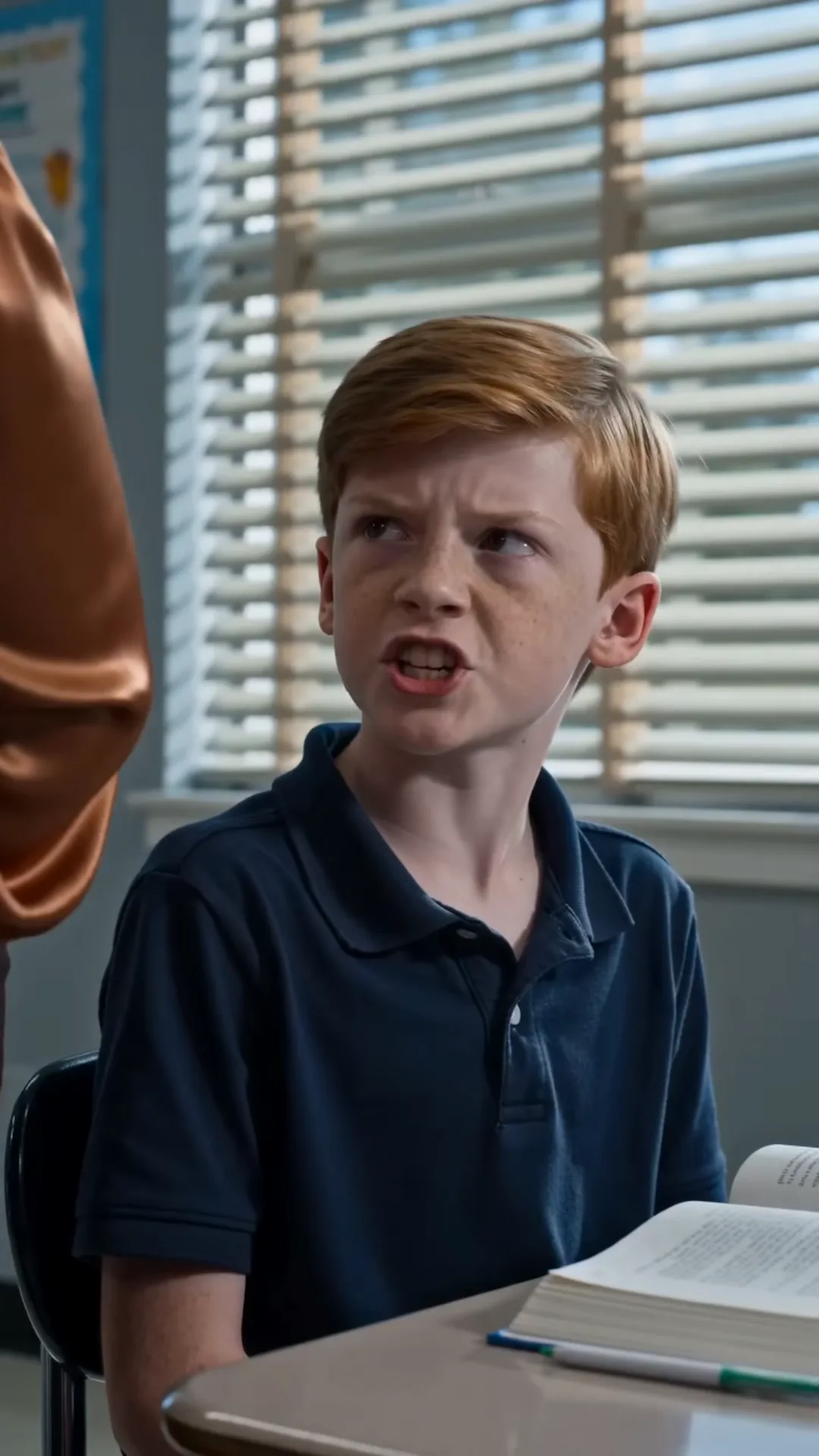
Chapter 1 - The Scholarship Kid
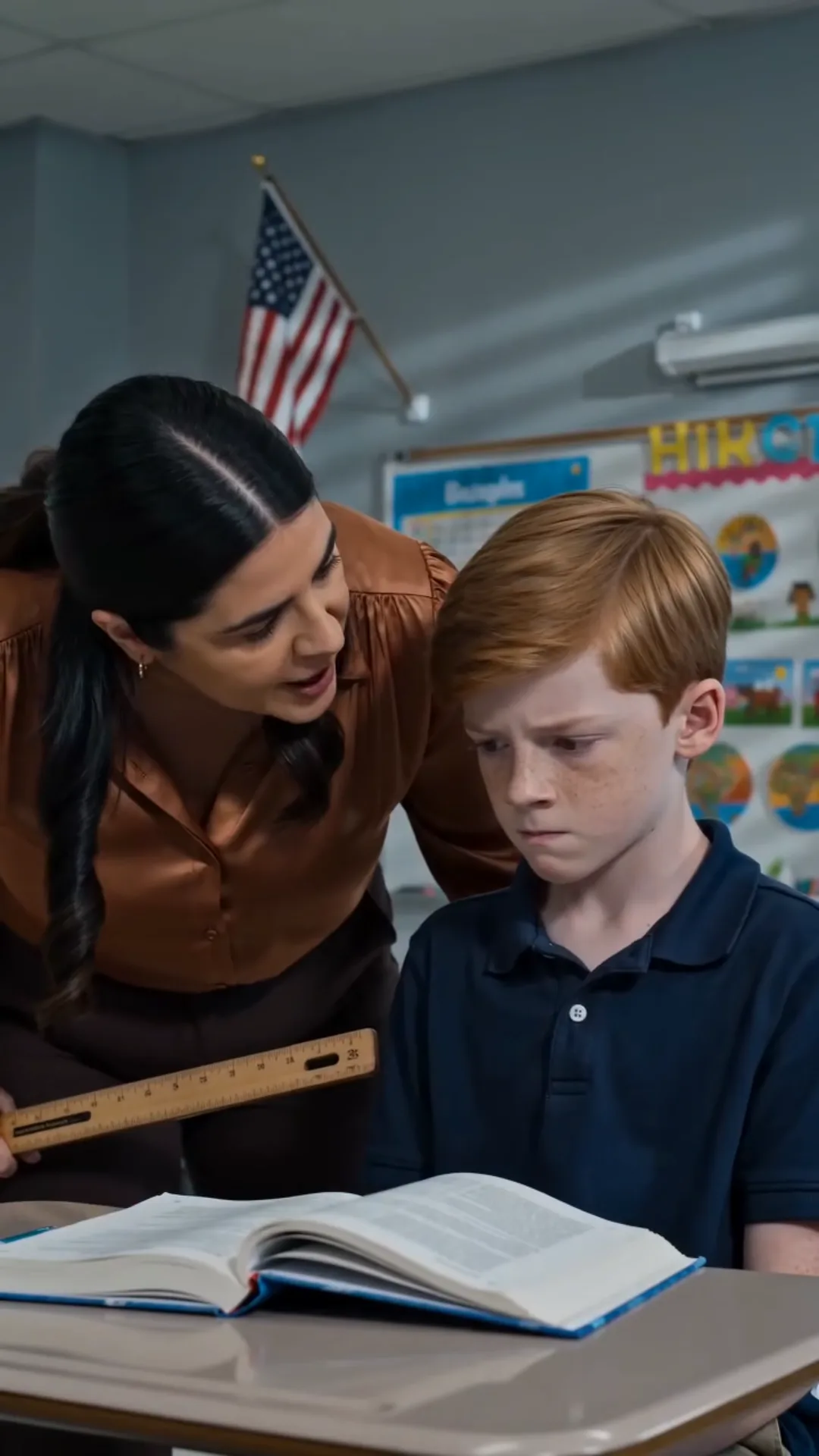
Malik Owens kept a notebook that nobody at Ashford Preparatory Academy knew existed.
It was small, spiral-bound, the cover gone soft at the corners from riding around in his backpack since September. Inside, in handwriting that got neater the more nervous he was, he kept receipts.
Not the paper kind. The proof kind.
October 3 — got question 7 right on the fractions quiz before anyone else raised their hand.
October 14 — Mrs. Pierce called on me for the hard vocabulary word. I knew it. She looked surprised.
November 2 — read two extra chapters of the assigned book, just in case she asks something specific.
He had started the notebook the week he found out, by accident, through a conversation his mother didn't know he'd overheard, that some of the other parents at Ashford had asked — politely, the way people ask things that aren't really questions — whether the scholarship program was lowering the academic bar.
He was eleven years old. He had not fully understood the sentence when he first heard it.
He understood it completely by the second week of school.
Ashford Prep sat on eleven manicured acres in a part of town Malik's mother, Denise, did not live in and never would on a nurse's salary, no matter how many double shifts she picked up at Mercy General. The school had ivy actually growing up one wall, on purpose, the way rich places grew things on purpose that poor places just happened to have.
Malik had earned his seat there through the Bridges Scholarship, a program that took four kids a year from the other side of the county line and dropped them, book bags and all, into classrooms full of kids whose grandparents had buildings named after them.
Three other Bridges kids were scattered across other grades. Malik was the only one in sixth-grade homeroom.
He had learned, fast, the specific weight of being the only one.
It showed up in small things. The way conversations about summer vacations went quiet and awkward whenever he was standing close enough to be included and then, out of some unspoken courtesy nobody had asked for, changed the subject entirely. The way a teacher's aide had once asked him, kindly, genuinely, if he needed help finding his actual classroom, on a day he was standing directly outside his actual classroom.
The way his homeroom teacher, Mrs. Diane Pierce, called on him more than anyone else in the room, every single day, in a voice that did not sound like she expected him to know the answer.
He had learned to always know the answer.
It was exhausting in a way he did not yet have the vocabulary to fully explain, even to his mother, who worked twelve-hour shifts in the cardiac unit and came home some nights too tired to do more than kiss the top of his head and ask, good day, baby?
"Good day," he always said.
It was not exactly a lie. Most of the individual pieces of most days were fine. It was only when you added all the pieces together, the way his math teacher taught him to add fractions with different denominators, that the total came out to something heavier than any single piece suggested.
He kept the notebook for the same reason he double-checked his homework three times before turning it in, for the same reason he read every assigned book at least twice — once for the story, once for the specific facts he suspected he might be quizzed on out loud, in front of everyone, in a tone that assumed he hadn't read it at all.
He had figured out, somewhere in the first month, a private theory of survival.
If I am perfect enough, nobody can say I don't belong here.
It was not a theory that had ever been tested to its limit. It would be, soon, in ways an eleven-year-old boy with a soft spiral notebook had no way to prepare for, no matter how many receipts he kept.
The one bright, unplanned thing about that fall semester was Tyler Doyle.
Tyler sat two desks over in homeroom, freckled and gap-toothed and constitutionally incapable of sitting still for longer than four minutes at a stretch. His family's name was on a plaque in the school library — his grandfather had donated the east wing sometime in the seventies — which meant Tyler moved through Ashford's hallways with a kind of unconscious ease Malik had studied the way a scientist studies a phenomenon he does not personally have access to.
Tyler had not, at first, seemed like someone who would notice Malik at all. Boys like Tyler rarely needed to notice boys like Malik; the social gravity of the school simply didn't pull them into the same orbit.
But in October, during a science unit on ecosystems, they'd been paired for a project neither of them had picked, and Tyler had shown up to the first work session with a bag of gummy worms and the sincere, uncomplicated question, "Do you actually like reading all this stuff, or is it just, like, a job?"
Malik had laughed before he could stop himself. It was the first real laugh he'd had at Ashford that did not come with a private cost calculated afterward.
"Both," he'd said. "Mostly a job. Sometimes I like it."
"That's basically how I feel about soccer," Tyler had said, entirely seriously, and handed him a gummy worm, and something small and unremarkable and important had shifted into place between them.
They were not, by November, best friends in any dramatic sense. They ate lunch together most days, not every day. They texted about homework, not about much else. Tyler had never been to Malik's apartment; Malik had been to Tyler's house exactly once, for a group project, and had spent the whole afternoon quietly cataloguing the size of the rooms the way his notebook catalogued proof.
But there was an ease between them that Malik did not have with anyone else at that school, an ease built on the accidental, ordinary discovery that Tyler simply treated him the way Tyler treated everyone — loudly, distractedly, without an agenda.
Malik did not yet know how much that ordinary ease would come to matter.
He only knew, on the Thursday morning this story actually begins, that he had forgotten his book report at home — not lost it, not failed to write it, simply left it on the kitchen counter in the scramble of getting himself out the door while his mother slept off a night shift behind a closed bedroom door he'd learned, over the years, never to knock on before noon — and that Mrs. Pierce had a rule about missing homework that she did not apply the same way to every student in that room.
He did not know that yet with proof. He only knew it the way you know a bruise is forming before the color actually shows.
May you like



He walked into Room 214 that Thursday morning already running the numbers on how much this single missing assignment was going to cost him, already reaching, without meaning to, for the small spiral notebook in the front pocket of his backpack, as if simply touching it might be enough to summon the receipts he was going to need.
---