Chapter 3 - The Book Report
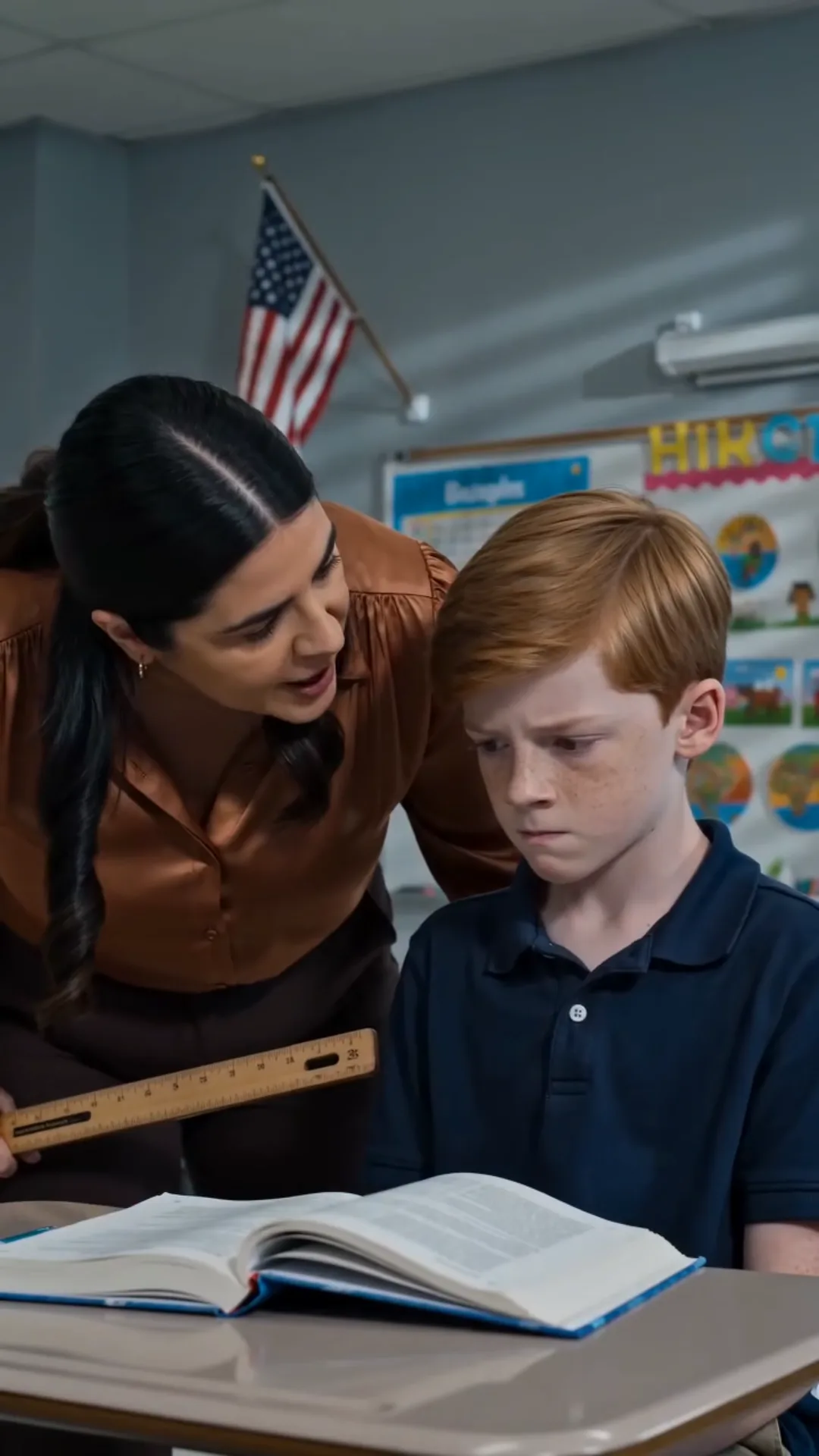
The book report that started everything had been, by any honest measure, one of the best pieces of writing Malik Owens had produced all year.
He had read The Watsons Go to Birmingham twice, the way he read everything twice, once for the story and once hunting for whatever specific detail a teacher might ask about out loud in front of the whole room. He had liked it enough, the second time through, that the hunting had briefly stopped mattering and he had just read, the way his mother used to read to him before her shifts got long enough to eat the bedtime-story hours entirely.
He had written four full pages when the assignment only required two.
He had used the word juxtaposition correctly, a word he had looked up twice to be sure, because he had learned that using an advanced word incorrectly in front of Mrs. Pierce cost more than not using it at all.
He had left it on the kitchen counter Thursday morning in the particular chaos of getting himself dressed, fed, and out the door in a one-bedroom apartment where the only adult present was asleep behind a door he'd learned never to open before noon, and by the time he'd realized it was missing from his backpack, he was already three blocks from home and the bus was already three minutes from arriving.
He had weighed, standing at that bus stop, whether to run back for it.
He had decided against it, reasoning — correctly, as it turned out, though not in the way he expected — that being late would cost him more than being one day behind on a single assignment.
He had been wrong about which cost would actually come due.
By Friday morning, the report itself no longer mattered in any practical sense. He had brought it, as promised, the very next day, four pages of careful handwriting and one correctly used advanced vocabulary word, and set it on Mrs. Pierce's desk at the start of class the way he'd been taught, corner squared with the edge of the desk, the way he squared everything he handed her, as if geometry might somehow function as an additional form of proof.
She had picked it up. She had read the first paragraph standing at her desk while the rest of the class settled into their seats.
"This is very advanced language for a sixth-grade paper," she said. Not to him directly, not yet. To the room, in the particular tone teachers use when they want an observation to land as a general comment while everyone present understands exactly who it's about.
"I wrote it myself," Malik said, because he had learned to say this preemptively now, the way you learn to say I have my ID before a security guard even asks.
"I didn't say you didn't."
She had said it, and yet everyone in the room, including Tyler, two desks over, understood perfectly well that she had, in fact, said exactly that, using words carefully engineered to be deniable later if anyone ever asked her to account for them.
This was the specific skill Mrs. Pierce had honed over twenty-two years without ever consciously naming it as a skill: the art of saying an accusation in a shape that could be denied as an accusation, leaving the person on the receiving end holding an injury with no admissible weapon attached to it.
Malik sat back down. He did not write anything in the notebook that period — some injuries, he was learning, did not fit neatly into a single dated line, the way a bruise does not fit neatly into the shape of the object that caused it.
Tyler, watching from two desks over, felt the small tightening in his chest again, sharper this time, and for the first time consciously wondered whether he had been imagining a pattern that wasn't actually there, the way you sometimes convince yourself you've seen a shape in a cloud that isn't really shaped like anything at all.
He decided, that Friday, to start paying closer attention.
It is worth pausing here to say something about Tyler Doyle that this story has not yet said directly: he was not, by nature, a boy who sought out conflict. He liked soccer and gummy worms and a video game about building things that his parents limited to weekends. He had never, in eleven years of life, needed to develop the specific muscle required to challenge an adult in a position of authority, because nothing in his life so far had required that muscle of him.
This is, itself, a kind of privilege, though Tyler would not have had that word available to him yet, would not fully understand it for several more years, long after this particular Thursday had become a story he told at dinner parties as an adult, the story of the first time he learned that some rooms are not equally safe for everyone standing in them.
What he did have, that Friday, watching Malik absorb an injury with no admissible weapon attached to it, was a small and stubborn sense that something was wrong, sitting in his chest the exact size and shape of a stone he could not quite put down.
He texted Malik that night, something unrelated, a screenshot from the video game, an ordinary elevenyearold's Friday-night nothing.
Malik answered normally.
Neither of them mentioned the book report.
But something had shifted, quietly, in the small orbit between their two desks — not dramatically, not in any way either boy could have named yet, but in the particular, accumulating way that eventually, given enough Thursdays, produces a boy willing to stand up in the middle of a classroom and say a sentence he has never said to an adult before in his entire life.
Over the following week, Malik noticed three more small things and wrote none of them down, because writing every single thing down had started to feel less like keeping proof and more like keeping wounds on display, reopening each one in the act of recording it.
He noticed that Mrs. Pierce had stopped saying good morning to him specifically, though she still said it to the room.
He noticed that when he raised his hand now, she called on him less often, as though even the possibility of him being right had become, in some private ledger of her own, an inconvenience she preferred to avoid.
He noticed, on the Wednesday before everything happened, that she had kept the wooden ruler on her desk in a slightly different position than usual — closer to the edge, closer to her hand, as though some part of her body had already decided something her conscious mind had not yet caught up to.
He did not know, could not have known, that a woman's twenty-two years of accumulated resentment does not announce its breaking point in advance. It simply arrives, the way weather arrives, on an ordinary Thursday, over a piece of homework so small that in any fair accounting of the world, it should never have been able to carry the weight of what came next.
He went to sleep that Wednesday night with the small notebook under his pillow, an unconscious echo of a gesture he did not know another boy, in another house, in another version of this same story, was performing with a photograph instead of a notebook, for exactly the same reason — because some children, faced with a world that keeps doubting them, learn to build their own small archive of proof that they were, in fact, telling the truth all along.
He did not know that the archive he would need most, by the end of the coming Thursday, would not be the one in his own backpack.
May you like



It would be the one in someone else's pocket.
---







