Chapter 2 - Mrs. Pierce's Rules
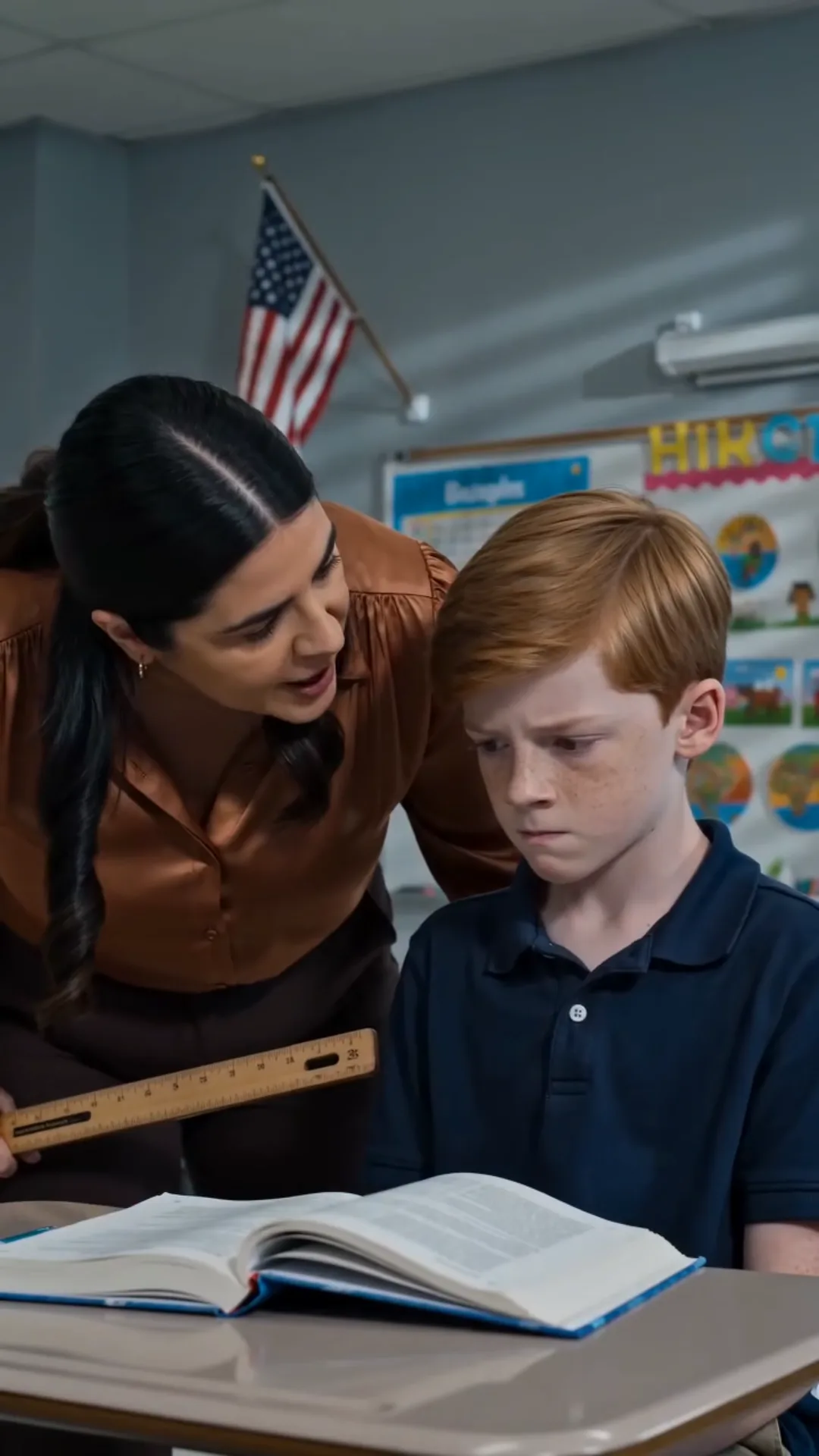
Mrs. Diane Pierce had taught sixth-grade English and homeroom at Ashford Preparatory Academy for twenty-two years, and in her own accounting of herself, she was exactly the kind of teacher every parent hoped their child would get. Rigorous. Traditional. Unimpressed by excuses.
She kept a wooden ruler on her desk that had belonged, she told every incoming class, to her own mother, who had taught fourth grade in a one-room schoolhouse in a town that no longer existed on modern maps. The ruler was scarred along one edge, the yellow paint worn down to bare wood at the tip from decades of tapping desks for attention, and Mrs. Pierce used it the way a conductor uses a baton — not, she would have said if asked, to threaten anyone, only to punctuate.
She would not have described herself as a woman with a problem.
She would have said, if you'd caught her in an honest mood over a glass of wine at the faculty holiday party, that Ashford had changed in the last several years in ways she found difficult, that the academic rigor she had spent two decades building into her classroom felt, increasingly, like something the administration was quietly asking her to relax in the name of programs she had not been consulted about, initiatives with names like Bridges that arrived with press releases and photo ops and, in her private assessment, students who required more of her patience and produced, she suspected, less of the results the school's reputation had always been built on.
She had never said any of this aloud to a student.
She had also never noticed — because noticing would have required a kind of self-examination she had spent twenty-two years successfully avoiding — the particular pattern of her own attention in that classroom. The extra half-second she paused after calling on Malik Owens, as though bracing for disappointment. The way she checked his homework more closely than anyone else's, hunting less for errors than for evidence.
The way she had once, in September, asked him directly, in front of the whole room, whether he had really written his own book report, because it was, in her exact words, unusually polished.
Malik had said yes. He had written it himself, alone, at the kitchen table, while his mother slept off a night shift on the other side of a thin apartment wall.
He had gone home that day and started the notebook.
Nobody at Ashford connected these two facts, because nobody at Ashford, save one eleven-year-old boy with a soft spiral notebook, was keeping the kind of records that would have let them.
Thursday morning, Room 214 filled the way it always did — backpacks thudding onto the floor beside desks, the particular clatter of lockers slamming shut in the hallway just outside, the fluorescent lights overhead humming at a pitch most of the students had long since stopped consciously hearing. An American flag hung on the back wall, slightly faded at the fringe from two decades of morning sun through the east-facing windows.
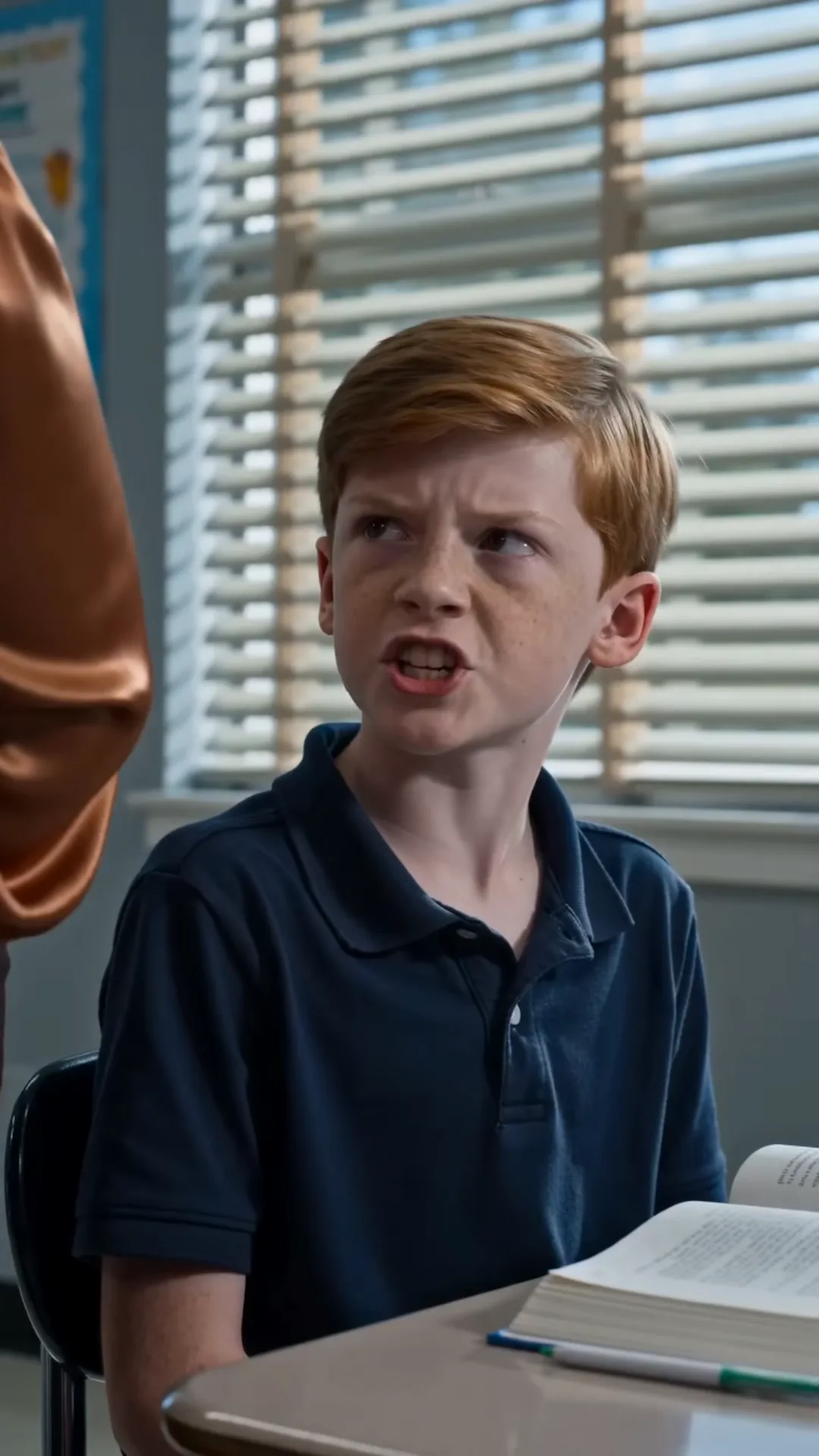
Tyler slid into his seat two desks over from Malik, gummy-worm bag already crinkling in his backpack pocket, and gave Malik the small chin-nod that had become, over two months, their entire private language of good morning.
Malik did not return it with his usual ease.
He was doing the math again — the missing book report, the specific weather system of Mrs. Pierce's moods, the way she had looked at him three days earlier when he'd answered a question correctly and she'd said, "Well, look at that," in a tone that made look at that land less like praise than like surprise she'd needed witnesses for.
Homework check came at the start of every class, a ritual as fixed as the pledge of allegiance that preceded it. Mrs. Pierce walked the rows with a clipboard, checking boxes, and when she reached Malik's desk and found nothing there to check, she stopped in a way she did not stop for the two other students that morning who also, it turned out, had not completed the assignment.
"Where is it, Malik?"
"I left it at home," he said. "I can bring it tomorrow. I finished it, I just—"
"That's what everyone says."
She moved on to the next desk before he could finish the sentence, which was, in its own quiet way, a kind of violence all its own — not the kind this story is ultimately about, but the kind that lays the groundwork, the kind that teaches a boy, incident by small incident, that his explanations are worth less air time than other people's.
Two rows back, a girl named Chelsea Byrne, whose father sat on the school's board, raised her hand and admitted she hadn't finished her assignment either — her family had gone to their lake house for the long weekend, she explained, and she'd simply forgotten.
"Not a problem, sweetheart," Mrs. Pierce said. "Bring it tomorrow, no penalty. I know how those weekends get away from you."
Tyler, two desks over, looked up from his own desk at that exchange with the particular sharpness of a boy noticing, for the first time in a conscious rather than a diffuse way, that a rule he had always assumed was a rule was, in fact, a preference wearing a rule's clothing.
He did not say anything yet. He was eleven. Saying something, out loud, to an adult with a clipboard and twenty-two years of unquestioned authority, was not yet a tool he had ever needed to use.
But he filed it away. He would not have called it filing anything, would not have used a word that formal for what happened in his chest in that moment — a small tightening, a small huh, that's weird — but it sat there, the way small true observations sit in a person until enough of them accumulate to demand a response.
Malik, for his part, said nothing at all. He had learned, months ago, that saying something in that particular moment only ever extended the moment. He pulled out the small notebook instead, under the desk, out of sight, and wrote, in handwriting slightly less neat than usual because his hand was not entirely steady:
November 9 — forgot report at home. She said "that's what everyone says." Chelsea forgot her whole assignment. No penalty.
He was not writing it down for anyone else to read. He had never once imagined anyone else would ever read it.
He was writing it down the way you write down a number you're afraid you'll otherwise convince yourself you imagined.
Class continued. Mrs. Pierce taught the day's lesson on persuasive essays with the same crisp, practiced authority she brought to every lesson, and if you had walked into Room 214 at any point over the next forty minutes, you would have seen nothing more remarkable than a rigorous teacher running a well-ordered classroom.
You would not have seen the particular weather system building behind her composed expression, the twenty-two years of unexamined resentment finding, in the missing homework of one specific scholarship student on one specific Thursday, the smallest possible pretext to finally, catastrophically, come loose.
May you like



You would not have known, watching Malik's careful, unreadable face as he took notes on thesis statements, that he had already begun rehearsing, silently, the specific defense he would give if she called on him again before the period ended — the way he had rehearsed defenses for two months, the way a boy learns to keep an umbrella folded and ready even on days the sky looks clear, because he has learned, the hard way, that in this particular room, the sky rarely stays clear for long.
---