Chapter 9 - What the Photo Started
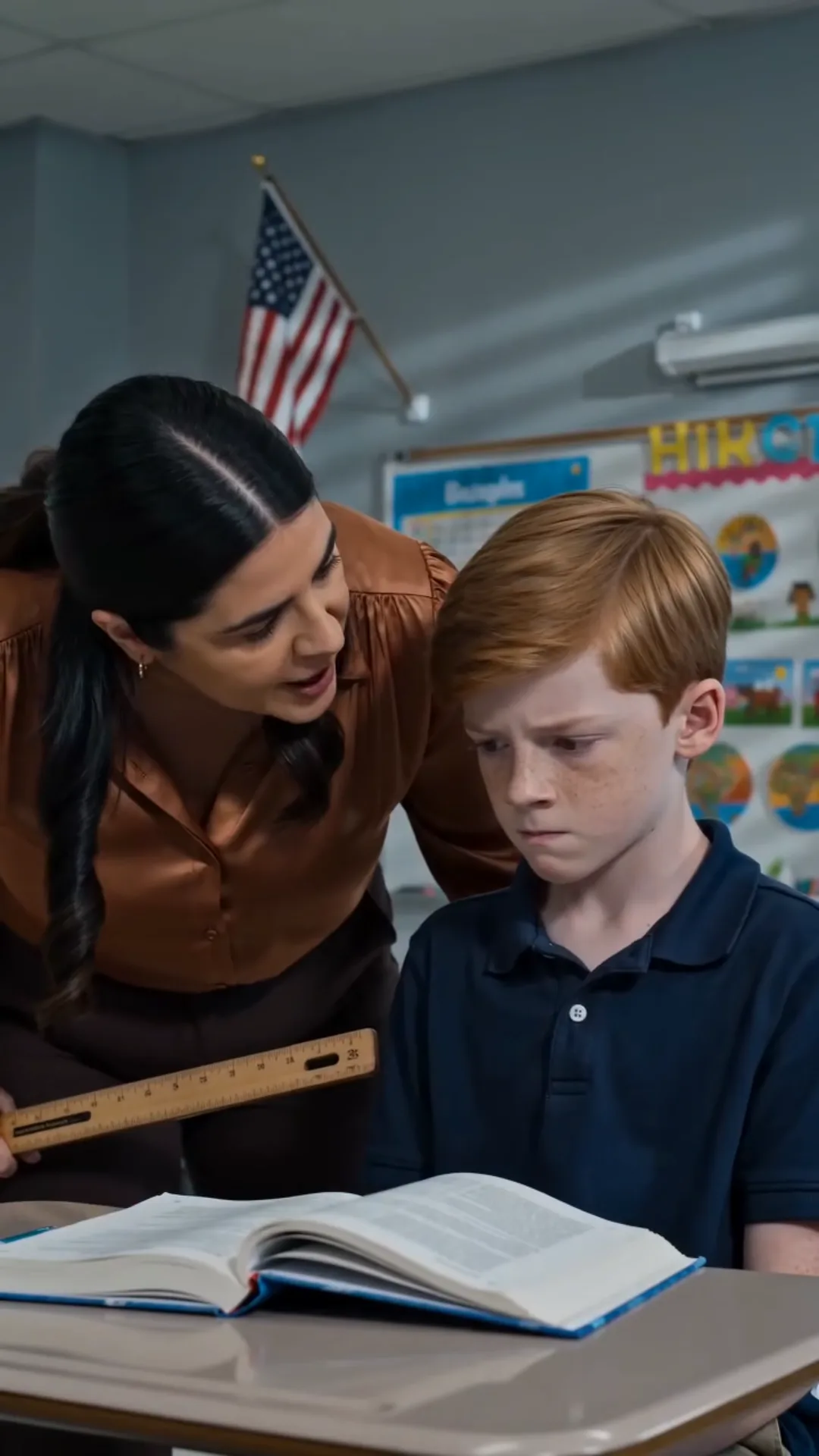
Karen Doyle was, by her own admission to anyone who asked in the weeks that followed, not a woman who had ever expected to become the center of a school controversy over a grocery-run Thursday afternoon.
She had read her son's text sitting in the parking lot of a supermarket, cart half-loaded, and had left the cart exactly where it stood, in the middle of the produce aisle, and driven straight to Ashford without stopping to think through what, precisely, she intended to do once she arrived.
She found the two boys outside the front office, sitting in the row of chairs reserved for students waiting to see the principal, Malik's face still faintly blotched, Tyler's hands still not entirely steady, and she did not waste time on questions that could wait.
"Show me the picture," she said.
Tyler showed her.
Karen Doyle looked at the photograph for a long moment, her own face going through several visible stages — shock, then something sharper, then a kind of controlled, focused fury that Malik, watching from the next chair over, recognized immediately, because it was the same fury he had occasionally seen flicker across his own mother's face on the rare nights she came home from a particularly hard shift and allowed herself, for a few private minutes, to stop performing calm.
"Okay," Karen said. "Okay. We're going to go in there together, and you're both going to tell Principal Hensley exactly what you told me, in exactly that order, and I am going to sit right there while you do it."
"Am I in trouble?" Tyler asked. His voice had gone very young, very small, the bravado of the classroom entirely spent.
"No," his mother said, and then, after a pause that suggested she was reconsidering the shape of her own answer, "Maybe a little, for having your phone out when you're not supposed to. But that's the smallest problem in this entire building right now, and it is not the problem we're here to talk about."
They called Denise Owens next.
She arrived forty minutes later, still in her nurse's scrubs from a shift she'd been sleeping off when the school's call came through, her hospital ID badge still clipped to her collar, swinging slightly as she crossed the front office at a pace that made clear exactly how fast she had gotten dressed and driven over.
She found her son sitting between Karen Doyle and Tyler, the photograph already pulled up on the school-issued laptop Principal Hensley had set on the desk between them, and when she saw it — her own son's face, tear-streaked, a ruler lifted over him by a woman entrusted with his care for six hours a day, five days a week — something in her went very still and very quiet, the specific quiet Malik recognized as the one that came right before his mother did something decisive.
"Baby," she said, kneeling in front of his chair, taking both his hands in hers, checking them the way a nurse checks for injury even when the injury in question is not physical. "Are you okay? Did she touch you? Did the ruler—"
"She didn't hit me," Malik said. "She hit the desk. But she said—"
He stopped. He had not yet said the actual sentence out loud to his mother, and saying it now, in this office, with three adults and Tyler all watching, felt like handing over the last and most fragile piece of the day, the piece he had been protecting even from himself.
"She said I should go to a school for Black kids," he said finally. "She said it like — like this school wasn't supposed to have me in it."
Denise Owens did not say anything for a long moment. When she finally spoke, her voice was low and steady in a way that Malik understood, even at eleven, had cost her enormous effort to produce.
"You belong exactly where you are," she said. "Do you hear me? Exactly where you are."
Principal Hensley, a measured man in his fifties who had spent the last twenty minutes looking increasingly gray, cleared his throat and said the words every family in that office had been waiting, with varying degrees of patience, to hear.
"Mrs. Pierce is being placed on immediate administrative leave, pending a full investigation. I want to be very clear — what's in this photograph, and what both boys have described, is being taken with the utmost seriousness."
"Seriousness," Denise repeated, in a tone that made clear exactly how much weight that particular word was, at this early stage, still going to have to earn.
The investigation moved faster than any of them expected, propelled by a photograph that offered no room for the careful, deniable phrasing Mrs. Pierce had relied on for twenty-two years. Other students, interviewed individually over the following days, described a pattern nobody had previously connected into a single visible shape — the extra scrutiny, the double standards on homework, small comments about fit and rigor that had always, until now, seemed like isolated incidents rather than a consistent weather system finally caught, once, on camera.
Mrs. Pierce did not return to Ashford Preparatory Academy. The specific terms of her departure were handled, eventually, through channels that did not involve either boy directly — lawyers, a school board meeting neither family attended but both heard about secondhand, a formal statement from the administration that used careful, institutional language to describe something that had not, in the classroom itself, felt careful or institutional at all.
What the photograph could not do — what no single piece of evidence, however undeniable, was ever going to be able to do — was erase, cleanly and completely, the specific weight Malik now carried from that Thursday afternoon, the sentence that had landed somewhere below conscious thought and would take, he suspected even at eleven, considerably longer than a school investigation to fully work its way back out.
But it had done something. It had turned two months of quiet, deniable weather into one undeniable photograph, and it had done it because a freckled eleven-year-old boy who had never before needed to develop the specific muscle required to challenge an adult in power had, on one ordinary Thursday, discovered that muscle existed inside him after all.
In the parking lot afterward, the two mothers stood together for a long moment before either family drove home, an unlikely pairing — a nurse in wrinkled scrubs and a grocery-run mother who had left a cart of produce abandoned in an aisle three miles away — bound together, suddenly and permanently, by a single photograph neither of them had asked to need.
"Thank you," Denise said. "For raising a kid who actually said something."
Karen shook her head slowly.
"He shouldn't have had to be the one to say it," she said. "That's the part I can't stop thinking about. It should never have taken my son's phone to make anyone listen to yours."
May you like



Neither woman had a clean answer for that, and neither pretended to. They exchanged numbers instead, in the awkward, practical way strangers do after being thrown together by something larger than either of them, and drove their sons home in opposite directions, into a Thursday evening that neither family would ever describe, afterward, as ordinary again.
---







