Chapter 10 - Room 214, After
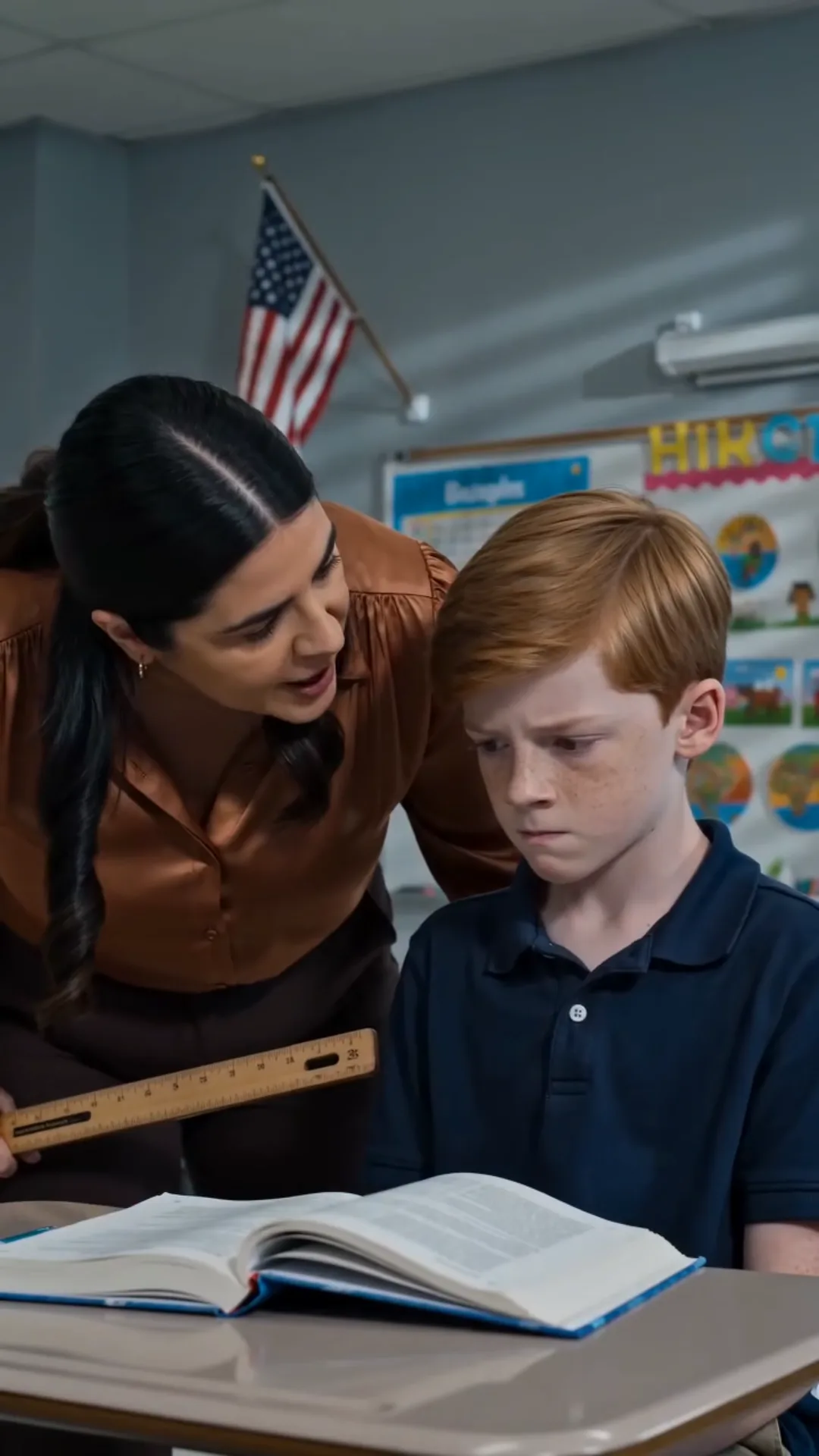
Ashford Preparatory Academy hired a new sixth-grade homeroom teacher the following month, a soft-spoken man in his thirties named Mr. Alvarez who had, in his very first week, done something none of his students had ever seen a teacher do before.
He had asked every child in the room, individually, over the course of several quiet one-on-one conversations at his desk, what they needed from him in order to feel like the classroom was fair.
Malik had not known, at first, how to answer the question. He had spent so long developing strategies to survive an unfair room that being asked, directly, what fairness might actually require of the adult in charge felt almost like being handed a language he'd forgotten he was allowed to speak.
"I guess," he'd said finally, "I'd just like it if you believed me the first time. Before I have to prove it."
Mr. Alvarez had written something down, the way Malik used to write things down in his own small notebook, and had said, simply, "I can do that."
He had, so far, kept the promise.
The wooden ruler was gone from the classroom entirely — not banned by any specific school policy, simply absent, replaced by a plain plastic yardstick Mr. Alvarez used exclusively for measuring things on the whiteboard, never once raised, never once brought anywhere near a desk in anger.
Malik still kept the notebook. This was a detail he had not expected about himself, in the weeks after everything happened — that the habit did not simply dissolve the moment the danger that created it went away.
He had thought, once the investigation concluded and Mrs. Pierce's replacement settled the classroom into its new, calmer rhythm, that he would stop needing it. Instead, he found himself reaching for it out of something closer to habit than necessity, and rather than fighting the habit, he had let it change shape instead.
He no longer wrote receipts. He no longer documented proof of his own effort, evidence assembled against a doubt he was bracing to defend himself from.
He wrote other things now. Small true observations that had nothing to do with survival.
December 2 — Tyler says the new taco recipe in the cafeteria is worse than the old one. I disagree. Debate ongoing.
December 9 — Mr. Alvarez let us pick our own book for the reading unit. I picked the one about the kid who builds boats. Nobody asked if I wrote my own summary.
December 14 — Mom worked a double but came to the winter concert anyway. Fell asleep during the second song. I let her sleep.
He showed the notebook to Tyler, eventually, on a lunch period in mid-December, sliding it across the cafeteria table the way you hand someone something you've decided, finally, is safe to be seen holding.
Tyler read a few entries in silence, his eyebrows drawing together with the specific concentration of a boy working out something larger than the words directly in front of him.
"You kept receipts," he said finally. "This whole time. In case anyone didn't believe you."
"Yeah."
"That's kind of like what I did. With the picture."
Malik hadn't thought of it that way before, but sitting there, turning it over, he found he couldn't disagree.
"I guess we both figured out the same thing," he said. "Just — different ways of doing it."
"What thing?"
Malik considered the question with the same careful gravity he'd once brought to memorizing textbook definitions, searching for language precise enough to hold what he actually meant.
"That some people won't believe you just because you're telling the truth," he said slowly. "So you have to be ready to show them. Even when that's not fair. Even when you shouldn't have to."
Tyler nodded slowly, the gravity of the sentence settling into him the particular way true things settle into a person who is still, in many ways, learning for the first time how large the world actually is, and how unevenly it treats the people standing in it.
"I used to think discriminating was just, like, a word from a textbook," Tyler said. "Something that happened in old movies. Then I heard her say it out loud, right in front of me, and it didn't feel like a textbook word anymore. It felt like — thunder. Like something you don't need explained to you, because you feel it happen in your own chest."
Malik looked at his friend for a long moment — this boy whose grandfather had a library wing named after him, whose family had never once had to develop the specific muscle Malik had spent his whole life building without ever being given a choice about it — and felt something loosen in his chest that had been tight for so long he had nearly stopped noticing the tightness as anything other than his own permanent shape.
"Thanks for feeling it," he said. "A lot of people don't, even when it's happening right in front of them."
"I almost didn't say anything," Tyler admitted. "I was scared. I didn't know what would happen."
"You said it anyway."
"Yeah."
"That's the part that mattered."
They ate the rest of their lunch mostly in comfortable silence, debating, as they had been debating on and off since September, whether the cafeteria's pizza day still held up against its now-worse taco day, a question that felt, on that particular December afternoon, appropriately, wonderfully small.
Malik walked back to Room 214 that day without reaching for the notebook out of dread, without running numbers on how much a single mistake might cost him, without the specific low-grade unease that had lived in his stomach for two straight months.
He sat down at his desk. Two seats over, Tyler gave him the small chin-nod that had, since September, meant good morning between them, and Malik returned it easily, without calculation, the way you return a gesture from someone who has never once needed you to earn it.
Outside the classroom windows, the American flag on the back wall — the same flag that had hung there through everything, faded slightly at the fringe, a quiet, unmoving witness to a Thursday afternoon neither boy would ever fully stop carrying — caught a small gust of wind through a propped-open door somewhere down the hall and stirred, briefly, before settling still again.
Mr. Alvarez began the day's lesson.
Nobody in Room 214 flinched.
Somewhere across town, in a break room at Mercy General, Denise Owens kept a photograph of her own now, saved quietly to her phone, one she had never shown anyone besides the school board and would probably never need to show anyone again — not the photograph of the ruler, which belonged, now, to an investigation file and a memory she was slowly learning to set down, but a new one, taken the week after, of her son laughing at something off camera, gap-toothed and unguarded, in a way she had not seen from him in longer than she wanted to admit.
She did not need a notebook to know what that photograph proved.
May you like



She kept it anyway. Some proof, it turned out, was worth holding onto even after the case for it had already been won.
— END —







